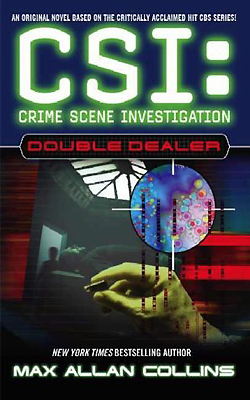
BookBin2013: Double Dealer

doubledealer

Lest I end the evening (or the month) with a negative review, let’s talk about that other television franchise over which I’m thoroughly gaga: CSI!

I may have mentioned this at some point here at the lair, but a while ago I found a great eBay auction on a large lot of CSI novels (I think I ended up with the first 10 novels; I could be wrong on that count, but I’m too lazy to get up and check) for a relatively low price. It was low enough, in fact, that I decided that even if I hated every single novel, it was still worth the cost.

Of course, we all know the deal by now: I bought them, received them, stacked them, and promptly moved on to other books. However, I decided one of these novels would be the perfect length for at least one leg of our recent Hawaii adventure…and I was right! I was able to finish this one during the flight from the islands to LAX. Perfect timing!

So Double Dealer, written by Max Allan Collins, is the first of the Las Vegas CSI novels. I’ve mentioned Collins here before; he was the author of three of the CSI graphic novels I’ve reviewed here. From what I wrote previously, I found his writing skills to be mostly entertaining, but I found that his stories didn’t really push the boundaries of the CSI fictional world in ways similar to how the Trek novel writers often pushed that franchise’s “accepted” boundaries. Of this, I wrote:

One thing that I

BookBin2013: A Hard Rain

ahardrain

I always view long flights as the perfect excuse to tune out the entirety of existence for a nice dive into a book or two…or more, depending on just how far I happen to be flying. Recently, I flew to Hawaii. Lots of time for lots of reading (and sleeping, but mostly reading).

I didn’t want to take a lot of thick, heavy books (I wanted to save ample space for important things like all the booze and coffee that I may or may not have bought while there), but I also wanted to take enough books to cover my bases and provide a nice variety of choices.

Thank goodness for Kindle! I loaded mine up with lots of selections, including several TNG books that I have had on my reading list for quite a while. Top choice was Dean Wesley Smith’s “Dixon Hill” novel A Hard Rain. I actually referenced this book in a Doctober post as one of the few TNG novels to actually feature Dr. Crusher on the cover. It was also the only book from this admittedly short list that I had not yet read.

I wish I had left it as unread.

I’ve never read anything else by Smith, but he wrote the novel adaptation of The Core. Do with that what you will (and I already suspect what many of my nerdier denizens will do with it). I got the impression from this story (and its blatantly open ending) that perhaps Pocket Books had planned on making Dixon Hill novels a spinoff to the mainstream TNG novels. I think A Hard Rain was the only one actually written, and I can understand why the idea was abandoned (if it ever existed).

With A Hard Rain, Smith has written a rather chaotic and muddled…tribute? parody?…to the detective novel, using the world of Dixon Hill as his foundation. Perhaps it’s a great novel to detective fans. It’s not a great TNG novel, I can attest to that.

Then again, it’s been years since I last read my TNG novels. Perhaps I have simply outgrown the storytelling parameters of Trek literature? I feel once again that I need to revisit these books, if only to finally put this question to rest. However, I fear that what I will find is that all the books I once loved will now just make me sad. And slightly appalled.

Anyway, I’m still not wild about detective novels, so that aspect didn’t really appeal to me. I’m also not a fan of Smith’s writing style for this particular book (again, I’m assuming that he doesn’t typically write like this and was probably striving to mimic popular detective novel styles). Additionally, I wasn’t all that crazy about the way the Dixon Hill story overlapped the TNG storyline in a rather non-linear and subsequently nonsensical way. Actually, the “real” storyline was more absurd than the Dixon Hill one…although the denouement was ridiculous for both stories. I didn’t like other things about this novel, but at this point I feel like I’m unnecessarily phasering a dead targh. I will say this, however: I never again want to read the phrase “Luscious Bev.”

Final Verdict: I have deleted A Hard Rain from my Kindle. I still have the master file saved elsewhere, but I doubt I will ever revisit it.

BookBin2013: Sum It Up: A Thousand and Ninety-Eight Victories, a Couple of Irrelevant Losses, and a Life in Perspective

sumitup

What more could I possibly write about Tennessee Lady Vols Coach Pat Summitt? I first blogged about her right after she announced her diagnosis of early dementia, Alzheimer’s type. This heartbreaking news inspired me to revisit Summitt’s book Raise the Roof, all about her team’s 39-0 championship season in 1997-98. I enjoyed re-reading this book so much that I sought out and read her book Reach for the Summit, which I described as “equal parts business-minded motivational pep talkery, behind-the-scenes glimpses of Summitt

BookBin2013: Schulz and Peanuts: A Biography

schulzandpeanuts

Some friends recently asked me to name 15 artists who have influenced me and who will always remain important in my life. Honestly, I haven’t been able to answer the request, because I haven’t identified 15 who have been so monumentally influential that they will always and forever be in my pantheon of artistic awesomeness.

What? Doesn’t everyone have such a pantheon?

However, when I tried to reach the full 15, Charles M. Schulz was most definitely there. The “Childhood” chapter of my life story would be notably incomplete without Schulz and his “curiously independent” cast of un-childlike children. I grew up in what has been called the waning years of Peanuts glory, a time in which many considered the strip past its prime and much softer and far less esoteric than it once was. I didn’t know any of this at the time; all I knew was that I enjoyed reading the comics and I loved all my Snoopy stuffed animals and other paraphernalia.

It wasn’t until my teen years that I became more curious about this comic’s evolution through its impressively long existence, and I started seeking out the early Peanuts comics. And my love for Peanuts grew even greater. It was almost as if I were discovering this comic and its characters for the first time. Indeed, those later strips with which I was so familiar seemed subdued and rather banal in comparison with Schulz’s early dark, philosophical, somewhat nihilistic strips. His work in the 80s hooked me as a child. His work through the 50s-70s is what made me a lifelong fan.

When I heard that David Michaelis had written Schulz and Peanuts: A Biography, I remembered being incredibly excited. However, early reviews made me wary enough that I didn’t bother picking up a copy until I found the book in a beachtown bargain bin in 2009. I bought it…and promptly abandoned it to a shelf when I got home.

True to my promise this year, I’m trying to make my way through some of the backlogged biographies/autobiographies/memoirs I have. And how could I resist this book’s smexy Charlie Brown-inspired cover?

[Apparently, quite easily, since it’s been almost four years since I bought this book…but I digress.]

For a 600+-plus-page biography, I kind of expected to walk away with more insight on Schulz beyond the fact that he was shy, self-effacing in that intrinsically Midwest way, somewhat pedantic, thoughtful, introspective…but also a bit emotionally incompetent (as detrimentally introverted people can be), especially when it came to the relationships he tried to form throughout his life. Honestly, I had long suspected this last part, and I think it was one of the reasons that I didn’t want to read this biography. Sometimes, we simply want to believe that our heroes are just that

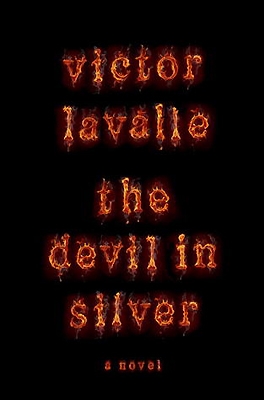
BookBin2013: The Devil in Silver

devilinsilver

I’ve been working my way through another book from my own library (I’m serious this year about reducing that stack of books around my night table…or at least of making room for new books waiting to be moved to the “next in line” stacks). However, I placed a hold with the local library back in December for this particular book. When I received the e-mail letting me know that my turn to borrow it had finally arrived…well, who I am to refuse the call of the wild library?

So I put aside the book I was working through and switched my book-loving fealty to Victor LaValle’s The Devil in Silver.

Let’s start with the dust jacket description:

Pepper is a rambunctious big man, minor-league troublemaker, working-class hero (in his own mind), and, suddenly, the surprised inmate of a budget-strapped mental institution in Queens, New York. He’s not mentally ill, but that doesn’t seem to matter. He is accused of a crime he can’t quite square with his memory. In the darkness of his room on his first night, he’s visited by a terrifying creature with the body of an old man and the head of a bison who nearly kills him before being hustled away by the hospital staff. It’s no delusion: The other patients confirm that a hungry devil roams the hallways when the sun goes down. Pepper rallies three other inmates in a plot to fight back: Dorry, an octogenarian schizophrenic who’s been on the ward for decades and knows all its secrets; Coffee, an African immigrant with severe OCD, who tries desperately to send alarms to the outside world; and Loochie, a bipolar teenage girl who acts as the group’s enforcer. Battling the pill-pushing staff, one another, and their own minds, they try to kill the monster that’s stalking them. But can the Devil die?

Again, I don’t usually provide these descriptions in my reviews, but I wanted to in this instance, to make a point. And that point is, this is not what this book is about.

Okay, it is. But it isn’t. It’s kind of like saying that Star Trek is about space exploration. See what I’m saying? It is. But it isn’t…and, with The Devil in Silver, the “isn’t” is what makes it such a compelling and difficult read.

What LaValle has done with this book is craft an enrapturing and infuriating castigation against several publicly facilitated ways in which we manage those whom most people immediately deem unmanageable, whether it be the mentally ill, the incarcerated, the illegally present. It is chaotic and claustrophobic and intelligent and revelatory and…I couldn’t put it down and I couldn’t stand reading it at times because it will cut you with its closeness to the truth.

The horror of this story is not in its “devil” but in the humans themselves, seemingly cored of their humanity by the perfunctory pressures of mind-numbing minutiae and the stunning insensitivities of status quo that have left them totally void of compassion or caring. Just do what you’re told, pay attention only to the words on the screen or the words on the paper. Ignore the human life those words represent. Makes it that much easier to dismiss yourself from culpability when you can say you were simply following orders.

There were points while reading this novel when I thought I wouldn’t be able to keep going. I’ve already stated that I know too well the inner workings of public mental healthcare in this country. LaValle obviously knows it as well. In fact, he has stated that the idea for The Devil in Silver was planted from a personal experience. What was planted all those years ago, LaValle forced into the light through one of the most captivating novels I have read in a long time.

I’m not necessarily sure how I feel about the climax or resultant ending, but I honestly think the strength of The Devil in Silver is more in its telling than in its ending. That being said, LaValle succeeded in creating characters that were, while perhaps not completely likeable, completely believable and completely empathetic. For these reasons, I truly wanted that mythical, virtually non-existent “happy ending.” For some, I got my wish. For others…

Well, I guess you’ll just have to read this one for yourselves. Just be warned: It is not horror in the exploitative or visceral sense of the word. It is horror in the literary, intellectual sense…in the pressing, rooted-in-reality sense. It will burrow beneath your skin in the most haunting of ways.

Final Verdict: I had to return this one, of course, but I might be adding this to my library, if only to make sure that I show support for an incredibly talented author.

BookBin2013: Mr. CSI: How a Vegas Dreamer Made a Killing in Hollywood, One Body at a Time

mrcsi

As you can already tell by the types of books I review here at the lair, I don’t read many autobiographies, biographies, or memoirs. I suppose because I’d much rather lose myself to a good fictional tale or immerse myself in the non-fiction minutia of one of my nerdy fandoms. I do (infrequently) purchase these more people-oriented books, if it’s about or by someone I’m terribly interested in, but they tend to languish, unread, far longer than my other purchases. Apparently, my general disinterest in people extends beyond the every-day disdain and into my free-time reading choices.

What better way to start to ease myself into the task of tackling at least some of the bio-esque books from my collection than through one of my nerdy fandoms? That’s why this review, denizens, is brought to you by three of my favorite letters in the alphabet: C, S, and I.

That’s Mr. CSI to you, however…or, if you’d rather, Anthony Zuiker, creator of that smexy team of Vegas criminalists that made science-based procedurals ubiquitous across the channel spectrum. In traditional memoir style, Zuiker maps for us the path that led him to create the biggest cash-cow franchise that Paramount’s sunk their teeth into, possibly since Trek.

What I found most intriguing about this book is that, for the most part, it’s Zuiker telling us absolutely nothing about CSI…while telling us absolutely everything about CSI. It almost reads like an episode script: Give the reader a stunning cold open, then flash into back story, full of clues and foreshadowing all along the way, and see if they can piece it all together on their own.

There’s even a grisly crime scene and guest appearances by real people who inspired characters from the Vegas series. Zuiker confirms the identity of one of his inspirations. Others are very obvious, even if they remain unidentified.

I have to admit, denizens: I really enjoyed this book. Not all that surprising, I suppose, considering the source material. However, before I read this, I didn’t know anything about Zuiker; I didn’t even know what he looked like until I saw the book cover. I had no idea that he grew up in Vegas, surrounded by the people who would later populate the world of his greatest professional creation to date. Reading this book gave me some great CSI trivia as well as a pretty decent understanding of what motivated Zuiker, not just to create this show but to persist in all his creative endeavors. I guess you could say this is kind of a memoir/detective novel/self-help/motivational speaker book.

Whatever you classify it as, it’s a quick, enjoyable read, but definitely meant primarily for CSI fans. You might enjoy some aspects of it if you’ve never watched CSI, but you’re going to miss a lot. “True believers,” however, will probably really dig the ride. I know I did.

Final Verdict: Yeah, this one’s a keeper. I actually have a shelf dedicated to memoirs and such, and Zuiker has definitely earned his spot…now, excuse me while I go cordon it off with some crime scene tape…

BookBin2013: Mortuary Confidential: Undertakers Spill the Dirt

mortuary

Ah, nothing like starting the new BookBin off with a happy read, no? I’ve had Mortuary Confidential, compiled by funeral directors Kenneth McKenzie and Todd Harra, since the summer (it was actually bought for me as “beach reading,” but I wasn’t able to finish my other books quickly enough to partake of such a delightfully macabre experience as reading a book like this surrounded by sea, sand, and sun).

The first thing I noticed when I flipped open my copy was a large advertisement, printed on the inside of the front cover, for Never Suck a Dead Man’s Hand: Curious Adventures of a CSI. I’ve read CSI Dana Kollmann’s book. It was one of my favorite finds for 2011. I took this as a good omen. Looking back, I realize that it was just a publication company advertising another of their books that they thought might “pair well” with the obvious death themes of Mortuary Confidential.

That’s not to say that I didn’t enjoy this book. It was entertaining enough, full of anecdotes that were poignant, funny, informative, and odd. In our world of constant online connectivity, though, I feel like books like this would be better served as a blog to which people can constantly contribute stories. Something, perhaps, like The Darwin Awards (which also lost a great deal of its quirky charm, imho, when turned into a book series). Something interactive, constantly growing, constantly changing. I suppose what I’m ultimately saying is that this concept seems too…alive to be limited to staid book status.

Final Verdict: I enjoyed reading Mortuary Confidential, but I don’t think I would ever revisit it. Again, though, if this were an interactive site, with new stories added constantly, I believe I would definitely bookmark it for regular visits.

BookBin2012: Voluntary Madness: My Year Lost and Found in the Loony Bin

vm-nv

A few years ago, I discovered journalist and author Norah Vincent through her book Self-Made Man: One Woman’s Year Disguised as a Man The title of the book kind of gives away the plot: Vincent spent a year (18 months, actually), living as a man, doing manly things, hanging out with manly men. And monks. Manly monks. It was a level of undercover or “immersive” journalism reminiscent of White journalist John Howard Griffin’s Black Like Me, which documented his 6-week experiment disguising himself as a Black man in the still racially segregated Southern states of Louisiana, Mississippi, Alabama, and Georgia.

Griffin actually went through a procedure, under medical supervision, to artificially darken his skin for his experiment. Vincent’s dedication was a bit less risky, but she truly did immerse herself in her mission. The resultant book was…well, I have mixed feelings about this particular work. I’ve yet to read a review of Self-Made Man that doesn’t at some point reference Black Like Me, and rightfully so. Both books are unique in their earnest attempts to “walk a mile,” one in the skin of another and one in the gender of another.

However, I feel as though Griffin’s decision to go undercover in an attempt to better understand through experience the pervasive racism of his home turf (he hailed from Dallas, Texas) carried with it more weight and justification than Vincent’s ultimate betrayal of trust placed in “him” by people who weren’t doing anything beyond living their lives. I applaud Vincent’s attempts to try to understand the male psyche, but it simply did not carry with it the gravitas of Griffin’s experiment, and in the end, it fell far short of any groundbreaking revelations.

Why mention it at all? Both because I do think it merits reading (I will rarely discourage the reading of any book), and also because, by the end of her time of total immersion as a man, Vincent went through a bit of a mental breakdown. The end result was that she ended up checking herself into a psychiatric ward.

And, thus, another idea for immersion journalism was born.

Voluntary Madness is Vincent’s latest undercover exploits. This time, she voluntarily commits herself to three different facilities most common to U.S. mental health treatment: a psychiatric ward at a big-city public hospital, a rural private psychiatric hospital, and a more exclusive “alternative treatment” program.

I felt supremely conflicted about this book the moment I saw it. Whereas Self-Made Man was a book that I felt I could describe as “objectively objectionable” at points, I knew that Voluntary Madness would be a far more subjective reading experience. I grew up with a front-row seat to a severe mental illness and all that such a disease entails. I’ve seen the public hospital mental wards…I’ve even seen the private psychiatric hospitals. I know ultimately what a horribly unfunny joke the mental health industry is in this country.

To learn that Vincent went into these places, cloaked only in partial truth regarding her need for mental health help, caused me to bristle. It’s one thing to play mentally stable people as she did in her first immersive project. To do the same with the mentally ill, even if it was in an attempt to bring to greater scrutiny the questionable treatment they are receiving, felt like a betrayal of something sacrosanct to me.

It was only during her stay at the public hospital that she encountered the most distressingly mentally ill: the schizophrenics, the dissociative disorders, the borderline personalities. And it was only during her time at the “alternative treatment” center that she seemed to find true balance and true mental clarity. It was also in this more exclusive program that she encountered people whose only “mental illness” seemed to be a terminal case of being overindulged brats with daddy complexes who were only there because they were trying to dodge jail time.

Yes, that was a totally subjective judgment. It angered me, however, to read about the incredible treatment afforded to people who barely bothered to stay awake through group sessions while in public hospitals all across this country, such attentive holistic care might actually prove to be the balm so desperately needed by the truly ill. Instead, they’re simply shot up, doped up, weighed down with medications dumped into the mental healthcare arena by pill pushing pimps from the pharmaceutical companies who basically own the public (and some of the private) facilities. And, as Vincent discovered, most of the psychiatrists prescribing these pills say nothing to their patients of the horrifying spiel of side effects that come along with most of these drugs: weight gain, uncontrollable food cravings, diabetes, uncontrollable muscle spasms, kidney damage, liver damage, lethargy…a whole litany of liabilities that more often than not place you on a one-way path to inevitable system failure. But who cares, as long as it gets you out of the hospital. At least until your next committal.

Besides, isn’t it much easier to just load up patients with drugs that suppress all their problems rather than actually spend time and effort working with them? Again, non-objective observation. And, for the record, I do understand that a textbook case of depression such as what Vincent suffers from is nothing like working with someone with schizophrenia. One comes and goes and is relatively manageable. One is permanent, persistent, ultimately drug-resistant, and only guaranteed to worsen with time. I was told once by an acquaintance who worked in the mental health profession that “terminal mental illnesses” were the ones that no doctor wanted to get, because there was no hope for improvement…just maintaining the status quo for as long as possible, until the next inevitable decline.

It shouldn’t be surprising, then, that many mental healthcare providers lose their humanity when they find themselves surrounded by the more distressing mentally ill. For example, the workers Vincent encountered in the public hospital had built up emotional barricades that made them come across as cold and callous. Honestly, I can’t imagine working in a place like a public psychiatric ward without developing a thick emotional armor.

I think that Vincent’s goals with this project were noble in intent. I also think that they brought to light the problems and the positives of the U.S. mental health system. Sadly, there seem to be far more problems, and not many solutions about how to fix them. In light of all the heartbreaking tragedies we’ve seen, even just in this past year, with obviously mentally unstable individuals gunning down innocent people, I think this project should be given extra scrutiny. Vincent has shown us only a sliver of the issues. There needs to be a broader national discourse…something that delves far deeper than branding the mentally ill with derogatory names (you’ll notice that even Vincent’s original book subtitle uses the term “loony bin”; it was changed for the paperback to “Lost and Found in the Mental Healthcare System”) or, even less helpful, branding them “evil.” As if attaching the yolk of this stigma around them dismisses us all from culpability. It’s the same as women jurors branding a rape victim a “whore” as a means of excusing themselves from the truth that such an act of violence could happen to anyone.

Mental illness can happen to anyone. For this reason alone, we should be more understanding and more eager to see more done to understand. But the violence that we have seen all across this country, committed by people who, in the aftermath interviews, were almost always described as “off” or “unstable” or “ill”…we have the ability to help these people or to at least perhaps cut them off at the pass before they reach the point of picking up a weapon and causing such grief and heartbreak.

Final Verdict: One more library book for the “Buy Me Later” pile, if only to have a copy on hand to share with others. I do believe that Vincent’s latest immersive journalistic effort is worth reading on a large scale.
BookBin2012: The Silence of Our Friends

soof

I actually finished Mark Long’s graphic novel The Silence of Our Friends a while ago. However, I wanted to say so much about this novel…and I could never really find the time to write down all the thoughts that I had and all the social commentary I wanted to examine. Things have been so tumultuous lately…but with every day that passed that I didn’t get the chance to write about this, the more heavily it preyed upon me. It wasn’t until this morning that I realized that it had become something so much more than just another BookBin review, and that the proportions to which it had grown mentally were now making it nearly insurmountable.

That’s not what should have happened. That’s not what I ever intended. So, let’s reel it back and start with something simple. Here is the book’s description:

As the civil rights struggle heats up in Texas, two families