BookBin2012: Buffy The Vampire Slayer: Omnibus 1-4

Some of you may already know that I have spent slightly more than a year in the idyllic little slice of hell life known as The Buffyverse. In fact, I just recently finished my sojourn with the viewing of the last episode of Angel.

Being the overachieving geek that I am, of course, I couldn’t leave it at tormenting myself with the shows only. Oh no! There are comics as well, my friends! In fact, both Buffy and Angel continue on in comics-based “seasons.” Prior to this, however, the shows had regular release comics, running concurrently with the shows…just like Star Trek or The X-Files.

Just like Star Trek or The X-Files, these early non-canonical comics are spotty in their storytelling attempts, but more often than not simply awful to behold. On all levels. The artwork is questionable in its best form. In most forms, it’s the equivalent of a hydrochloric eye wash. Seriously, if you cannot find someone able to tell your story in a visually pleasing style, you need to reconsider telling your story in graphic form. Many of the comics are illustrated in poorly chosen styles, some looking so amateurish and off-putting that the artwork distracted me completely from the story itself.

Thankfully, Cliff Richards did a lot of the artwork throughout these first four Buffy the Vampire Slayer: Omnibus volumes. His style is far more aesthetically pleasing than some of the more obtuse styles throughout these volumes, albeit more traditional as well. What can I say? I’m just an old-fashioned wolf at heart, I guess. Not even Richards, however, could meet the challenge of making the characters look like their actor counterparts. This is something that I notice in every show- or movie-based graphic novel tie-in: The comic characters very rarely look like the actors.

I’m somewhat all right with this, but it’s because I have decided that the artists do this as a means of signaling that, hey, this isn’t Sarah Michelle Gellar. This is Buffy. And she only looks like Sarah Michelle Gellar when Sarah Michelle Gellar is playing her. Elsewhere? She looks like this. Or this. Or this. The artist is ultimately true to the character, not the player. Does that make sense?

Of course, that being said, sometimes we then end up with comic characters that look like this little slice of WTF:

And believe me when I state that there were worse visual offenses than this throughout these volumes. For the most part, however, I think my biggest quibble with a lot of the artwork was the fact that more often than not, Willow was a brunette. Um…wha? That’s as irritating as a certain TNG novelist writing that Dr. Crusher has green eyes. Again, if you want to be taken seriously, you kind of have to get basics right. I know I just wrote that the artist must remain true to the character rather than the actor with comics…but when you’re not drawing your characters to look like the actors, you need some kind of universal visual to signal that this is Willow and not Cordelia, which honestly became an issue for me with some of the more non-traditional artwork.

That being said, I would like to hug the artist responsible for the cover art for the third volume of this set. Why?

Well played. So very well played.

Oh, and in case you were wondering, I chose to read the first four volumes of the Buffy Omnibus because they were readily available through our local library. Only these volumes, however. Honestly? I’m okay with that. Only getting to read the first four volumes is more than okay with me.

As for the stories, they were mostly…unmemorable. Some were short little one-shots that made absolutely no sense and held no point beyond the one being wielded by the Slayer against whatever demonic ick she was facing at the moment.

There were standouts, however. Actually, I’m going to say that the first volume in its entirety was the most enjoyable of the four, and very much worth reading. It begins with a graphic rendering of the original Joss Whedon script for the movie that started all this insanity.

Remember that movie? Yeah.

Well, apparently, it was supposed to be much darker…still possessing pop culture awareness, humor, and kitsch, but also infused with deep shades of melancholy and despair.

Kind of like what the show often tried to be.

The original movie story actually wasn’t bad. Neither was the follow-up arc “Slayer, Interrupted,” which chronicled Buffy’s brief institutionalization that was referenced a few times on the show. It also shows the tangential travails of one Rupert Giles, who wishes to earn the Council’s approval as the next assigned Watcher. The Giles storyline is fairly decent as well and plays quite nicely in conjunction with Buffy’s arc, bringing them together slowly and convincingly until they finally cross in good old Sunnydale.

Before we get the recognizable arrangement of Buffy and Giles and the Scooby Gang, however, we get Volume 2’s “A Stake to the Heart.” This was probably my favorite story arc of all four volumes. It details the end of Buffy’s parents’ marriage and Joyce’s subsequent decision to move her daughters to Sunnydale. It’s quite a dark, grim tale in which Angel accidentally releases a band of “malignancy demons” upon Buffy in an attempt to cast a spell to protect her from the miseries and pressures of life that surround her.

Oops.

Admittedly, it’s a silly sounding premise for a story. However, the artwork is the finest of the lot

BookBin2012: The Murder at the Vicarage

It’s finally happened, denizens. I am no longer an Agatha Christie virgin.

It was bound to take place sooner or later. One simply cannot claim a love of literature without giving a go to all those “prime suspect” authors whose works continue to be highly revered by fans and critics of their respective genres.

I suppose I was late to the Christie party because her novels reign within a literary realm I rarely visit: the detective genre. I’m still not really sure why this genre is so hit-or-miss with me, but I do keep giving it a go. One day, something from its hallowed halls will simply knock my socks off.

The Murder at the Vicarage wasn’t necessarily the sock-knocking “something” in question. Not that I was expecting it to be. Honestly, I wasn’t quite certain what to expect. I have seen several of the BBC Miss Marple and Poirot offerings, but I don’t think I ever paid attention to them while watching them. They were sort of background noise while I did something else. And even though I claim to be quite the Anglophile and to have a deeply genetic connection to all things England, I’ve never even considered going to see The Mousetrap while in London.

So what to think of this novel? I was delighted to realize that it was the very first appearance of Miss Marple, that ingenious “spinster sleuth” who starred in one of Christie’s detective serials. I didn’t know at first where this novel fit into Christie’s oeuvre. All I knew was that it was the only one of her novels offered through Amazon’s free Kindle collection. Free is a great incentive to finally give something a go, eh?

As for the story itself, it’s quite…comforting, actually (an odd description, to be sure, for a murder mystery!). Small village tale told in a compelling, lucid voice. Quietly ingenious characters and simple deductive reasoning from a quaint “heroine” of subdued charm and sharp reasoning. An exemplary example of storytelling from another time, another place. I imagine it would be considered dull or pointless to many today. A shame, though. I quite enjoyed it.

I’m also still enjoying my Kindle experience (segue, ho!), and I particularly enjoyed the fact that I was able to go straight to Amazon’s Kindle section to learn more about Christie’s works immediately after finishing The Murder at the Vicarage (even though it was almost midnight and I’d been in bed for almost an hour by that point). Very nice.

What I don’t like is the fact that it seems that Amazon is slowly whittling away its free library. Whereas I was able to download this novel for free, Amazon has now once more listed it as a purchase-only offering. I can’t help but wonder how many other books they’ve shifted from their free section as the popularity of the Kindle continues to grow. Glad I went on that free spree right after I received this for my birfday!

Final Verdict: Christie shall be staying on my Kindle. Perhaps soon enough I shall track down the next entry in Miss Marple’s adventures. Or maybe even…Poirot!

BookBin2012: Death’s Daughter

Here’s another book I finished back in September. Huzzah!

Death’s Daughter is the first in the Calliope Reaper-Jones series penned by Amber Benson.

Full disclosure: I only chose to read this novel because it was written by Amber Benson. Yes, she played Tara on Buffy The Vampire Slayer. Yes, I just watched this show for the first time. No, I’m not getting into the details of what I thought.

At least not here.

Tara was one of my favorite characters, and I attribute a great deal of that to Benson’s portrayal, which was sensitive, strong, funny, and ultimately heart-breaking in so many ways. Of course, when I learned that she was now carving a path for herself in the literary world, I was intrigued.

So, here’s the thing: Just like Buffy was a soap opera disguised as a fantasy show, Death’s Daughter is chick lit disguised as a fantasy novel. Unfortunately, fantasy is an iffy enough genre for me on its own, but when you combine it with the even less appealing “chick lit” genre…well, you’re inching dangerously close to the edge of my ability to stay focused on what you’re trying to tell me.

Still, Amber Benson.

Here’s a quick plot summary: Calliope Reaper-Jones is, indeed Death’s Daughter. His middle daughter, to be precise. She doesn’t want anything to do with her family or the decidedly depressing family business, so she wipes her memory and takes off for New York City, to make her own way. However, her plan of blissful normalcy is obliterated when her father is kidnapped and she is tasked with finding him.

Indeed, hilarity does thus ensue.

Truth be told, this book feeds a bit too heavily upon the tropes of traditional chick lit for it to really appeal to me. Calliope is a bit too…Carrie Bradshaw at times. I probably wouldn’t have minded if she’d been more Samantha Jones, but that might have been too feisty for what I’m assuming is a book marketed to Young Adults as well as the Terminally Geeky.

And I have now pretty much exhausted my knowledge of Sex and the City. Thank the prophets.

“Callie,” as she is called, fits the fantasy trope bill of “unwilling hero/ine” quite well. She does not want this duty. She is unprepared and even a bit whiny about the entire ordeal. I can’t say I wouldn’t be the same since I’ve never found myself tasked with temporarily being “Death” and dealing with all variety of strange and sometimes scary underworld characters. Still…this novel confirmed for me that chick lit AND fantasy make for a very difficult journey at times.

Then again, Amber Benson.

I wanted to like this book. On certain levels, I did. It was a light and oftentimes funny read. The plot, while dependent upon many very familiar tropes of the genres, was well-considered and intriguingly executed. The fact that it falls within the boundaries of genres that I typically do not enjoy is not a reflection of its merit but rather a reflection of my own personal limits.

Final Verdict: I’m hanging onto this one for now, simply because I’m still debating whether or not I wish to read more about Death’s Daughter. As of now, there are three other Calliope Reaper-Jones novels, with a new one scheduled for a February 2013 release. I’m honestly curious as to whether the journey that Callie endured in this first novel changes her in ways that I might find a bit more enjoyable.

Also? Amber Benson.

BookBin2012: I Remember Nothing and Other Reflections

I know, I know. You’re all wondering, “What gives, Loba?” I hang out with you for almost the entirety of October, regaling you with redundant dark beer reviews…and then November comes along and POOF! Loba gone.

I’m a bit backlogged, denizens. How backlogged, you might wonder? Well, this is the first BookBin entry I’m writing since September 6. More surprising? It’s a review of a book I finished the weekend after Labor Day, whilst sitting under an umbrella on the beach.

I apparently put the back in backlogged at the moment.

It’s also befitting that the first BookBin post I’m making to end this prolonged literary absence is a book called I Remember Nothing and Other Reflections. Not surprisingly, the amount of time that has passed between the finishing of this book and now has left me remembering very little about this particular collection of essays by screenwriter Nora Ephron.

That’s not to say that it’s not a good read. I Remember Nothing comprises reflective vignettes, some poignant and some amusing, sifted from Ephron’s own admittedly incomplete memories. It makes for a wonderfully quick read, whether nestled into a beach chair with your feet burrowed into the warm sand or snuggled on your side of the couch under your favorite zebra-print blanket.

Not that I have experience with either of these scenarios.

I think what made this collection more moving for me was the fact that I read it not long after Ephron’s death. Reading through Ephron’s essays after her passing was bittersweet, and at times I sensed in her writing a subtle self-awareness of her increasingly tangible mortality. Maybe that was just me reading more into her statements than was truly there…maybe not.

To be completely truthful, I have a bit of a “hit or miss” affinity for Ephron’s writing in general. Most of her movies do not necessarily speak to my personal tastes, and her script for Bewitched simply made me want to weep from the horror of it all (My childhood! What are you doing to my childhood!!).

That being said, When Harry Met Sally is one of the greatest comedies ever written (imho) and remains in heavy rotation in my “favorite movies to quote the hell out of.” Sleepless in Seattle is one of my few “chick flick” girly pleasures. And, as I’ve discussed here at the lair previously, it’s simply not the holidays without at least one viewing of Mixed Nuts, which I argue is one of her greatest and most underrated scripts ever.

Whether or not I loved all her movies, I cannot deny that Ephron was incredibly talented. She possessed a self-deprecating sense of humor and a sharp wit, which she never wielded maliciously. For that, I respect her even more.

Final Verdict: This was a library loaner and not one that I foresee adding to my own collection, but it was definitely one that I’m happy I read.

BookBin2012: Horns

This must be Joe Hill’s lucky year at the lair. He caught me under Locke & Key, then I let him stuff me into his Heart-Shaped Box. Now I’ve been willingly eviscerated by his Horns.

The follow-up to Heart-Shaped Box, Horns is in many ways another of Hill’s takes on supernatural revenge. This time, however, you’re placed in vengeance’s corner rather than opposing it. We meet up with Ignatius “Ig” Perrish on the morning that he wakes up to discover that he has grown a pair of horns. Sadly, this is just another layer on the pile of not-that-great things that have begun to slowly crush him. It’s been almost a year since the love of his life, Merrin Williams, was violently murdered, leading to him being tried, and ultimately cleared due to suspicious circumstances. Still, everyone believes he did it, so he’s pretty much a prisoner anyway, just without the bars.

And now he has horns. Horns that have the disconcerting effect of encouraging anyone who sees them to reveal the darkest parts of themselves to Ig. He learns a lot more about his friends and family than he may have ever wanted to know…but he also learns what exactly happened to Merrin. And thus kicks in the vengeance.

Well, not exactly. Hill doesn’t tell a traditionally linear story, choosing instead to shift readers backward and forward through the layers of the tale, giving you just enough to keep you slightly in the know, but never quite ahead of the story. Ironically, for a story about a man slowly turning into a demon, written by the son of Stephen King, I’d actually peg this as less of a horror story and more of a…supernatural coming-of-age/suspense thriller. With horns. And one of the almighty worst puns pertaining to an indigo-colored article of women’s clothing that I think I have ever read. I promise you, denizens, it is groan-worthy.

Horrifying punnage aside, Hill once again proves that he is a skilled storyteller of his own making, obviously inspired and encouraged by his lineage but quite capable of standing on his own literary merits. He’s also able to create some incredibly bleak and demented characters. And they’re purely human, which makes them that much more upsetting, I think.

Final Verdict: I might actually want to add this one to my collection. I loved the layering of the story, the way it shifted so effortlessly along the plot’s timeline, never missing a beat, never relenting. I also loved the characters (or loved to loathe the characters); Hill’s ability to craft humanity in its myriad forms through nothing more than words is remarkable. This was a thoroughly enjoyable read, even at its darkest moments, and simply makes me that much more of a fan of Joe Hill.

BookBin2012: The Complete Strangers in Paradise, Volume 1

I’m not quite certain what to make of the first volume of Terry Moore’s Strangers in Paradise.

By no means do I believe that comics need to always be about superheroes or mutants or anything more than everyday life. I point to recent reads like Deogratias, Epileptic, or Blankets…or even further back to Fun Home or This Will All End in Tears as fine examples of how the graphic novel can be a satisfying medium through which to tell tales of normal people experiencing normal things, with beauty, compassion, depth, and sophistication.

Moore seems to be telling a similar tale of normal life in this collection…but not with the level of depth I had hoped for. In truth, his two primary characters seem more like shadows of complexity, shackled to stereotypes that perhaps Moore had originally intended to break through his telling of their tale. Katchoo often comes across as a riotous, man-hating lesbian and Francine is a codependent, overly emotional woman. And of course, Katchoo is in love with Francine, because lesbians can’t be just friends with women.

Look, it’s When Sally Met Sally!

This volume is just the beginning of their story, which apparently lasted quite a while: There are three volumes of Strangers in Paradise, and the third volume is divided into eight parts. The local library has all of those parts…but doesn’t have the second volume at all! I guess it’s a good thing that I didn’t really feel all that invested after reading the first section; I’d be a bit livid right now. Either that or I’d be on Amazon Marketplace, trying to find a cheap used copy. Now look, I can save my money.

Final Verdict: I admit, I am slightly curious about how their story plays out, and if the library did have the second volume, I would probably give it a go. Obviously, there’s something to this story if it lasted long enough to fill out 10 books. Then again, there have been five seasons of Jersey Shore…so, there you go. However, I don’t feel any great sense of loss that I won’t be continuing along with Katchoo and Francine. Back to the library they go.

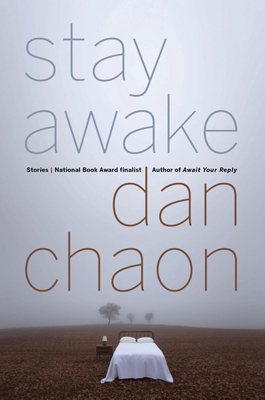
BookBin2012: Stay Awake

Pulling back from the political speak for a little while. You come here for a variety of inane ramblings, so time to switch focus.

Stay Awake is a collection of short stories by author Dan Chaon. I’d never heard of Chaon prior to seeing this book on the “Recommended Reading” table at our local library, but he’s apparently enjoyed moderate success with previous short story collections and novels. With this collection, he examines the darker side of the emotional spectrum through a series of explorations into loss and sorrow.

His prose is at times detached, analytical, which I believe helps immensely as he tackles a series of tales that could very easily slip into the syrupy sanctuary of schmaltzy sentimentality. There’s also an inescapable shifting in his narrative that always leaves you off-balance and uncertain as to what will happen next. His tales are melancholy, morose, strange, and most often unnerving. I also found them to be deeply satisfying.

What can I say? I like the darkness.

There are 12 stories in total in this collection, and each one possesses some strange intimacy with death that I found disturbingly entrancing. I also can’t help but wonder how much loss Chaon has experienced in his life to have such an…open relationship with the many guises of the Grim Reaper. He’s either intimately familiar with it through experience or possesses a very honed morbid sensibility. Either way, his grappling with these various forms of loss is exquisite.

Final Verdict: I don’t know yet if I want this as part of my own collection, but I do believe I would like to further explore Chaon’s oeuvre. His darker sensibilities appeal greatly to my own.

BookBin2012: How to Be A Woman

I do believe that Caitlin Moran and I might have been separated at birth. True, she is a year older than me, we look nothing alike, and there is the whole issue of her being English and me being American. But if I were to believe in sociological/societal/feminist doppelg

BookBin2012: Marvel 1602

As anyone who has followed my literary exploits here at the lair already knows, I’m a bit of a Neil Gaiman fan. Even when I don’t particularly like one of his offerings enough to add it to or keep it in my collection, I still am able to find aspects of the story to enjoy and carry with me. And the stories are always intriguing enough that I keep returning to him as one of my favorite modern genre writers.

My latest library discovery belonging to Gaiman is his 2003 graphic novel Marvel 1602. The year is…1602, and strange events are transpiring all throughout the realm of Queen Elizabeth I. Strange meteorological events, the existence of dinosaurs in the New World, disappearing colonists, savages, demented villains…and the premature arrival of some strangely familiar characters.

That’s right: Gaiman transports a large selection of Marvel heroes and villains back in time to Elizabethan England. Part of what I enjoyed most about this novel was trying to deduce who was whom. Some are easy: Sir Nicholas Fury, Dr. Stephen Strange, Peter Parquagh, Sir Richard Reed, Carlos Javier and his “witchbreed” students.

Wait. I always enjoy saying that name out loud a few times. In a bad impression of Mr. Roarke from Fantasy Island. Carlos Javier.

Heh.

Others are a bit more difficult to suss, but they’ll come to you sooner or later. One is actually the key to the early arrival of our favorite Marvel characters into the timeline of Human existence.

Gaiman’s transition of these characters into an earlier historical period is quite well planned and executed. It definitely helps that his tale is supported by a beautiful pencil and coloring collaboration between Andy Kubert and Richard Isanove, with gorgeous “scratchboard” covers by Scott McKowen. The artwork itself has a rather unique appearance. I did a little research and learned that, rather than sending the pencil work first to an inker, Kubert sent his pencil drawings straight to Isanove for digital coloring, creating what is referred to as an “enhanced pencil” technique. It’s a beautiful and unique art style that I enjoyed immensely.

It’s also enjoyable and impressive, how well Gaiman slips his selected Marvel representatives into historical reality, nipping and tucking the timeline or simply splitting it open per his own crazy creative whims. I’m by no means an historical expert, but I’ve studied enough English history and the early history of America to be able to recognize several real events scattered through Gaiman’s story and to be able to laugh at how Gaiman tweaked them for his own purposes.

Because I’m a bit of an all-around nerd, this kind of historical/fictional commingling amused me greatly. Do I think it would be everyone’s cup of tea? Probably not. Hard-core history nerds would probably grind a molar or two flat out of frustration, and hard-core comics fans might find the historical angle more than just a little below their expected “BAM! WHAM! KAPOW! ZING!” enjoyment level.

However, if you find yourself amenable to all variety of nerdery, and especially if you have a bit of a soft spot for Gaiman and/or characters from the Marvel universe, I think this might be an enjoyable exploit.

Final Verdict: I might be tempted to add this to my library at some point, but not today. However, if you do read and enjoy this collection, you might be interested in knowing it spawned three sequels. One was even written by Peter David. Do with that knowledge what you will.

BookBin2012: Before I Go To Sleep

What’s this? Another blog post? Three in one day? My goodness, it sure is feast or famine here at the lair lately, eh?

Sadly, even with this post, I’m still not finished catching up with my recent BookBin reads. Still haven’t caught up with other posts either…time slips away so quickly lately.

But this has nothing to do with why we’re really here, now does it? And what’s the reason for this latest meeting? To discuss S.J. Watson’s Before I Go To Sleep.

First, I’m doing a rather embarrassing job yet again of trying to stick mainly to books from my own book collection. This is another find that I picked up from the library. How could I resist though? The dust jacket description listed this as “Like Memento on meth.”

I love Memento. No, I don’t also love meth. However, any description that calls upon a Christopher Nolan movie that I actually really like already piques my interest. That being said, I was also slightly reticent in my excitement, considering the last time I allowed myself to be swayed by dust jacket comments.

I’m pleased to say that this novel came much closer to living up to its description than the other novel did. I don’t necessarily agree that it’s a more amped-up version of Memento (I’m assuming that was the implication of the drug reference? What the hell do I know about meth though?). I don’t even completely agree with the comparison beyond overarching similarities. Both have protagonists who suffer from bizarre forms of amnesia in which they are unable to form any new memories.

For Watson’s protagonist, Christine Lucas, her form of amnesia is such that she can form new memories throughout the day, but the moment she falls into deep sleep, everything is lost. Fragments might resurface, but each morning is a frightening state of tabula rasa in which she must be refreshed on everything that is her life now…who her husband is, where they live, what he does, what happened to cause her to lose her memory…it’s rather tiring to consider, really. Imagine having to re-learn everything about yourself each morning, waking up thinking that you’re still in your 20s (Christine’s early memories are the only ones that survive her nightly reboot) only to realize that you’re actually almost 50 and trapped in this hellish mental purgatory.

Of course, this can’t be the only thing going on with this story, with a description like the one that hooked me into picking this up in the first place. Where’s the meth? Well, things don’t seem quite right…even beyond the obvious things. It’s kind of complicated to delve into in a short synopsis, and really, it’s not something that I actually want to get into because I don’t want to spoil anything. Let’s just say that while you might not want a “Remember Sammy Jankis” tattoo, you definitely might want to start writing things down. That might help, because something’s definitely rotten in Denmark.

I will also say this: The layering and complexity of this novel are quite brilliant, especially considering that this is Watson’s first time at the rodeo (oh, there’s something so delightful about mixing British and American slang). While I wouldn’t recommend this novel to everyone (especially those of you who hated Memento, shocked though I remain whenever I encounter someone who doesn’t think it’s wonderful), I do think that it’s a definite for people who enjoy a good psychological thriller.

That being said, I do warn that there are several aspects of the plot that, if thought about too hard, make the entire novel unravel right before your eyes. It’s difficult for me to silence the overly analytical part of my brain, so this happened for me a few times. However, it wasn’t enough to cause me to dislike the book. I think that Watson did a remarkable job of taking this concept and making it uniquely his own. There are just some aspects of the story itself that are intrinsically flawed, both with this and with Memento. If you are able to overlook those flaws, however, I think that Watson’s debut novel is something you could enjoy.

I just read on Wikipedia that Ridley Scott has bought the film rights to this book. I approve of that. I also just read that Nicole Kidman is tentatively being considered for the role of Christine Lucas.

Sigh. Not exactly who I envisioned playing Christine. I think that should be left to an actress whose face still actually has the ability to show a wider range of emotion beyond “Botox” and “Botox.”

/ snark

Final Verdict: As much as I enjoyed this novel once I silenced the nitpicker portion of my brain, I don’t think I would want to add this to my collection. I do think I might want to borrow it from the library for another read, now that I know the ending. It’s definitely one of those books that will reveal more to you once you know how it all wraps up. However, I do think that two, maybe three reads is enough for this one. Of course, this is coming from someone who has seen Memento many more times than three. Would it be bad form to say that I just can’t remember how it ends? 😉