BookBin2012: Heart-Shaped Box

So, remember how crazy I went over the first volume of Joe Hill’s graphic novel Locke & Key?

It’s definitely a series that I want to continue reading, just as soon as the local library starts bringing in other volumes. Either that, or I might just break down and buy the set. I don’t know. Cheap Loba is cheap.

Regardless, I was impressed enough by Hill’s writing that I knew I wanted to experience it in its longer, less-illustrated form. When I returned Locke & Key, I checked to see if the library had any of his books in stock and…huzzah! Indeed, they did.

This is how I ended up reading Heart-Shaped Box…and falling even more in love with Joe Hill.

Okay, for full disclosure, I’m just going to come out and say what I alluded to in my review of Locke & Key: Joe Hill’s full name is Joseph Hillstrom King and he is the undeniable offspring of Stephen King. Why undeniable? Look:

Beyond the aesthetics (by the way, I’m not entirely convinced that Hill is King’s kid…I think King is slowly reincarnating himself and becoming Hill…mark my word, soon King will just disappear and all that will exist will be Hill), Hill definitely inherited his father’s ability to spin a nice, solid scary story. With his debut novel, he tells the tale of aging metal rocker (and oh-so-subtlely-named) Judas Coyne who, in his retirement, likes to work his way through young women on a state-by-state basis (he’s currently with Georgia, but Florida is about to really rile him up), name his dogs after fellow rock musicians (he owns two German shepherds named Bon and Angus), and collect all manner of creepiness. He owns an authentic snuff film, a witch’s confession, and now, thanks to a weird online auction, he owns the spirit of an old man, which comes attached to a suit that arrives packed in? A heart-shaped box.

Hmm.

There is, of course, more to the story behind this haunted suit as well as who is haunting it and how they are linked to Coyne. Hill wouldn’t be much of a horror writer if he couldn’t spin this bare-bones synopsis into something far deeper, far darker, and far creepier than what I’ve written here. Okay, it’s not a lot deeper. He’s not Tolstoy. He is, however, quite a capable storyteller, with a clean, captivating style reminiscent in all the best possible ways of his dad’s earlier works.

I hate to compare son to father, but really? If you’re going to be compared to someone, wouldn’t you want it to be someone like King? Hill manages to take two popular horror tropes

BookBin2012: The Joker

I’ve accumulated a bit of a BookBin backlog and I’m starting to already forget my thoughts on the books that I’ve finished. That won’t be much of a problem with this entry.

I’m not really sure why I picked up Brian Azzarello’s The Joker. I could tell from the artwork that it was based on the Joker as portrayed by Heath Ledger in the Christopher Nolan Batman universe. I make no secret of the fact that I really dislike Nolan’s take on the Dark Knight. I have no interest in seeing this summer’s final offering. I’ll probably rent it later on. Then again, probably not. I guess it all depends on that day’s level of rental-related sadomasochism.

However, I know that Azzarello’s work with 100 Bullets is considered by many to be a graphic novel masterpiece (I’ve yet to experience it, but am willing to take other opinions into consideration).

The problem, however, is that no amount of creativity on Azzarello’s part is going to eliminate the fact that the foundation of this Joker was laid by Nolan. Did I mention that I really don’t like his translation of the Joker?

Well, I don’t.

Therefore, I didn’t really like this graphic novel.

One of the things that I’ve always liked about other interpretations of the Joker is that he is a dark, damaged, duplicitous criminal mastermind, worthy of being considered one of Batman’s number one opponents. Even in Alan Moore’s The Killing Joke, this darker version of the Joker carried within him a sharpness of wit and humor that were completely lacking in Azzarello’s Joker. Instead, in this story he’s nothing more than a bottom-dollar gangster, taking out petty vengeance on those who “wronged” him while he was away at Arkham Asylum.

Also? I know I come back to this all the time, but the depiction of women in this novel was atrocious. Harley Quinn as a mute stripper? (I’m just assuming she’s supposed to be a mute in this storyline, since I don’t believe I read any lines from her at all…she was just in the background, looking naked and lascivious). And a completely unnecessary act of sexual violence to show what an unhinged badass the Joker really is?

Please stop. Stop now.

I will say this: As with The Killing Joke, what ultimately saved this novel wasn’t the writing but the artwork. The combination of Lee Bermejo’s art with Mick Gray’s ink, Patricia Mulvihill’s colors, and Robert Clark’s letters combine for a delicious panorama of the more sinister sides of Gotham City and its seedier inhabitants. Some of the panels are frame-worthy, they’re so viciously beautiful.

Final Verdict: As much as I love the artwork, this is another case of finding the story itself so repulsive and unimpressive that I’m going to have to pass. Already back at the library, where I should have left it in the first place.

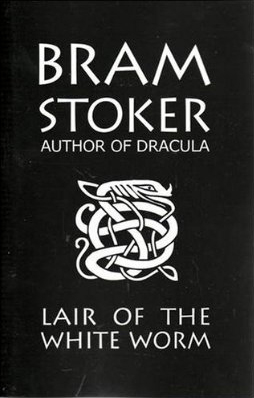
BookBin2012: Lair of the White Worm

Once more to the Kindle! After re-reading Dracula and delighting in it as much as I did my first go-round, I decided that I wanted to read more by Mr. Stoker. Sifting through the free library, I found his 1911 novel Lair of the White Worm. I already knew about this novel and, in fact, had used a play on its title as the name of my first Web site, The Lair of the White Wolf. It seemed like a no-brainer that this should then be my second Stoker experience.

This is, quite possibly, one of the worst things I have ever read. I wish I could say otherwise, but I have nothing kind to say about this book. It’s discordant, rambling, unfocused, can’t decide what story it wants to tell or what genre it wants to be. Is it a battle of wills? Is it a cursed family? Is it a monster story?

The only bit of consistency that it had for a while was the consistent use of a particular racial epithet in regard to a Black servant to one of the primary characters. I was glad when he was killed if only to stop the appearance of this particular word on my Kindle screen, especially as I read a large portion of this book while sitting in airports or on planes. Had I known Stoker had such a propensity for this particular word, I would have chosen a different book to slog through in such public places!

Oh, by the way, sorry for the character death spoiler. Trust me, though, you don’t want to read this novel. It’s terrible. I tried so very hard to come up with a more balanced review, but it simply isn’t within me.

Upon doing a bit of research on the free Kindle version I read, I did learn that this is the abridged 1925 release of the story. Apparently, 100 pages were removed and there were some rewrites. I can’t imagine that this story was actually 100 pages longer; at its abridged length, it felt like it would never end. I also can’t imagine that those 100 pages made the story make any more sense or seem any less ridiculous. It was probably nothing more than another 100 opportunities for Stoker to write the N word.

Needless to say, I won’t be seeking out the unabridged version. I think if I tried to read this story again, I would lose all respect for Bram Stoker as a writer. I’d rather that not happen.

I know that Ken Russell made a movie based on Stoker’s novel, back in 1988. His Lair of the White Worm stars Amanda Donohoe and Hugh Grant. I might have to rent that, simply for the inevitable camp factor.

Final Verdict: I don’t think I have ever deleted a file more quickly or more gleefully.

BookBin2012: Reunion

I came here to write a review of another book I recently finished, but soon realized that I never completed my round of reviews from my last library trip. My mother was right: I’d lose my head if it wasn’t attached.

Ah well. Better late than never, right?

I alluded to this book in my review of Alan Lightman’s Ghost: A Novel. Even though my initial excitement regarding Lightman diminished slightly from Einstein’s Dreams to Ghost, I was still enamored enough of his style and the way his mind processed ideas that I wanted to read more. Reunion was the only other Lightman novel in stock at the local library, so I quickly added it to my stack.

Yet again, I find myself visiting the concept/complaint of the “well-worn trope.” There is no new thing under the sun and certain stories have been and will continue to be retold until the end of existence itself. One of these stories is that of time travel, of returning to a place, a person, a moment in our pasts and…what? Changing it? Reliving it? Erasing it? Cherishing it?

In Reunion, Lightman takes his protagonist

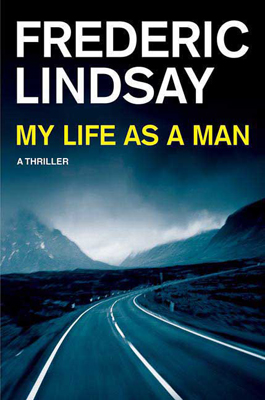
BookBin2012: My Life as a Man

I have to confess this to you, denizens: I’m severely confused by this book. See, the reason that I checked out Frederic Lindsay’s My Life as a Man was because the cover stated it was a thriller and scarier than Satan’s nightmares. Or something like that. Point is, it was supposed to be a chilling thrill ride, which sounds precisely like something I wanted to read.

There was nothing chilling, thrilling, or, ultimately, fulfilling about this story at all, denizens. I suppose as a coming-of-age story, it succeeded in being different. The problem, however, is that I wasn’t sold just a coming-of-age tale. I was sold “The scariest coming-of-age story you’re likely to read. Lindsay will scare the bejesus out of you.”

So wrote Kirkus Book Reviews.

Apparently, bejesus no longer lives inside me, because he certainly wasn’t scared out by this book.

I will grant Lindsay this: He had an interesting hook for the start of his novel. After being fired after only a week at his factory job, 18-year-old Harry Glass decides that it would be a good idea to leave the factory for the last time in his former boss’s car. Only problem is that the former boss’s wife is in the car. They go back and forth for a little while before deciding to keep going…then they realize there’s something in the trunk of the car that certain dangerous people might want back…then they end up with this really odd couple who might be married or might be siblings…or might be both…and hilarity thus ensues.

I honestly kept expecting things to get interesting, especially when our daring duo end up in the hills with the questionably related creepy farmers. The cover wouldn’t lie to me, would it?

Yes. Yes, it would.

Final Verdict: Back to the library you are sent. I have no interest in ever reliving my life as a man.

BookBin2012: Ghost: A Novel

I actually have a few recently finished books waiting in the wings for their big blog review debut. I’m hoping that now that my schedule is slowly clearing itself, I’ll have a little more time to work on them.

Hopefully not too much time though. Ahem.

Now, on to the first review. I read Alan Lightman’s novel Einstein’s Dreams last year and loved it so much that I knew I wanted to read more by this author. I was, therefore, pleasantly surprised when I discovered two more of his books at my local library.

The first of these two books that I read was Lightman’s 2007 offering, Ghost: A Novel. The story follows protagonist David Kurtzweil, a former bank employee who, after being laid off, finds new employment at a funeral home. As one can easily deduce from the title, David has an inexplicable encounter of a possibly paranormal variety while at his new place of employment.

Actually, one of the things that I loved most about this book was that Lightman doesn’t at first reveal what David saw. He keeps David’s experience a mystery, alluding to it, circumnavigating it, flirting with it…but never quite meeting it face-to-face. It takes a delicate touch to be able to write a novel called Ghost without actually discussing…the ghost.

Unfortunately, Lightman does finally reveal what David witnessed, and I have to admit, it was a bit of a letdown to me. I think it’s because I was hoping that Lightman would simply not reveal what David saw. I think the further along the story progressed and the longer Lightman remained vague, the more I was convinced that the novel could only possibly work if the reveal never occurred. Perhaps that was my own failing as a reader. I don’t know.

I do know that Lightman once again enraptured me with his clean, elegant prose. His style is stark and simple, extremely reminiscent of Hemingway in many ways.

Unlike Einstein’s Dreams, this novel is a little less stream-of-consciousness, far more regimented, and a lot longer. Perhaps a bit too long. I found myself growing weary of some of the plot twists toward the end, but, again, this might be a reflection of my response to the reveal that I had hoped would never arrive.

Final Verdict: I don’t know whether or not I would ever want to re-read this book. While I very much enjoyed the experience on a holistic level, the devil is, indeed, in the details…and the few negatives that I have detailed in this review are enough to convince me not to purchase a copy, but to keep this in mind for a future library revisit.

I still think that Lightman is very much worth reading. I still treasure the experience of reading Einstein’s Dreams, and I promise that the next Lightman book that I review here will be a much more ebullient posting than this one.

BookBin2012: Locke & Key: Welcome to Lovecraft

Okay, I’m just going to wait a moment while all you Cthulhu geeks wear yourselves out from your fannish squee frenzy.

All better? Good.

Yes, the subtitle of this first volume of what is currently a five-volume series (the fifth volume has yet to be released, however) is a sly bit of homage to that great proprietor of purple prose himself, H.P. Lovecraft. And, where else would the fair city of Lovecraft be located than in Massachusetts? I’m sure it’s quite close to Arkham and the prestigious Miskatonic University.

For the purposes of this graphic novel, Lovecraft is also the location of Keyhouse, the ancestral home of Rendell Locke, the family patriarch whose brutal murder during a home invasion sends his widow and three children on a cross-country journey from San Francisco back to the East Coast town he once called home.

Of course, any place located in a town named Lovecraft isn’t going to be level in any sense of the word. Keyhouse is vast, twisted, and full of secrets. Believe me when I say that you’ll be dying to learn them all.

Locke & Keye is a collaboration between celebrated genre author Joe Hill and artist Gabriel Rodriguez. I’ve raved about Rodriguez here at the lair already; he’s the artist behind the CSI graphic novels I’ve recently reviewed, the best being Secret Identity. I was so over-the-top happy to see more of Rodriguez’s exceptional art, which is even more impressive when he’s working with original characters rather than ones based on predetermined appearances. His visual translations of Hill’s bleak, unsettling tale spread through the pages of this novel in a rich, haunting diaspora.

I don’t want to go too far into the details of the story itself. Suffice it to say, the crux of the story is discovery…discovery of strength, of secrets, of keys to unlocking all the mysteries hidden within the confines of the Locke family’s new home and new life. Hill is a king among storytellers, and this is a shining example of his royally inherited prowess.

And if you think that last sentence was a little bit leading, you might have something to stand on there. I won’t say any more about it. I’ll just leave this photo of Joe Hill here, for you to ruminate on for yourselves…

Final Verdict: I completely enjoyed the first part of what I’m hoping to discover is a holistically creepy, captivating series. Bottom line is, if the subsequent volumes are even half as amazing as this first part, it’s going to be an awesome ride from here. I’ve already added this volume to my wish list (alas, this was yet another library loaner) and am contemplating whether or not to just dive in and collect them all. I do believe that my graphic novel collection is growing more rapidly than any other part of my library…and, with stories like this one lining up for consideration, I’m very much okay with that.

BookBin2012: Sin City: Hell and Back

This is an addendum of sorts to my last book review. Really, though, it’s not even going to be a review.

I have nothing to say about Frank Miller’s final Sin City entry, Hell and Back. I didn’t like it. I didn’t like the story. Didn’t like the writing. Didn’t like the artwork.

Just didn’t like it.

I wish I had more to say about this book, but I really have nothing else I want to say. My response was decisive and persistent the entire time I read this book; to be honest, I actually dreaded this particular review because of my keen lack of interest or investment. I suppose it’s my fault for picking up the final volume in the series without having read any of the others. However, I also didn’t like the movie based on three other volumes from the series. I haven’t seen the film since it was at the theater, so I don’t remember specifics of why I didn’t like it. Of course, this speaks volumes, in my mind at least. If I can’t remember anything about it other than it left a lingering tang of disinterest on my palate, it’s obviously not going to be high on my list of re-watches.

Subsequently, this book isn’t going to be high on my list of re-reads. I’m also not in any particular hurry to track down any other volumes from the series. I can’t say I’m the least bit surprised by my reaction to this novel. I remember the hype surrounding Miller’s saga. In fact, this might be an early example of my hype deflector going into overload. The more I heard, the more marketing I witnessed, the more raging fanboy glee I watched, the less interested I became in this series. I’m sure there are earlier instances of simliar responses from me, but I can’t think of them right now.

Final Verdict: Meh.

BookBin2012: All-Star Batman & Robin, The Boy Wonder, Volume 1

Well, there’s a mouthful of a title, right?

Seems that I went on a bit of a binge the last time I hit the local library, especially when it came to graphic novels. This time, I was surprised to find a couple of selections from Frank Miller’s catalog. I’ve been looking for Miller’s work to show up for a while now; mostly, I’ve been waiting for his Batman work as well as 300. I got part of my wish with this selection.

Even though it wasn’t The Dark Knight Returns, which is what I was hoping would show up, I was more than willing to give All-Star Batman & Robin a go. With this series, we get Miller’s take on how Dick Grayson found himself under the protection and training of Batman after events left them sharing a defining moment involving their respective parents (how’s that for vague?).

Mainly, I was drawn in (ha) by the fact that Jim Lee was the artist for this collection. Lee was an integral force behind the artwork of the X-Men back in the late 80s and 90s. He pretty much helped establish the appearance of that merry band of mutants to which I was first introduced through the Saturday morning cartoon that I still love. Not only that, he helped Chris Claremont create the character of Gambit, who was always one of my favorites on the cartoon. Also? Anyone who gets a vote of confidence from Chris Claremont definitely gets my vote, too.

Obviously, at some point Lee shifted his talents from Marvel to DC, which led to his teaming up with Miller on this retelling of the Boy Wonder’s arrival in the Bat Cave.

Taken in its entirety, this is an amazing collection. Miller’s dark sensibilities work well in conjunction with the world of the Dark Knight. This is not the glowing realm of Metropolis, protected by their alien immortal in bright patriotic splashes of blue and red. This is seedy, gray Gotham, full of characters composed of gritty complexity. There are rarely clear delineations between good and evil, as intent and integrity blur into the deep shadows that Lee so eloquently elicits through his artwork. Kudos should also be given to Scott Williams and Alex Sinclair, who were responsible for inking and coloring, respectively.

Where the weakness of this collection shows is where the weakness of most comics appear: the depiction of female characters. Miller’s women are vapid, vituperative, and vindictive, not to mention extremely objectified through language and artistic renderings. We meet Vicki Vale in her very skimpy lingerie. Later, we see her preening in anticipation of getting close to Bruce Wayne and his huge bank account. The Black Canary is a busty, bawdy barmaid with indecent curves and impossible heels. Wonder Woman…she was the greatest disappointment of all. Apparently, in Miller’s Gotham, a woman of strength and independence by default must be an angry, violent man hater secretly harboring crippling lustful urges toward the primary target of her man-hating ways.

Right.

Miller’s depiction of all the women in this collection was infuriating, but no take was more insulting or offensive than his on the Amazon goddess.

Plus, there’s the added insult of the comic-standard ass angle in which we see nothing but the…butt of whatever woman happens to be in frame at the present moment. What a dull, tedious angle, lacking in any artistic integrity or imagination.

That being said, I did find certain other choices by Miller to be intriguing. I liked that his Batman was just the least bit, shall we say, unhinged. Sure, he’s the Dark Knight. Yes, he’s a crime-fighter. But he’s not a “hero.” He’s surly, unpredictable, uncooperative and just a tad bit…cracked. He refers to himself as “the goddamn Batman,” which made me think of the awesome Twitter feed of the same name every time I read it. I’m assuming this comic is also from where the idea for Christian Bale’s gravelly, growly Batman voice came? Interesting. Works better in print form.

Final Verdict: I’m not really sure I want to add this to my library. As much as I love Lee’s artwork as well as many aspects of Miller’s re-imagining of Gotham and its Dark Knight, I didn’t feel any particular desire to revisit. This might change. If it does, I’ll let you know.

BookBin2012: Deogratias

After stating in my last review that I find fictional uses of September 11 to be disconcerting, it’s a strange twist for me to then turn to a graphic novel recounting of the 1994 Rwandan genocide.

Truth is, the deeper down the graphic novel rabbit hole that I dive, the more blown away I am by the creativity and introspection shown by the amazing artists I’m discovering. When I saw Jean-Philippe Stassen’s Deogratias: A Tale of Rwanda, I didn’t think twice about grabbing it from the library shelf. David Beauchard and Craig Thompson have more than convinced me that this medium is not only capable of respectfully dealing with tough topics, but it is also in many ways more appropriate when dealing with things that escape the limits of language itself.

I should have been clued in by the expurgated length of this novel that it wasn’t going to be terribly provocative; however, the topic alone more than fulfills that expectation. Even nearly 20 years later, I still can’t wrap my brain around how the world sat by as so many lives were brutally snuffed from existence. Then again, most of the things that humanity does to itself elude my understanding. The one thing that humans will probably never truly understand is human nature.

Stassen tells a very carefully controlled story, centering on the titular character Deogratias (a Latin liturgy meaning “thanks be to God”). We experience the outbreak of violence through this teenaged boy’s view as he watches his Hutu kinsmen rise up against the local Tutsi. Interspersed are moments embedded 5 years after the fact, in which we see how the events have irrevocably altered him…alterations that Stassen conveys in a rather interesting visual choice.

In some ways, it feels almost disrespectful to have condensed the events of this genocide into such a short novel. Then again, I don’t necessarily think I would have been able to absorb a visual account any longer than this, considering how bleakly explicit Stassen’s artwork became at times. There are some things you simply don’t need to see to comprehend how awful they were.

An obvious comparison at this time would, of course, be Art Spiegelman’s Maus, not only for the graphic treatment of a graphic historical event, but also for shared allegorical elements. Spiegelman’s groundbreaking novels, however, are far more complicated than Stassen’s tale. Still, I believe that Stassen pays subtle but deserved obeisance to Spiegelman’s novels through certain choices in his storytelling.

Final Verdict: As an interlude to something more probing and holistic, this is worth the time to read; however, as a stand-alone, it falls short of the greatness to which it could have transpired.