Cravenous: A Nightmare on Elm Street

If ever the hashtag #SorryNotSorry were applicable to anything I have done here at the lair, this is the time. I stated in my initial Cravenous post that I wanted to examine Wes Craven’s lesser-acknowledged films…the ones that didn’t include “Nightmare” or “Scream” in their titles. However, I simply couldn’t skip this film, denizens. My horror-loving heart is so full with joy and exuberance for this particular movie that the thought of not taking full advantage to re-watch and re-examine it filled me with an aching sadness. Besides, I’ve actually never written specifically about the film. I’ve done a Poster Pick examination of the film’s poster (ah, Poster Picks, I miss you so). I’ve also written about Nancy Thompson as a Lady of Horror May-hem.

Now is the time on Sprockets when I finally write about the actual film, and the most significant solo contribution that Wes Craven made to the horror genre: A Nightmare on Elm Street.

anoes

Die-hard horror fans will already know how Craven found real-world inspiration for this script within several news articles that detailed the mysterious sleep-induced deaths of Laotian refugees who had recently immigrated to the United States. They claimed that something was trying to kill them in their dreams. No one believed them; in one instance, a young Laotian man struggled to stay awake for several days before his family finally got him to sleep. I’m sure you know what fate he met.

Craven, of course, being fascinated already by the historical terror and power of dreams (he had trained himself since college to dream lucidly and to keep a dream journal), instantly knew that he wanted to come up with a movie that centered on a powerful dream demon who would take out his victims when they were most vulnerable. He also knew, thanks to his daughter Jessica’s influence, that he wanted a strong heroine to lead his story. Remember how I wrote in my review of Swamp Thing that Jessica was disappointed in her father’s use of the cliched “Tripping Heroine” trope? With Nancy Thompson, Craven set out to undo that disappointment tenfold.

What Craven did was create one of the most significant (though ultimately too revisited) villains of modern horror as well as one of the fiercest horror heroines. We’ll get back to Nancy in a moment, though. Now, rather than simply regurgitating to you all the fun factoids that I have learned about this film throughout the years of my obsession, I’m instead going to encourage you to seek out the InfiniFilm version of the movie. It’s chock-full of special features, including two full-length “commentaries” (I feel as though one of the commentaries was more of a pieced together selection of interview bits from various players in the film and crew rather than a legitimate commentary session). Pay special attention during the commentary with Craven, Heather Langenkamp, John Saxon, and cinematographer Jacques Haitkin to hear mention to how this was for the laser disc release of the movie. Good times.

A couple of intriguing moments from the commentaries that I would like to focus on came from two of the lovely ladies to star in this film. First was from Amanda Wyss, who played Tina Gray. She referred to the teens in this film as “shelterless.” I think is a brutally beautiful way to describe Freddy’s teen victims. They had no consistently protective force in their lives (with possibly the exception of Glen). Even Nancy with her stalwart police officer father couldn’t completely depend on him. Having divorced parents meant that she only had access to him in a limited capacity. Instead, she was living with her mother, who chose to deal with the secret that the Elm Street parents were keeping from their children by disappearing into alcoholic fugues as often as possible. That takes us to the deeper truth of this “shelterless” existence. Nancy and her friends were being taken out by this dream demon because of the sin of their parents. What began as these parents taking the hard-line final choice when it came to protecting their children from the neighborhood child molester and murderer ultimately led not only to their inability to protect their children but their culpability in their children’s murders at the hands of the man they killed. It’s quite the perverse circle jerk, if you think about it.

Conversely, I suppose that you could argue that the parents provided the wrong sheltering. Nancy’s mother sheltered her from the truth of who Fred Krueger had been. All the parents sheltered their children from this truth, and that cost them all dearly.

The second moment was hearing Wes Craven and Heather Langenkamp refer the character of Nancy Thompson as a “warrior woman.” It really struck a chord with me and made me re-evaluate my use of a more accepted term when it comes to the surviving females in horror movies: the Final Girl.

I’ve always taken issue with the use of “girl” in the comics world. Whereas the use of “boy” for the male superheroes is rare (and usually refers to an actual young character), there are several instances of “girl” in the names of female superheroes, including those who are clearly not les petites filles. I can’t help but wonder whether the absence of “boy” isn’t in part because of the negative connotations this term carries in reference to a grown man. One need only look to segregation-era America to understand the dismissive, offensive implications of using a child identifier for an adult man. While not on the same derogatory level as “boy” is in this context, I would argue that “girl” in reference to a grown woman, or even a woman on the precipice of adulthood, is similarly dismissive. Additionally, it’s infantilizing the character in question

BookBin2015: If You Were Here

ifyouwerehere

It would seem that BookBin2015 is the Year of Alafair Burke here at the lair. I wrote back in June all about discovering Burke’s Detective Ellie Hatcher series and how I had finally found a detective/mystery series that I enjoyed (other than J.K. Rowling’s Robert Galbraith efforts).

Therefore, it was with great joy and gratitude that I discovered If You Were Here, a new-to-me Burke novel, at the B&B we recently stayed at out in California, and was told by one of the staff that I could take the book with me if I liked it enough to want to finish it. Generous B&B is generous.

So in this novel, we meet a new character from Burke’s growing pantheon of strong, inquisitive women: McKenna Jordan, a former NYC ADA who is now a features reporter as a result of making a poorly considered choice early in her legal career that blacklisted her from that profession. In this new role, she comes across an incident in which a woman saved a young man who fell onto the subway tracks right before he was struck by an incoming train, and then bolted from the scene before anyone could identify her. Turns out, the woman was chasing the young man because he had just stolen her phone. It also turns out that McKenna thinks she knows who the woman is: a friend who disappeared nearly a decade ago and had been presumed by police to be dead.

Not one to be put off her gut instinct, McKenna latches on to trying to discover the mystery woman’s identity, which takes McKenna back through the tumultuous events that led to her leaving the ADA’s office and that McKenna realizes might somehow relate to her friend’s disappearance.

It all becomes tightly woven into an intricate pattern that only drops a stitch every now and again. It was a compelling enough story, even if a few times I grimaced at the perfect way certain things aligned. This is ultimately what always pulls me out of a mystery novel: I like coincidence to a point. For certain mysteries to pan out successfully, they require a level of coincidence that I often simply cannot buy into. Those instances in this story were enough to allow me to slip out of the zone of suspended disbelief enough to lose me from its grip.

Final Verdict: While I enjoyed reading the book and greatly appreciate the generosity of the B&B that allowed me to take it with me to finish it, I do believe that I shall be returning this on our next visit. I don’t see the need to keep it, but I think it could make a nice diversion for a future guest.

BookBin2015: Love and Other Wounds

laow

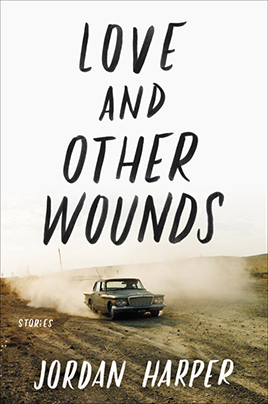
Fast review of a fast read. I’ve been trying to give short story collections a better go. I have always loved short stories, but sometimes they get lost behind the larger-scale worlds of their full-length siblings and I end up neglecting them. I decided to rectify that during one of my recent library trips by picking up a couple of short story collections. First on my list to read was the shorter of the two, Jordan Harper’s Love and Other Wounds.

According to his dust jacket bio, Mr. Harper is a producer and writer for the Gotham television show. I haven’t seen the series, so I don’t know whether this is good or bad. I do know that his short story collection is a little bit of both. All of the stories are dark, which I typically like. Some of them are exceptional for their imagery or their inventive plot deviations. Others are kind of okay, while some left me feeling distinctly apathetic.

I suppose that’s not a terrible review. Truth is, if you’re looking for something to keep you company on a flight or a cold winter evening when you’d rather just stay in, then this cavalcade of characters could provide you with what you seek. Just be sure that you enjoy dark topics.

Final Verdict: Not a terrible way to pass time, but not really a book that demands revisiting.

BookBin2015: 99 Days (Vertigo Crime)

99days

I think the thing that struck me the hardest about Matteo Casali’s graphic novel 99 Days was the mention of how most people in this country heard more and remember more about Kurt Cobain’s suicide than the atrocities that occurred around the same time in Rwanda.

For the record, Kurt Cobain killed himself on April 5, 1994. Beginning two days later, from April 7 to July 15, 1994, the Hutu-led government of Rwanda targeted the Tutsis for extermination, killing between 500,000 to 1 million Tutsi

Cravenous: Invitation to Hell

invitationtohell

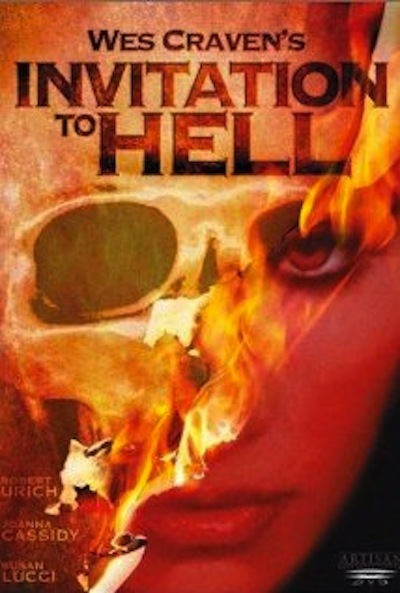
The next directorial project that Wes Craven took on after mucking through the swamps of South Carolina was 1984’s Invitation to Hell, a television movie-of-the-week made for ABC for the financial equivalent of a pack of playing cards and a pouch of Big League Chew.

Okay, it wasn’t that cheap, but the production values were definitely much smaller than Craven’s previous two films. However, since Craven began his career in a low-rent fashion, this was somewhat of a homecoming in ways, I suppose. Plus, he had solid backing from a legitimate production source as well as some relatively high-rent names when it came to television. We get Robert Urich as protagonist Matt Winslow and Susan Lucci as Jessica Jones, AKA “You’re the Devil!” (trust me, I’m not spoiling anything with that statement), plus post-Blade Runner Joanna Cassidy, Joe Regalbuto (soon to be known as Frank Fontana on Murphy Brown), kiddie actors Barret “Neverending Story” Oliver and Soleil “Punky Brewster” Moon Frye, instantly recognizable genre character actor Kevin McCarthy, the Bad Seed herself Patty McCormack, and a don’t-blink-or-you’ll-miss-him appearance by Michael Berryman (see, I told you Craven was faithful to his actors).

Seriously, not a bad collection of talent there. Plus, any time you get to watch Susan Lucci chew scenery like a pit bull who hasn’t been fed for a week? Who the hell doesn’t want to watch that? In fact, you can watch it on YouTube right now rather than reading any further, if you’d like. I won’t be mad. Promise.

The story itself isn’t terribly complex. Jessica Jones runs a spa and club in the lustrous (and deliciously named) town of Steaming Springs. It’s really a front for her cult of worshipers, to whom she grants unlimited wealth and power, so long as they join her club. Literally. Matt Winslow and his family play the happy but unknowing new residents who move to town so Matt can take a job finishing the programming on his latest and greatest invention: a space suit that can withstand extremely hot conditions.

Wow. Do you think that might come in handy at some point in a movie that takes place in the town of Steaming Springs?

This was such a slice of nostalgia to watch. I feel as though the era of the prime-time MOTW is well behind us. However, there was a time when movies like this were a cheesy joy to behold. And this particular offering actually is solid little gem. The script, written by Richard Rothstein, is somewhat pedestrian. Rothstein’s greatest contribution as of this writing, beyond this script of course, was coming up with the story for Universal Soldier. So there you go.

However, Craven kept a tight directorial rein on the story, moving the action along at a satisfying pace. Don’t expect a whole lot of gore. This was regular television, after all. Craven always battled with censors throughout his career, but you can bet that they were in full attack mode whenever they knew he was dabbling in television work. Also, this was the Reagan-era 80s. Milquetoast was considered offensive before the watershed hour.

Even without the excessive gore of Craven’s previous horror fare, he still does give us a lovely trippy end sequence when Matt Winslow goes into the depths of the underworld to save his family. I feel as though this whole sequence would be AMAZEBALLS with some narcotic assistance. Not that I’m condoning that kind of behavior in any way. Still, it’s solid visual craziness that drops on you in a most unexpected but delightful way.

I definitely wouldn’t consider this as one of Craven’s top offerings, but it’s still an enticing offering from him to the horror genre.

Cravenous: Swamp Thing

swampthing

I’d never seen Wes Craven’s 1982 film Swamp Thing prior to taking on this project. I honestly don’t know how I never saw it, since it seems like it would be my bailiwick. I wasn’t as into comics when I was little, however. I went straight for the jugular when it came to genre fiction and immersed myself from an early age in horror. I didn’t start seriously taking note of the comics world until my teens. Also, by the time I did start showing an interest in comics, Swamp Thing wasn’t necessarily the comic hero I was looking for.

Interestingly, Craven knew nothing of the character when he agreed to take on the movie. He stated in a commentary on the movie that this was because the church in which he grew up didn’t permit comics. Perhaps he meant that, because he grew up not reading comics as a child, he never saw the value of doing so as an adult, since Swamp Thing didn’t debut until 1972

BookBin2015: Be Afraid, Be Very Afraid: The Book of Scary Urban Legends

beafraid

I picked up Jan Harold Brunvand’s book Be Afraid, Be Very Afraid completely on a whim. I happened to notice it on a shelf near a section in the library I usually don’t visit. I saw it was about scary things. I like scary things. I threw it in my basket.

Yes, I load a basket when I go to the library.

The book was pretty much what you would expect it to be: a compilation of urban legends in their various iterations through the years. However, I didn’t learn anything from this book that I hadn’t already learned from the Internet. I kind of feel as though books like this are pointless now, with so much information online about urban legends. Want to know if something is true or a legend? Go to Snopes like everyone else.

Sorry. I feel terrible for pointing people to online rather than a book, but sometimes online is better.

Final Verdict: Back to the library with you, urban legend book.

BookBin2015: Batwoman Volume 5: Webs

batwoman_webs

This, sadly, is going to be both my shortest Batwoman review and my last Batwoman review. At least for now. They’ve ended her solo run and, while there is one final graphic novel out there, I have no intention of buying it. I couldn’t care less how Marc Andreyko ended this series. By the time I finished this graphic novel, I was left so apathetic that I couldn’t even muster the energy to be furious that the last two pages pretty much seemed to imply that Batwoman was about to be raped by her new nemesis, Nocturna.

Okay, not completely bereft of fury. Seriously, DC? It’s not okay for Batwoman to marry her girlfriend but it’s okay for her new enemy to mentally Roofie her as she’s trying to fall asleep and trick her into believing she’s someone else so that Batwoman won’t fight her off? Oh, and really subtle artwork in that last panel, of Nocturna, who is apparently a vampire or vampire-like character, penetrating Batwoman with her fangs while Batwoman arches back against her while wearing just a camisole and undies. And with a look on her face as if she were enjoying what was happening to her. Great message there. Absolutely.

What utter bullshit. Sorry, but there’s no tactful way to put it. The whole novel was just example after example of piss-poor writing and some of the most mediocre artwork to ever grace a Batwoman comic. There was nothing satisfying about any of this collection, starting with Andreyko’s terribly anticlimactic ending to the story arc that Williams and Blackman started (and should have been allowed to end, dammit). And then to end the novel on that so-not-kosher, rapey WTAF were you thinking note? Allow me to be thoroughly clear with this sentiment, DC Comics. Fuck. You.

So utterly disappointing. Thanks, DC, for ruining my current favorite character from your comics line. Oh, and it looks like you’ve turned Batgirl into a character I don’t really want to follow anymore either. Thanks. For nothing.

Final Verdict: The only redeemable thing about this collection is the clean copy of that great WWII-era artwork of Batwoman as one of the ball players from the All American Girls Professional Baseball League. I think I’m probably just going to slice that out and then get rid of the rest of the book. Not even going to donate it. Just going to toss it in the recycle bin. That’s how much I hated this collection.

Cravenous: Deadly Blessing

The next film in the Cravenous line-up is Wes Craven’s 1981 offering, Deadly Blessing.

deadlyblessing_poster

Could your poster be any more sexualized?

[Loba Tangent: Here’s a treat that might not be around for a while. I couldn’t find this Wes Craven movie on DVD, but the whole thing is currently on YouTube. Go now. Watch it while it’s still available, denizens.]

Right off the bat, you’ll notice several differences between Craven’s first two mainstream films and this one. First, it looks far more stylish and professional. Pays to have a far larger budget. Whereas The Last House on the Left came in around $90,000 and The Hills Have Eyes edged closer to $230,000, this one clocked in at an impressive $2.5 million. Switch up from 16MM to 35MM film, get yourself a big-name star with Ernest Borgnine, get yourself a big-name composer with James Horner (this was actually one of his first composing gigs), and, hell, while you’re at it, treat yourself with a couple of newly minted actresses: Sharon Stone and Lisa Hartman.

Craven actually got this movie after impressing one of the producers from his previous directing gig, a 1978 made-for-television movie called Summer of Fear (or Stranger in Our House, depending on where you look). Unfortunately, the only way I could find to watch this one is to buy the DVD, which is currently ridiculously priced because clearly people want to make money off the fact that Craven is now dead. Because people suck. It’s a shame, though, because this sounds like a movie I would totally dig, if only for that movie-of-the-week nostalgia. Based on a Lois Duncan novel, it stars Linda Blair as a young woman coming to terms with the fact that her recently orphaned cousin who moved in with the family might possibly be a witch. I’ve seen a couple of clips from it. Totally groovy late 70s style. Also? A beautiful classic Dodge Charger. Clearly, someone had reason to have some spare Chargers setting around, waiting for some screen time. Luckily, this one hadn’t been painted safety orange just yet.

Anyway, Max Keller decided he wanted Craven to direct the next picture he produced, which ended up being this somewhat sleek yet somewhat clunky “religious horror” tale set among a fictional fundamentalist religious sect known as the Hittites. This time, Craven was only a co-writer, working on revising a rather messily composed screenplay by Matthew Barr and Glenn Benest, the latter of whom was responsible for adapting Duncan’s novel for the Linda Blair MOTW. Even though Craven was only a co-writer, there’s little room for doubt that he took this script as an opportunity to this time explore some of those fundamentalist demons that haunted his own past. You also can recognize Craven’s aptitude for naturalistic dialogue. That was always one of the beautiful things I loved about Craven’s writing: He had this enviably innate sense of rhythm when it came to character dialogue. Even when dealing with the stilted delivery of green actors, that rhythm still made it through.

Ultimately, I would consider this movie the first major disappointment from Craven’s directorial oeuvre, thanks to several factors that were completely out of Craven’s control. First, of course, was the script, which he fixed but clearly did not write. Second was the too-late realization on Craven’s part, which he discussed in later interviews, that basically this film’s larger budget came at a much larger cost to his creative freedom. The linchpin evidence of this truth? The ending of this movie. It’s appalling. Seriously, it makes absolutely no sense at all. Slight spoilers ahoy: The movie, which as I have already mentioned, was a religious horror akin to movies like Rosemary’s Baby or The Sentinel, and moves along at a fairly logical pace, playing out more like a mystery thriller but with some solid scares and some appeasing horror gore. The ending, though? It’s like it came from a completely different film. It suddenly veers off onto some bizarre supernatural horror tangent, complete with cheesy demon rising from the pits of hell to capture our heroine in the final scene. It’s such a ludicrous moment that swings in so far from left field, you’d think Pluto was closer in orbit than this ending. It was shockingly ill-conceived and jars you completely out of the movie, which might not have been spectacular but was at least tolerable up to that point.

I get what the producers wanted. They wanted a purely shocking surprise ending that none of the viewers would expect. There’s nothing wrong with that, so long as it’s done with some modicum of logic. Even the most fantastical stories need to have some kind of logical structure or you’re going to lose your audience. Supernatural horror, when done well, can be incredibly frightening and satisfying. Craven would prove this point more than adequately when he finally decided to venture on his own terms into the realm of the supernatural with his greatest solo contribution to horror mythology. This, however, misses the mark in a surprisingly ludicrous fashion.

Besides, this film already contains a twist that works in context with the story laid out before its reveal. This is the tricky part though. This particular reveal is pretty significant and one that is telegraphed ahead of the reveal to the audience but in a way that some might miss. There’s another horror movie that came out a few years after Deadly Blessing with a similar, though more tantalizing, version of this film’s surprise reveal. I don’t really want to say more. Suffice it to say, this could have passed as the one mostly satisfying surprise of the movie.

As I mentioned previously, this time we get more familiar faces, with Ernest Borgnine pulling a quick “Dr. Loomis” guest role for Craven and Lisa Hartman and Sharon Stone in one of their earliest movie roles. Stone would never physically appear in another Craven movie, but we’d encounter her in mention many years later in another iconic Craven-directed movie

Cravenous: The Hills Have Eyes

First, some full disclosure: I’ve skipped a Craven-directed movie, but some of you might not realize it. Remember what I wrote in my first Cravenous entry about the relationship between horror and porn during the late 70s and 80s? Well, Craven’s next documented movie after 1972’s The Last House on the Left was a 1975 Swedish-cocreated “arthouse porn” called The Fireworks Woman. You might have never heard of it as a Craven film because he wrote and directed it under the name “Abe Snake.” Gee, wonder why. He appears in the film as well. See?

The Fireworks Woman

Doesn’t he look groovy?

The movie is available online if you’d like to watch it. It’s about a brother and sister’s sexual obsession with each other. I decided to skip it, but you feel free to tackle that one, denizens. I’m holding out for the other Craven movie that features a canoodling brother and sister team.

/foreshadowing

[Loba Tangent: Oh, and just in case you’re wondering about the interconnections between these two genres? It’s because a lot of horror movies received X ratings from the MPAA, and the only theaters that would go anywhere near such a rating were…you guessed it: adult movie theaters. See? Travis Bickle could have taken Betsy to see a nice Wes Craven movie on their first date…]

So next in the horror line is Craven’s 1977 film The Hills Have Eyes.

We get some recognizable faces this go, with Horror Queen Supreme Dee Wallace in one of her first film roles. Also making one of his earliest appearances in movies is Michael Berryman, the gentleman whose unique visage graces this movie’s poster. Berryman, whose Hypohidrotic Ectodermal Dysplasia causes his odd appearance and leaves him with no sweat glands, hair, fingernails, or teeth, has bankrolled a full career from horror and science fiction movies, thanks in part to appearing as Pluto in this movie. We’ll even see him a few more times in future Craven films, as the director was often quite loyal to his actors.

As with his first film, Craven clearly still was fascinated by the exploration of humanity’s depravity and breaking points. He also was still fascinated by exploring the superficiality of our “civility.” No matter how refined we imagine ourselves to be, we still are animals