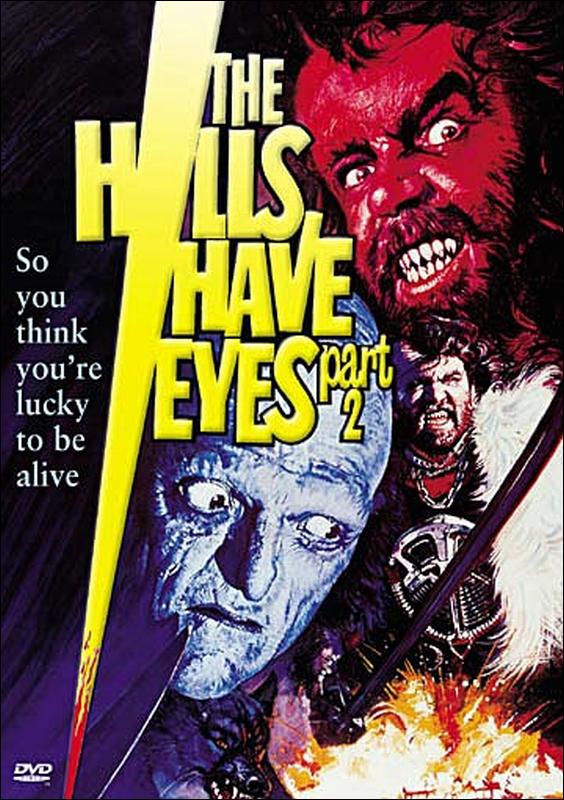
Cravenous: The Hills Have Eyes Part 2

hhe-ii

I’m honestly surprised that Wes Craven agreed to tackle a sequel to his 1977 movie The Hills Have Eyes, especially considering how adamantly against an open ending he was for A Nightmare on Elm Street. Then again, even though The Hills Have Eyes Part 2 came out after Nightmare, Craven started working on it before that film released. Perhaps his experience with this film was partially what drove his disinterest in leading another of his films down the franchise route.

There’s not really a whole lot to say about this sequel. True to most 80s horror sequels, it takes the original idea, guts it of value and back-fills it instead with more gore and more gratuitous nudity. That’s pretty much this film in a nutshell. The only original characters to return for this film are Michael Berryman’s Pluto (who gets royally shafted in this film), Robert Houston’s Bobby, and Janus Blythe’s hill girl Ruby, who now goes by Rachel. Oh and Beast, the German shepherd, who is probably the most interesting character from the entire film.

The premise is that Bobby is still severely traumatized by the events of the first film and when he learns that the motocross team he trains and has developed a high-octane fuel for is going to compete in the desert near where those events happened, he freaks and can’t go. So his wife, Rachel/Ruby, takes his place and leads his unknowing team of dirtbiking dudes (and their girlfriends) off into the empty terrain of her former home. Of course, they break down and the remaining cannibal clan find them. You’d think the clan would be led by Pluto (who, by the by, shouldn’t have made it to the sequel since it seemed pretty clear from the first film that Beast killed Pluto, but whatever). Instead, the leader is the Reaper, the brother of Jupiter, the leader from the first movie.

Now, that’s where the plot really falls apart for me. This introduction of the Reaper is painfully convenient, especially considering how important it was to stress how horrible Jupiter was in the first film

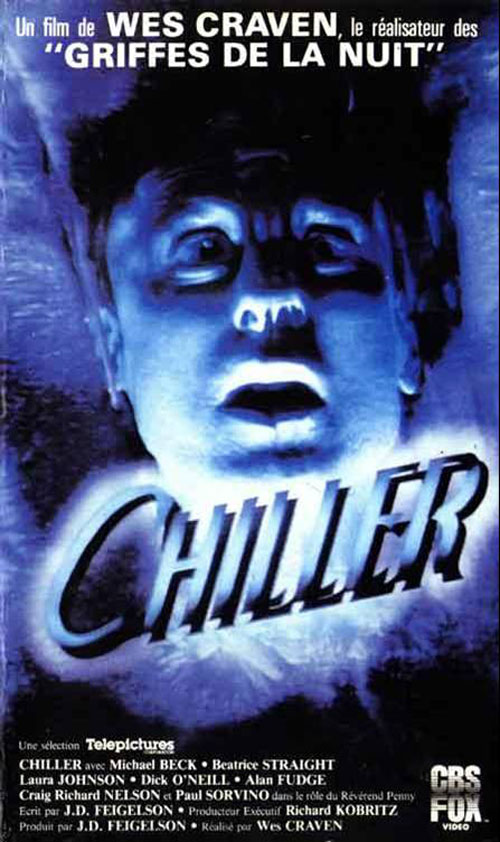
Cravenous: Chiller

chiller

I know I’m calling this one early, but I’m going to have to say that Chiller is probably going to be my least favorite film from Craven’s directorial oeuvre.

It’s not that Craven did a terrible job on directing. It was a nice, solid, middle-of-the-road effort for a movie that was…meh. Not the worst made-for-television movie. Not the best. Just meh.

The story, written by J.D. Feigelson (who apparently had a very brief career as a screenwriter of other equally unmemorable-sounding horror scripts), contemplates what might happen if someone was revived from cryogenic suspension without their soul. He doesn’t have a very positive outlook for such a person.

Very existential-sounding plot, right? Of course, it requires that one believes that behavior is dictated by a “soul” rather than something less ethereal like personality, genetics, upbringing, etc. I’m not really all that keen on believing that who I am is contingent upon what my soul is like, or that missing my soul would turn me into a cold, calculating jerk with serpent eyes.

Really, really cheesy serpent eyes, mind you.

I don’t really have a whole lot else to say about this movie. It was rather dull, with no real standout directing or acting. Paul Sorvino is probably the most recognizable name. Beatrice Straight played the mother; horror fans will recognize her as Dr. Lesh from Poltergeist. Dick O’Neill was in it for a hot minute, for all you Cagney and Lacey fans.

I kind of feel as though this was an immense step backward for Craven after he dropped the magnificence that is Nightmare on Elm Street on us all. Then again, people might not have yet twigged to how amazing that movie was and how wondrous Craven could be when given control of his films. He was probably still just that guy who made horror movies to them. A shame, really, that he had to waste time on something like this when he clearly could do far better.

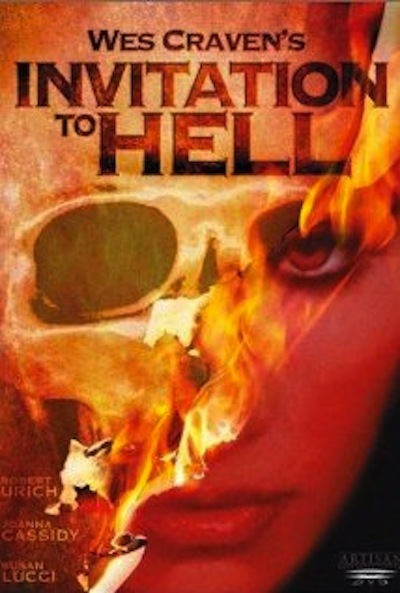
Cravenous: Invitation to Hell

invitationtohell

The next directorial project that Wes Craven took on after mucking through the swamps of South Carolina was 1984’s Invitation to Hell, a television movie-of-the-week made for ABC for the financial equivalent of a pack of playing cards and a pouch of Big League Chew.

Okay, it wasn’t that cheap, but the production values were definitely much smaller than Craven’s previous two films. However, since Craven began his career in a low-rent fashion, this was somewhat of a homecoming in ways, I suppose. Plus, he had solid backing from a legitimate production source as well as some relatively high-rent names when it came to television. We get Robert Urich as protagonist Matt Winslow and Susan Lucci as Jessica Jones, AKA “You’re the Devil!” (trust me, I’m not spoiling anything with that statement), plus post-Blade Runner Joanna Cassidy, Joe Regalbuto (soon to be known as Frank Fontana on Murphy Brown), kiddie actors Barret “Neverending Story” Oliver and Soleil “Punky Brewster” Moon Frye, instantly recognizable genre character actor Kevin McCarthy, the Bad Seed herself Patty McCormack, and a don’t-blink-or-you’ll-miss-him appearance by Michael Berryman (see, I told you Craven was faithful to his actors).

Seriously, not a bad collection of talent there. Plus, any time you get to watch Susan Lucci chew scenery like a pit bull who hasn’t been fed for a week? Who the hell doesn’t want to watch that? In fact, you can watch it on YouTube right now rather than reading any further, if you’d like. I won’t be mad. Promise.

The story itself isn’t terribly complex. Jessica Jones runs a spa and club in the lustrous (and deliciously named) town of Steaming Springs. It’s really a front for her cult of worshipers, to whom she grants unlimited wealth and power, so long as they join her club. Literally. Matt Winslow and his family play the happy but unknowing new residents who move to town so Matt can take a job finishing the programming on his latest and greatest invention: a space suit that can withstand extremely hot conditions.

Wow. Do you think that might come in handy at some point in a movie that takes place in the town of Steaming Springs?

This was such a slice of nostalgia to watch. I feel as though the era of the prime-time MOTW is well behind us. However, there was a time when movies like this were a cheesy joy to behold. And this particular offering actually is solid little gem. The script, written by Richard Rothstein, is somewhat pedestrian. Rothstein’s greatest contribution as of this writing, beyond this script of course, was coming up with the story for Universal Soldier. So there you go.

However, Craven kept a tight directorial rein on the story, moving the action along at a satisfying pace. Don’t expect a whole lot of gore. This was regular television, after all. Craven always battled with censors throughout his career, but you can bet that they were in full attack mode whenever they knew he was dabbling in television work. Also, this was the Reagan-era 80s. Milquetoast was considered offensive before the watershed hour.

Even without the excessive gore of Craven’s previous horror fare, he still does give us a lovely trippy end sequence when Matt Winslow goes into the depths of the underworld to save his family. I feel as though this whole sequence would be AMAZEBALLS with some narcotic assistance. Not that I’m condoning that kind of behavior in any way. Still, it’s solid visual craziness that drops on you in a most unexpected but delightful way.

I definitely wouldn’t consider this as one of Craven’s top offerings, but it’s still an enticing offering from him to the horror genre.

Cravenous: Swamp Thing

swampthing

I’d never seen Wes Craven’s 1982 film Swamp Thing prior to taking on this project. I honestly don’t know how I never saw it, since it seems like it would be my bailiwick. I wasn’t as into comics when I was little, however. I went straight for the jugular when it came to genre fiction and immersed myself from an early age in horror. I didn’t start seriously taking note of the comics world until my teens. Also, by the time I did start showing an interest in comics, Swamp Thing wasn’t necessarily the comic hero I was looking for.

Interestingly, Craven knew nothing of the character when he agreed to take on the movie. He stated in a commentary on the movie that this was because the church in which he grew up didn’t permit comics. Perhaps he meant that, because he grew up not reading comics as a child, he never saw the value of doing so as an adult, since Swamp Thing didn’t debut until 1972

Cravenous: Deadly Blessing

The next film in the Cravenous line-up is Wes Craven’s 1981 offering, Deadly Blessing.

deadlyblessing_poster

Could your poster be any more sexualized?

[Loba Tangent: Here’s a treat that might not be around for a while. I couldn’t find this Wes Craven movie on DVD, but the whole thing is currently on YouTube. Go now. Watch it while it’s still available, denizens.]

Right off the bat, you’ll notice several differences between Craven’s first two mainstream films and this one. First, it looks far more stylish and professional. Pays to have a far larger budget. Whereas The Last House on the Left came in around $90,000 and The Hills Have Eyes edged closer to $230,000, this one clocked in at an impressive $2.5 million. Switch up from 16MM to 35MM film, get yourself a big-name star with Ernest Borgnine, get yourself a big-name composer with James Horner (this was actually one of his first composing gigs), and, hell, while you’re at it, treat yourself with a couple of newly minted actresses: Sharon Stone and Lisa Hartman.

Craven actually got this movie after impressing one of the producers from his previous directing gig, a 1978 made-for-television movie called Summer of Fear (or Stranger in Our House, depending on where you look). Unfortunately, the only way I could find to watch this one is to buy the DVD, which is currently ridiculously priced because clearly people want to make money off the fact that Craven is now dead. Because people suck. It’s a shame, though, because this sounds like a movie I would totally dig, if only for that movie-of-the-week nostalgia. Based on a Lois Duncan novel, it stars Linda Blair as a young woman coming to terms with the fact that her recently orphaned cousin who moved in with the family might possibly be a witch. I’ve seen a couple of clips from it. Totally groovy late 70s style. Also? A beautiful classic Dodge Charger. Clearly, someone had reason to have some spare Chargers setting around, waiting for some screen time. Luckily, this one hadn’t been painted safety orange just yet.

Anyway, Max Keller decided he wanted Craven to direct the next picture he produced, which ended up being this somewhat sleek yet somewhat clunky “religious horror” tale set among a fictional fundamentalist religious sect known as the Hittites. This time, Craven was only a co-writer, working on revising a rather messily composed screenplay by Matthew Barr and Glenn Benest, the latter of whom was responsible for adapting Duncan’s novel for the Linda Blair MOTW. Even though Craven was only a co-writer, there’s little room for doubt that he took this script as an opportunity to this time explore some of those fundamentalist demons that haunted his own past. You also can recognize Craven’s aptitude for naturalistic dialogue. That was always one of the beautiful things I loved about Craven’s writing: He had this enviably innate sense of rhythm when it came to character dialogue. Even when dealing with the stilted delivery of green actors, that rhythm still made it through.

Ultimately, I would consider this movie the first major disappointment from Craven’s directorial oeuvre, thanks to several factors that were completely out of Craven’s control. First, of course, was the script, which he fixed but clearly did not write. Second was the too-late realization on Craven’s part, which he discussed in later interviews, that basically this film’s larger budget came at a much larger cost to his creative freedom. The linchpin evidence of this truth? The ending of this movie. It’s appalling. Seriously, it makes absolutely no sense at all. Slight spoilers ahoy: The movie, which as I have already mentioned, was a religious horror akin to movies like Rosemary’s Baby or The Sentinel, and moves along at a fairly logical pace, playing out more like a mystery thriller but with some solid scares and some appeasing horror gore. The ending, though? It’s like it came from a completely different film. It suddenly veers off onto some bizarre supernatural horror tangent, complete with cheesy demon rising from the pits of hell to capture our heroine in the final scene. It’s such a ludicrous moment that swings in so far from left field, you’d think Pluto was closer in orbit than this ending. It was shockingly ill-conceived and jars you completely out of the movie, which might not have been spectacular but was at least tolerable up to that point.

I get what the producers wanted. They wanted a purely shocking surprise ending that none of the viewers would expect. There’s nothing wrong with that, so long as it’s done with some modicum of logic. Even the most fantastical stories need to have some kind of logical structure or you’re going to lose your audience. Supernatural horror, when done well, can be incredibly frightening and satisfying. Craven would prove this point more than adequately when he finally decided to venture on his own terms into the realm of the supernatural with his greatest solo contribution to horror mythology. This, however, misses the mark in a surprisingly ludicrous fashion.

Besides, this film already contains a twist that works in context with the story laid out before its reveal. This is the tricky part though. This particular reveal is pretty significant and one that is telegraphed ahead of the reveal to the audience but in a way that some might miss. There’s another horror movie that came out a few years after Deadly Blessing with a similar, though more tantalizing, version of this film’s surprise reveal. I don’t really want to say more. Suffice it to say, this could have passed as the one mostly satisfying surprise of the movie.

As I mentioned previously, this time we get more familiar faces, with Ernest Borgnine pulling a quick “Dr. Loomis” guest role for Craven and Lisa Hartman and Sharon Stone in one of their earliest movie roles. Stone would never physically appear in another Craven movie, but we’d encounter her in mention many years later in another iconic Craven-directed movie
Cravenous: The Hills Have Eyes

First, some full disclosure: I’ve skipped a Craven-directed movie, but some of you might not realize it. Remember what I wrote in my first Cravenous entry about the relationship between horror and porn during the late 70s and 80s? Well, Craven’s next documented movie after 1972’s The Last House on the Left was a 1975 Swedish-cocreated “arthouse porn” called The Fireworks Woman. You might have never heard of it as a Craven film because he wrote and directed it under the name “Abe Snake.” Gee, wonder why. He appears in the film as well. See?

The Fireworks Woman

Doesn’t he look groovy?

The movie is available online if you’d like to watch it. It’s about a brother and sister’s sexual obsession with each other. I decided to skip it, but you feel free to tackle that one, denizens. I’m holding out for the other Craven movie that features a canoodling brother and sister team.

/foreshadowing

[Loba Tangent: Oh, and just in case you’re wondering about the interconnections between these two genres? It’s because a lot of horror movies received X ratings from the MPAA, and the only theaters that would go anywhere near such a rating were…you guessed it: adult movie theaters. See? Travis Bickle could have taken Betsy to see a nice Wes Craven movie on their first date…]

So next in the horror line is Craven’s 1977 film The Hills Have Eyes.

We get some recognizable faces this go, with Horror Queen Supreme Dee Wallace in one of her first film roles. Also making one of his earliest appearances in movies is Michael Berryman, the gentleman whose unique visage graces this movie’s poster. Berryman, whose Hypohidrotic Ectodermal Dysplasia causes his odd appearance and leaves him with no sweat glands, hair, fingernails, or teeth, has bankrolled a full career from horror and science fiction movies, thanks in part to appearing as Pluto in this movie. We’ll even see him a few more times in future Craven films, as the director was often quite loyal to his actors.

As with his first film, Craven clearly still was fascinated by the exploration of humanity’s depravity and breaking points. He also was still fascinated by exploring the superficiality of our “civility.” No matter how refined we imagine ourselves to be, we still are animals

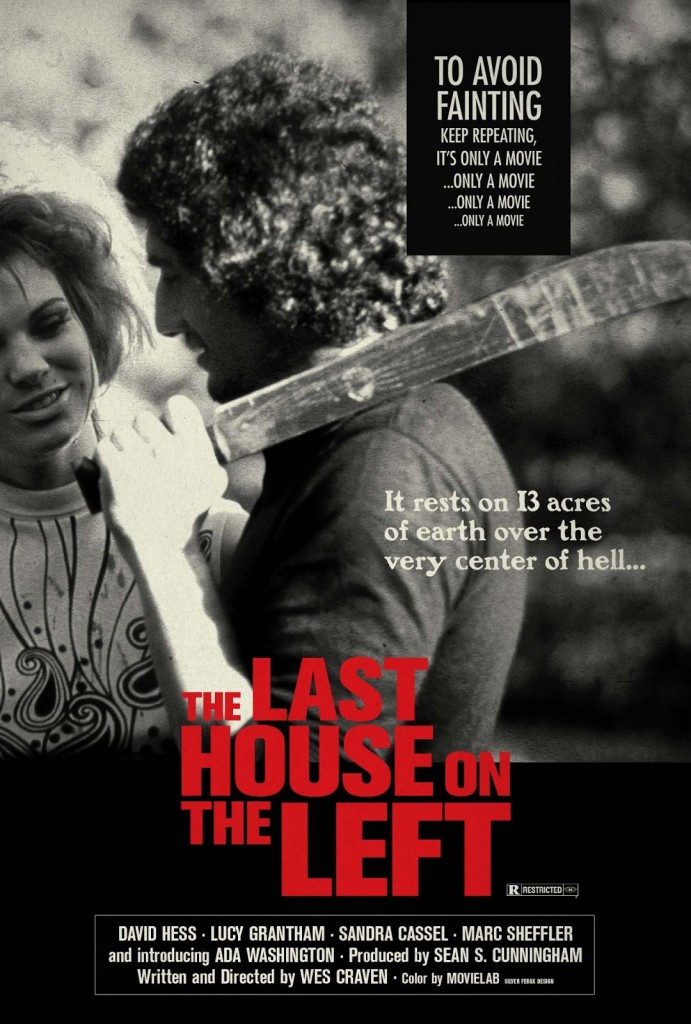
Cravenous: The Last House on the Left

It’s October, denizens. You know how much I love this month. Even though it’s cold and bound to get colder from this point on in the year, I can’t help it. I love Halloween. I love horror. And while I’m still struggling to find solid footing when it comes to my visits here to the lair, I had this idea this morning while driving to work and I’m going to try to make it so. See, I decided a little while ago that, for this October, I wanted to watch/re-watch every Wes Craven-directed movie that doesn’t include the word Nightmare or Scream in the title. We all know how I feel about those two franchises. But what about all the other films that Craven directed throughout his career?

I’ve already loaded up my Netflix queue with every Craven film they offer (and I’m seriously debating going ahead and buying a couple that aren’t offered but that I love enough to want to add them to my collection anyway). There are enough movies in my list that I know I’m not going to be able to finish watching them all this month, so this new feature will last a hot minute longer than until All Hallow’s Eve. Plus, I’ve got a lot on my plate work-wise and play-wise, so that will slow things down there as well. But, the good news is that I’m here now, and I’m…Cravenous in my horror hunger.

Did you see it? What I did?

So let’s start with the beginning of it all, shall we?

tlhotl

Admittedly, this is a very difficult place to start, especially for non-horror fans. I can’t recommend Craven’s first film The Last House on the Left. It falls soundly into that category of horror populated by realistically unsettling storytelling. Even if you do like horror but your preferences skew toward the scary yet implausible variety, then this is not the film for you.

Instead, this is Craven exploring the darkest of horror. Not the phantasmagorical. Not the supernatural. Not the paranormal. For Craven, we were the most frightening monsters to examine. Thus, when this film starts out with the warning that this story is based on true events, I view it less as a specific warning and more of a generic caution that what we’re about to see can be as true as we make it. As anyone who pays attention to the news even today (even? especially today), we can make this true…and we can make far worse true.

In horror lingo, you can boil the story down to two words, one genre trope: rape revenge. I don’t like rape revenge stories. I also don’t like this type of realistic horror. Again, I’m aware enough of what we do to each other in real life that when I want to be scared, I want it to come from a horror that cannot actually happen to me. Maybe that’s a cop-out. I don’t know. However, reality is a bludgeon enough even when it isn’t being horrific. A couple hours of escapism is a nice balm to a bludgeoned soul.

However, Craven felt the need to go to these darker depths of humanity, driven by the need to better understand the reality he and his peers were experiencing at that point in history. He said in many interviews regarding this movie that it was spurred into life by our increasingly violent culture. The images broadcast from the Vietnam War in particular brought violence into homes all along Main Street USA in visceral, unsettling ways, leaving all of our society

BookBin2014: Scream Deconstructed: An Unauthorized Analysis

screamdeconstructed

This is going to be a really short review because: A) this book isn’t going to be for everyone; and B) my feelings for the book are probably already very obvious to those who know me. Lucky you, denizens.

I bought the Kindle version of Scott Kessinger’s Scream Deconstructed: An Unauthorized Analysis completely on a whim (darn easy 1-click Amazon shopping option). Why? Because I love Scream.

You know, in case you haven’t noticed that before in all the myriad posts I’ve dedicated to banging on about this particular movie/franchise.

/ end sarcasm

In fact, I would even go so far as to say that, if I had to choose one horror movie I’ve seen…just one…that would be my default horror movie from now until forever? Scream would be in the elite list of five from which I would struggle to make my final selection. I’ll let you try to figure out what the other four are.

Do I love the rest of the franchise as much? Not by a long shot. That first film comprised some bit of magic that was so precious and rare that it simply could not be recaptured for the sequels. But I find things to appreciate about the other movies. Well, maybe not the fourth one. I do believe I have already made my feelings about Scream 4 very clear.

Although, to be honest, after reading Kessinger’s analyses of the fourth movie, I was intrigued and impressed enough by his thoughts that I rented the movie to give it a fair shake at perhaps showing me what it showed him. I admittedly still didn’t see what he saw (and still saw a depressingly disappointing addition to the trials and tribulations of Woodsboro’s sauciest survivors), but I still appreciate what he sees in this film and value his opinion.

All that being said, I can’t recommend this book to everyone…or to most people, for that matter. If you don’t like the movies, then this is not a book for you. It’s definitely only for the truly obsessed. Like yours truly. However, if you do love, or even just really really like, Scream and its sequels? Then I can’t recommend this book enough.

Final Verdict: Staying on my Kindle. It’s short, it’s sweet, it’s got some great analyses, even if I don’t always agree 100 percent, and I imagine I will be going back to peruse this one every now and again. Whether or not that means I’ll ever give Scream 4 another go is a completely different story…