BookBin2014: Rin Tin Tin: The Life and Legend

rintintin

Before you even ask, no. I have never seen a Rin Tin Tin movie. I have never seen a Rin Tin Tin show. I didn’t even know what the original Rin Tin Tin looked like until I read this book (or how different German Shepherds used to look in comparison to how they look now). However, these facts speak to the illustrious ubiquity of this dog in such a way that I felt compelled to borrow Susan Orlean’s Rin Tin Tin: The Life and Legend from the library when I saw it. I don’t know about in other countries, but here in the United States, the name Rin Tin Tin is so entrenched in the American pop culture lexicon that I’m absolutely certain that there are myriad others, just like me, who have never once seen any Rin Tin Tin movie or show, and yet know precisely who Rinty is.

For those who might not know, Rin Tin Tin is a German Shepherd (or Alsatian, as I believe the breed is called in some other countries) of epic entertainment proportions. I use “is” rather than the past tense, even though the original Rinty has been dead for many years, because just like other famous dogs

Wine A Little

I went really deep into the contemplative weeds on that last post, eh? Thought I would lighten things up a bit by finally discussing something that I’ve discovered I really, really love doing. A lot. A LOT.

Naughty denizens, whatever you’re thinking right now…I’m proud of you. But it’s not that. Or that.

No. See, while another one of my Internet PersonalitiesTM might be known as a whiny hater, Loba would now like to declare her passion as a wine-y lover. (Ooh, overwork that pun, Loba!) I love to drink. True, I used to love to drink because I loved the numbing insouciance of total inebriation. Rite of passage and all that jazz, I suppose. I’m a bit of a higher-class drinker now. I drink to enjoy the flavors, the craft, the love that goes into these libacious fineries. I’ve already proven myself to be quite the beer snob, both through Darktober and Febrewary.

Now it’s time to do the same with wine.

For several years now, we’ve been making regular trips to both the East Coast (Virginia) and West Coast (California) wine regions. Virginia has surprised us several times with some really fabulous wineries nestled throughout the Shenandoah region, but none so far has come close to competing with what California has to offer. Whatever miracle of wind, water, fire, earth, and air that winemakers have captured out there, they have become masters (and mistresses) of bottling the magic in the most delicious ways possible.

First, a few points of clarification. When we visit California wine country, we stick with Sonoma. Why? Personal preference. Experience has left us with the opinion that Napa is overcrowded, overpriced, and overhyped. They have decent wine, sure, but not decent enough to support the fees and prices they charge. Napa is the Disney of Wine Countries.

Conversely, Sonoma is bucolic, relaxing, and they offer wines that are the most appealing to our palates. If you lean toward Pinot Noirs and Zinfandels and shy away from crowds and empty fanfare, then Sonoma might be the side for you, too.

The other thing that we love about Sonoma is the abundance of small wineries. I love going to wineries so small that their bottles don’t even have bar codes on them. I’m not trying to be “I liked that wine before they had bar codes” hipster or anything. I’ve simply learned that a lot of times (but not always), if a winery has become large enough that they’re able to ship large batches of multiple varieties and vintages all the way over to the East Coast, then it’s because they’ve hit upon a process that allows them to produce bottle after bottle after bottle of generic wine. Again, it can be generic and delicious

LobaBlerch

It’s been a while, hasn’t it, denizens? Not a while since I paid any love to the lair. I’ve been banging on about books and beers and strange ephemera from my youth that once (and forever) made me happy. But it’s been a while since I wrote something navel-gazey, eh? What better day to change that then the auspicious 11th birthday of my bloginations?

One of my favorite online stops every now and again is The Oatmeal. Funny, dorky, irreverent, and grammar sticklers.

During a recent perusal, I ran across the section The Terrible and Wonderful Reasons Why I Run Long Distances. True, I don’t really run all that much. Sometimes, if I have an abundance of energy, I’ll bring it down a few notches with a jaunty jog here and there, but mostly I walk. A lot. Uphill, downhill, on paths, on trails, in cities, in the woods, wherever. I love to walk. The longer and more strenuous the walk? The more I’m going to dig in. I don’t take glucosamine every morning for nothing, dammit.

But why? The unglamorous reason is that I started walking four years ago as a means to outpace having to deal with my mom’s death. I dealt with it some, mostly through blogging here, but when the edges got too sharp and the feelings got too raw? I moved on. If I just plugged in my earbuds and kept moving, then I could focus on the music, on the pace, on the sweat and exhaustion, on the physical pain and not the deeper hurt. Basically, I tried to walk away from dealing with it all, not accepting that it was chained to my ankle and following right along with me.

But that’s a whole other story.

Funny thing (and I’m always one for gallows humor), is that when I started to resurface from the fog of my self-enforced avoidance through exercise…I really liked the physical me I came back to. I’d “avoided” myself down 50 pounds and up several metabolic notches. I had a reduced appetite and increased energy. I was toned and muscular and for the first time in my life, I didn’t want to run away from the reflection in the mirror.

Thus bringing me back to the Oatmeal post on running. Bet you thought I’d forgotten that, didn’t you? Some of the post made me laugh and some of it passed right over me without any response. One panel, though. One panel punched me right in the solar plexus:

running_5theblerch4

“I grew up a fat kid.”

When I was in the safety of my own world (as any good introvert will tell you, we all have two worlds: the outside one in which we have to live, and the inside one in which we choose to live), my weight wasn’t an issue. It never stopped me from battling Cobra Commander and Destro or using my proton pack to fight ghosts or calling for K.I.T.T. before the bad guys found my hiding spot. I could be anyone, do anything in the confines of our yard…although, looking back, I would love to have known what the neighbors thought of my strange antics, swinging from tree limbs, running and rolling and ducking and dodging, none of them able to see the fantastic adventures my imagination was creating for me.

Outside of my own world? I was fat. And others made a point of informing me that I was fat, as if somehow this truth eluded me without constant reminding. Because somehow having to shop in the boys’ husky section for jeans or the women’s plus-sized section for school clothes when I was 11 wasn’t enough.

[Loba Tangent: Don’t cry for me, Argentina. Yes, kids bullied me for being fat. The sad truth, though, is that when someone else came along, even lower on the popularity food chain than me, I didn’t step up and defend them. Instead, I reveled in the feeling of finally giving back some of what I’d been taking all those years. Kick a dog too much and sometimes the wrong person ends up losing a hand when the dog finally bites back. I bear the weight of that truth even now, because introspection is deservedly cruel sometimes.]

I’ve tried since my teens to tame my weight, but almost always in that half-assed, “miracle diet,” snap-my-fingers-and-it’s-done-right? way. You know what that approach gets you? A boatload of disappointment and discouragement. Intellectually, I understood that being healthy was more important than being skinny, and that being healthy was a commitment (that I obviously wasn’t ready to make).

But the part of me conditioned by years of fat-shaming and societal demands to fit into one generic mold, regardless of the multitude of body shapes women should have, had left me convinced that I was never going to be attractive as long as I had a double chin or my thighs rubbed together when I walked or I had bingo wings

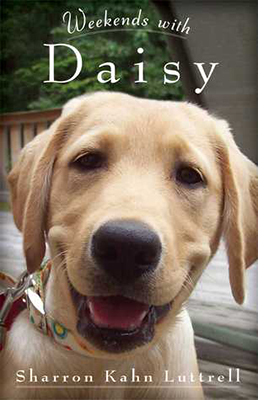
BookBin2014: Weekends with Daisy

wwd

Speaking of books that suckered me into reading them because of their cover art, that’s precisely what happened when I saw this painfully adorable puppy dog punim staring out at me from the cover of Sharron Kahn Luttrell’s book Weekends with Daisy.

Seriously, if you ever want to sell me anything, tell me anything, convince me of anything, or just get my general attention, put a dog on it (to paraphrase Portlandia).

And so it went with Daisy. I couldn’t resist her cute doggy smile or wanting to know the story behind it. What makes her more special than any other adorable pooch? She’s a service dog. Luttrell’s book is all about Daisy’s training through a program in which inmates do the bulk of the command training, and “outside” volunteers take the dogs for the weekend, to work on acclimating them to the sensory overload of life outside prison walls.

As cute as Daisy is and as laudable as this program is, I have to admit that I considered quitting this book after only a few chapters, simply because I found Luttrell too…judgy. Even before she learned why Keith, the inmate responsible for Daisy’s weekday training and care, was incarcerated, she makes several disparaging comments about him and inmates in general, which all came across as obnoxious and elitist. No, not all who are incarcerated are redeemable. However, not all who are incarcerated are the unintelligent, vulgar cretins Luttrell apparently assumed them to be. We are all fallible, all capable of making mistakes, all capable of stepping too far over that line of scrimmage and into the penal fray.

Just one mistake away, Luttrell. Ask Piper Kerman.

I will allow that Luttrell does seem to change her tone as the book proceeds and she begins to see Keith as more than his incarceration or more than his crime (without forgetting why he is in prison or the harm he caused). Really, this book is more a testament to Keith’s ongoing redemption. I would have been far more interested in reading more about his story rather than the banal Lifetime Move Network life of Luttrell and her family.

Still, it’s an interesting “beach read” kind of story that, indeed, has a happy, feel-good ending.

Final Verdict: Daisy is very cute and I’m thrilled that she is now helping someone as she was trained to do, but I think I’ll pass on adding this to my library.

Flashback Friday: Mannequin

mannequin

As I’m sure that several of you read recently, Meshach Taylor passed away from cancer at the end of last month. I’m sure many people’s initial response was that Anthony Bouvier had gone to join Julia Sugarbaker in that great design firm in the sky. The first words out of my mouth were “Oh, no, Hollywood Montrose died.”

montrose

To anyone who isn’t certain who exactly that might be, Hollywood was the flamboyantly gay window dresser Taylor portrayed in the 1987 cuh-lassic movie Mannequin. Of course, I use the term classic in a very subjective way, since I know that this movie: a) isn’t everyone’s particular idea of entertainment; b) is now incredibly dated in that uniquely 80s “how on earth did this ever get made?!” kind of way; and c) will always make me laugh no matter what kind of mood I’m in or how many times I’ve seen it. And I’ve seen it quite a few times, denizens. Because Kim Cattrall.

Okay, so Cattrall was the reason I wanted to watch the movie in the first place, but she’s not the only reason I ultimately fell in love with it. I know it’s ridiculous and doesn’t make sense and the adult me sometimes takes over while I’m watching it and points out all the absolutely nonsensical parts of the script that make her cringe…but the kid who fell in love with this movie all those years ago promptly regains control and just goes along for the ride, whether by motorcycle, hang-glider, or Hollywood’s fabulous car…

//www.youtube-nocookie.com/embed/a_lRKMUpWjI

Which brings me back to Hollywood. I wrote this about the character elsewhere, but here it is again:

I know Hollywood was horribly cliched and stereotyped as only an 80s-era movie could do with minority characters. But even with as campy as he was, Hollywood was still integral and important to the story. He was Falstaffian, yes, but he was also one of the heroes. That meant a lot, especially since for years movies felt compelled to portray gay characters as anything but heroic. Unnatural, yes. Evil, yes. A good character? Never. Also, Hollywood was hilarious. And that car. And those glasses. And…oh, man, I loved Hollywood.

Yes, Hollywood was stereotypically gay, but he also got to help save the day…and wield a big effing fire hose while doing it. And, in the end, he stood by the hero’s side when he finally “got the girl” in true cliched style. It might be small by today’s inclusive standards, but showing Hollywood as important enough that he remained right to the very end of the final reel, right by the hero’s side? Good times.

Beyond all that, though, this movie is just a bundle of 80s WTFery in all its big-haired, big-shoulder-padded, glitzy, goofy, shiny, “I think they’re implying that he’s having sex with a store dummy, but let’s just ignore that and listen to this Jefferson Starship song really loudly” style.

Okay, wait, fan-made video break:

//www.youtube-nocookie.com/embed/j46N_aMlXH8

Complete it all with Andrew McCarthy in his first appearance with a non-responsive human co-star (personally, I would choose a dummy over a dead guy, dude), Estelle Getty (picture it: Sophia Petrillo, running a department store in Philadelphia) and James Spader in probably the most un-James Spader role he’s ever played and, again I say, cuh-lassic.

//www.youtube-nocookie.com/embed/jr9HbZ-mbdU

BookBin2014: Reviver

reviver

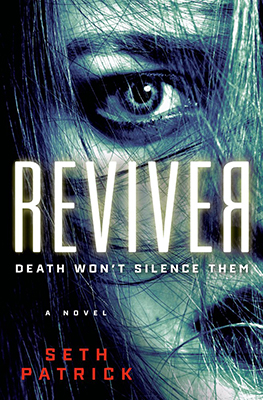
I’m going to admit right at the start that I initially picked up Seth Patrick’s novel Reviver because of the cover, with its one-two punch combo of a photo with a gaze that unnervingly followed me as I perused nearby shelves and a tasty letter reversal treatment for the palindromic title. What can I say? I’m sometimes that much of a sucker for some tasty font pr0n.

Of course, then the story description had to reel me in even further by describing Patrick’s novel as “CSI meets The Sixth Sense.” Pretty lofty claim there, but one that I was more than eager to judge for myself. You know what I discovered? It’s a pretty on-point claim for a surprisingly satisfying story.

The premise is that main character Jonah Miller is a “reviver.” He and those like him have the ability to revive someone who has recently died to learn the truth behind their death, be it through natural causes, their own hand, or by someone else. I love this idea and feel as though it would have been a Philip K. Dick book at some point, had he lived longer. In Dick’s absence, however, Patrick provided an incredible (and gory) ride-along with Jonah as he begins to see and suspect that what he and his fellow revivers are doing could have drastic consequences. You see, it’s not just the dead they are awakening.

But I can’t say anything more than that. Because spoilers.

I can say that I found this book engaging from start to finish, with fully realized characters and a delicious sense of pacing that kept tempting me forward, night after night to see what awaited my discovery within the next chapter. I adore when I find a book like this.

I admittedly balked a bit at the ending, which in its own right was not bad at all. It’s a rather open-ended finale, leaving some things not quite so tidily tied up with our characters or their actions. This doesn’t bother me on its own. I’m not one who necessarily needs a perfect ending. However, I have learned that this sort of ending nowadays means one thing: sequel. True enough, the next “Reviver Novel,” Acolyte, seems slated for an April 2015 release. As I mentioned in my review of the first in Ransom Riggs’s peculiar series, I don’t really like being set up for sequels. I kind of like knowing from the start that I might have to wait for a satisfactory conclusion to what I’m currently reading…or even worse, I hate realizing too late that I’ve just invested in a lackluster story that couldn’t even have the decency to end well and now expects me to want to carry forth into more meh storytelling.

I’m a persnickety one sometimes.

That being said, even with Patrick’s somewhat unresolved ending, I still felt he concluded this novel in a satisfying way. If I choose to continue, I have a solid foundation on which to build future stories. If I don’t choose to continue, I have a great story that I can play around with in my own imagination if I ever wish to. Win-win, I say.

Final Verdict: Even if I am a bit wary of the fact that Patrick is working on a sequel to this novel, I still loved this book and definitely would love to have it as part of my library. I’m probably going to give the sequel a go, but even if it’s not as good as this first novel, Reviver will still be able to stand on its own…even with its sequel-ready open ending.

BookBin2014: I Remember You: A Ghost Story

iryags

Some of you might remember that back in May I did a month-long celebration of some of my favorite Ladies of Horror May-hem. One of my selections was Eli from the Swedish vampire tale Let the Right One In. In that post, I mentioned that the movie was based on a book by John Ajvide Lindqvist.

During my last trip to the library, I tried to find this (or any) book by Lindqvist. Unfortunately, he apparently isn’t a big enough deal to make it onto our library system’s radar. However, instead of finding a Swedish vampire story, I ended up finding an Icelandic ghost story. Sure, why not?

And so I ended up reading Yrsa Sigur

BookBin2014: The Cuckoo’s Calling

tcc-jkr

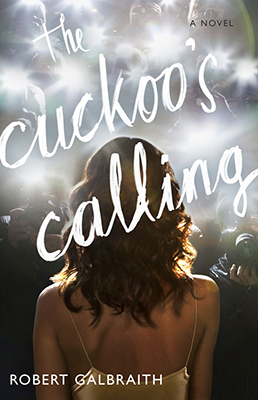
My experience earlier this year with J.K. Rowling’s first foray into non-Potter fiction was decent enough that I decided that if I could find her second offering at the local library, then I would give it a go. So it was with delight and a little trepidation that I borrowed The Cuckoo’s Calling.

First, I really wish that I hadn’t known that “Robert Galbraith” was Rowling writing under a pseudonym. I wish I’d been able to experience this novel thinking that it was someone other than an already established author trying to break into another genre after a somewhat mixed first attempt. However, truthfully, I probably would have never read this book if I hadn’t known that Rowling was the actual writer. See, I have learned through repeated trials that detective stories simply are not my cuppa. I do keep trying (because I just don’t know when to quit sometimes), but I’ve yet to find one that makes me go “YES! THAT’S IT! THAT’S THE BOOK FOR ME!”

Totally strange, I know, considering that so many of my favorite shows have been crime procedurals…including that one three-lettered series that I simply can’t quit. But I digress.

Still, I have to say that The Cuckoo’s Calling came pretty close to finally pulling me into the detective genre all the way. Close. But not quite all the way. True to Rowling’s form, she did a fantastic job of setting up compelling characters and situations that kept drawing me along for whatever fantastically bumpy ride she had in mind. Plus, Rowling has an enviable skill for planning things out to the very last detail. I honestly could not fault the conclusion of this story, even when I sat and pondered it far more deeply than I think I’ve ever pondered one of these stories.

I think, though, that this was part of the problem I had with the novel. It was so well-planned that the reveal felt…anticlimactic. I don’t know how else to put it. I felt that the whole novel preceding the part leading into and finally giving the big reveal was so solid and enjoyable that…I don’t know. The ending should have been more…more.

Great use of words there, right? I’m trying not to give away anything about the ending, though, because I don’t want to ruin anything for those of you who might not have read this book. And even though I wish that the ending hadn’t been quite as neat and polished and sedate as it was, I do think this book is worth reading. Rowling is gloriously talented to the point that, even when I don’t completely love every bit of every story she writes, I can still love her for her abilities and her obvious devotion to language and literature. To put it in her own vernacular, I think she’s brilliant.

Final Verdict: As well written and mostly enjoyable as this book was, I kind of feel at this moment that I don’t need to add this to my collection. However, I found Rowling’s detective Cormoran Strike an interesting enough character that I have already added myself to the wait list at our local library for his next adventure, The Silk Worm (the library hasn’t even received any copies yet and already I’m 384th in line!).

BookBin2014: We

we_zamyatin

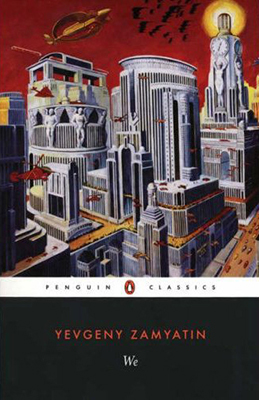
I knew nothing of Yevgeny Zamyatin’s novel We when I found it at the local library, other than the fact that it was one of the new arrivals in the science fiction section since my last visit. Turns out, this is one of the earliest examples of dystopian science fiction, predating more well-known novels like Aldous Huxley’s Brave New World and George Orwell’s 1984. In fact, Orwell even acknowledged in a review of We that he was going to use it as a model for his next book, his aforementioned dystopian classic.

There can be no doubt, upon reading this novel, that Zamyatin’s story was quite influential on many of the darker storytelling souls within the genre’s literary pantheon. Tangentially, I have a strong belief that he found influence and inspiration in preceding tales, including the works of H.G. Wells, whose notions of the chaos that scientific advancement could cause morphed in Zamyatin’s mind to the chaos of failed mathematical control.

In Zamyatin’s future, equality is a mandate, individuality is not an option, and the human collective (in its significantly war-reduced numbers) runs in such precise mathematical form that names no longer exist (our protagonist is known simply as D-503) and every moment of every day occurs according to precisely timed intervals. Wake. Walk. Work. Eat. Celebrate. Assemble. Copulate. Sleep. All planned. All approved. All performed according to the One State.

“Mathematically infallible happiness.”

How could anything possibly go wrong in such an equation?

Zamyatin’s novel is a rebuke of many of the political and cultural happenings of his time, obviously, but his stark outlook on the results of those influences remain timely and relevant, nearly 100 years later. I’m honestly surprised that I had never heard of this novel before now and that it’s not nearly as well known as the previously mentioned novels that continue to show up on bestseller lists and required reading for students everywhere. Perhaps it’s because the previous translations of this novel have been unapproachable? I have read that some translations are not as engaging as the recent translation by Natasha Randall (which is the version I read). I had no problems with Randall’s efforts. I think, however, that Zamyatin’s style is a bit of an endurance test at times. That being said, it’s well worth it to make it through this novel, especially if you consider yourself a sci-fi connoisseur.

Final Verdict: I’m not sure. I feel as though, as a science fiction fan, that I should have this as part of my collection for its historical importance. Also, it is a compelling story, if a bit of a slog at times. I believe that I will at least add it to my wish list, for further contemplation. Prophets know that just because I add something to my wish list doesn’t mean that I’m going to be purchasing it any time soon. I have books on there that have been patiently waiting to be purchased for almost 10 years.

BookBin2014: Quiet: The Power of Introverts in a World That Can’t Stop Talking

quiet

It’s been quite a while since I brought you all a book review. It’s not that I’ve stopped reading; I simply couldn’t do more than one blog post a day during the month of May (TBH, I’m honestly amazed that I was able to do even that, with as chaotic as my May ended up being).

Then June came…and June went. How it’s already July, I still don’t understand.

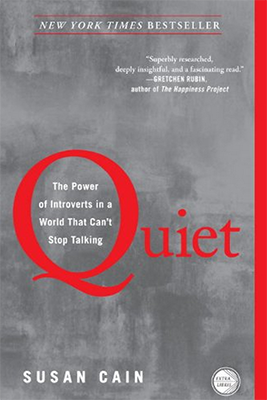
Anyway, I finished Susan Cain’s book Quiet several months ago. The sign of it being a book that’s well worth it? I haven’t been able to stop thinking about it since I read it.

I make no secret of the fact that I am extremely introverted. I couldn’t make it a secret even if I wanted to. It really is that obvious. One of the major obstacles I encounter on a regular basis is the fact that many within the business world have apparently decided that the world should have no time for introversion. I have a feeling it’s an even more extreme outlook here in America, where “go-getters” and “action-takers” are the desired worker model. We want bold personalities ready to schmooze and smile and talk and lead and be the successes they were obviously destined to be simply because of their scintillating personalities and take-on-the-world attitudes.

Too often, people make the mistake of assuming that quiet people are weak, one-dimensional, antisocial, and ultimately valueless. This is unfair in general, but damaging to both sides in professional settings. Instantly assuming this litany of negative traits about introverted employees locks us out of achieving our true potential because we are never allowed to operate within a work model designed for our unique abilities, and denies our employers the full power of our abilities because we don’t fit the square holes of the Extroverted Ideal.

Cain, herself an introvert, makes a poignant case against this assumptive behavior by the corporate world and for more understanding of the richness that introverts can bring to any professional setting with just a little bit of adjustment to what has unfortunately become the standard. She also discusses the need for adjustments in schools as well, which embrace the valuing of extroversion over introversion more and more, significantly reducing the success rates for all those quiet, shy kids before they’re even old enough to get crushed by the corporate world.

Is this an objective book? Hardly. A book about introversion written by an introvert? Of course she’s going to have a lot to say about what is often a fairly unbalanced treatment of quiet people by the (too) loud mainstream. Is it a valuable book? Absolutely. Who better to tell our story and argue our case than one of our own?

Final Verdict: I definitely want to add this to my library. I also want to make it mandatory reading for every single extrovert, but especially every single extroverted person in charge of managing even one introvert, because here’s a little hint: You’ve probably been doing it wrong this whole time.