Ladies of Horror May-hem: Lana Winters

lanawinters

I briefly struggled with the fact that Lana Winters is not a horror movie heroine. However, I realized quickly that she was perfect for this month for precisely that reason. She instead made her mark as an amazing genre heroine from an equally amazing genre television show, of which there are not many options. She stands as proof that, if given the opportunity, a talented actress given a well-scripted role can bring horror to life in astonishing ways, regardless of the size of the screen.

[Loba Tangent: I also briefly struggled with the notion of combining Lana with her adversary, the stentorian Sister Jude, played to perfection by Jessica Lange. Both deserve to be included together for the fascinating interconnectedness they shared throughout their development. Plus, Lange’s performance as Jude is yet another in a series of high-quality performances from this grand dame of Hollywood elite. However, in the end, I chose Lana to stand alone as representative of this show, difficult though that decision ultimately proved to be.]

First, for full disclosure, I have only watched the second season of American Horror Story, dubbed “Asylum,” in its entirety. I tried to watch the first season, but I found it too tedious. Thankfully, each season of the series is a different story, with different characters telling the tale. Even more thankfully, the second season proved to be one of the best pieces of horror TV I’ve seen in a very long time. By taking the entire season to reveal its story, the show took its tortuously sweet time in creating a diabolical diaspora of evil intent and insufferable cruelty. I often don’t enjoy horror that showcases humanity’s penchant for violence and abuse against its own, but I can make allowances for those offerings that are done with care and precision. I can honestly say that I felt that AHS: Asylum executed both points quite well.

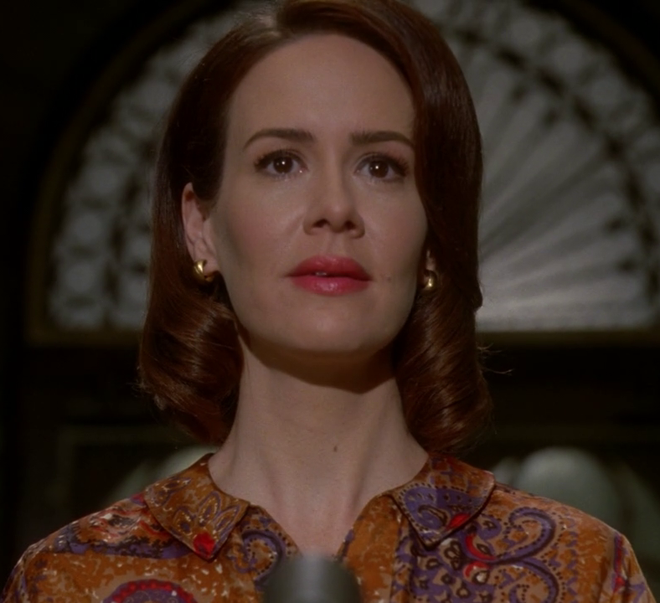
Another point well in the show’s favor was the wisdom in casting Sarah Paulson as Lana Winters, the “plucky” reporter with designs on fame for cracking open the truth behind Sister Jude and her Briarcliff Mental Institution. She could not have been a better selection to portray Lana and her almost preternatural survival reflex against the horrors in store for her. With chimeric grace, Paulson has repeatedly proven throughout her career that there has yet been a character outside the reach of her acting skills. She is one of my favorite parts of modern Hollywood, never disappointing me with her performances, even when cast in lesser roles in lesser projects. It’s taken a bit of time for the rest of Hollywood to see what I’ve seen for a while, and I couldn’t be more delighted.

Paulson’s performance acumen makes Lana such a compelling character that, even when the storyline delved into genre tropes that I rarely find tolerable let alone enjoyable, I continued along. I needed to see Lana’s story through to its completion. And, I have to say, her final moments on screen are deeply satisfying, something that quite often is not the case for horror endings. It’s admittedly much more of a commitment to discover the joy of Lana Winters as a horror heroine, but I believe that she will be well worth your time.
Ladies of Horror May-hem: Helen Lyle

helenlyle

There were a couple other names that would have been more appropriate picks for this particular holiday here in the States, but I vowed to go with whatever name I picked first. Abide by your rules, Loba. That’s my motto. And so I drew Helen Lyle, the intrepid grad student whose skepticism is no match for the Candyman.

[Loba Tangent: Again, I apologize for any spoilers I include here. I will try to be vague, but there are certain things I must include to provide a better understanding for Helen’s nomination. Do not let this dissuade you from watching this film. It’s wonderful.]

Helen was created by horror maven Clive Barker as the finder, foil, and finally believer in the history of Daniel Robitaille, a former slave who met a grisly end and found eternal resurrection as the urban legend known among the inhabitants of Cabrini Green as Candyman.

At first prone to humor and, yes, judge those whose unwavering belief in Candyman never quite convinces her, Helen continues to seek the truth behind the myth. Her curiosity is unquenchable to the point that, when she finds herself on the opposite side of laughter and judging from colleagues and mentors, she grows even more determined to root out the truth of Robitaille’s existence.

Helen is the curious cat. And we all know what curiosity does to cats.

Then again, we also learn what happens to those who become legendary. Legends never die.

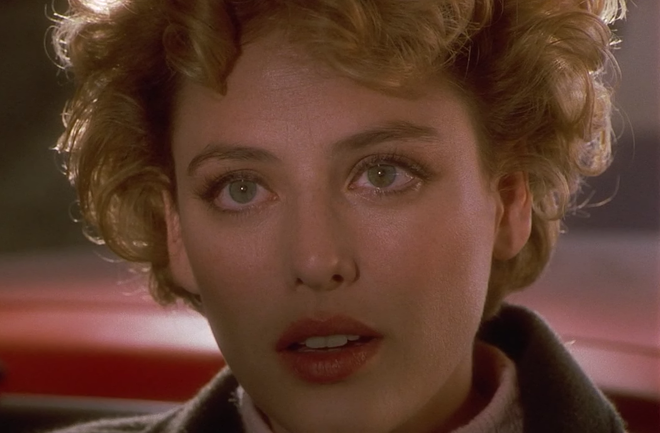
Candyman has always been one of my favorite horror movies, thanks in great part to the unsettling chemistry shared between Helen and Candyman, played by Virgina Madsen and Tony Todd, respectively. In their roles as the myth and the detractor, each eager to prove their case at the expense of the other, they perform a beautifully synchronized cat-and-mouse game that you realize quite early on is not going to end well for the mouse, tenacious though she may be.

Madsen’s Helen is the detached interloper at first, separated from those who hold the key of understanding she seeks by her dismissal of their beliefs as well as the whiteness of her skin, a physical barrier for many reasons among the residents who keep Candyman’s legend alive. Barker’s counterpoint of Helen as “executioner” of the Candyman legend through her dismissal of its genuineness is poignant and, in many ways satisfying in its defeat. As a legend, Candyman can now face the threat that those like Helen once brought him…but her physical traits, which warn his believers away, draw him closer, push him to choose her, to cherish her.

“It was always you, Helen.”

In the end, Helen becomes what she seeks to disprove in a resolution that satisfies in unexpected ways. I’m not going to say anymore, even though I fear that I have already said too much. Just as long as I don’t say it four more times, I should be okay…

Ladies of Horror May-hem: Jess Bradford

jessbradford

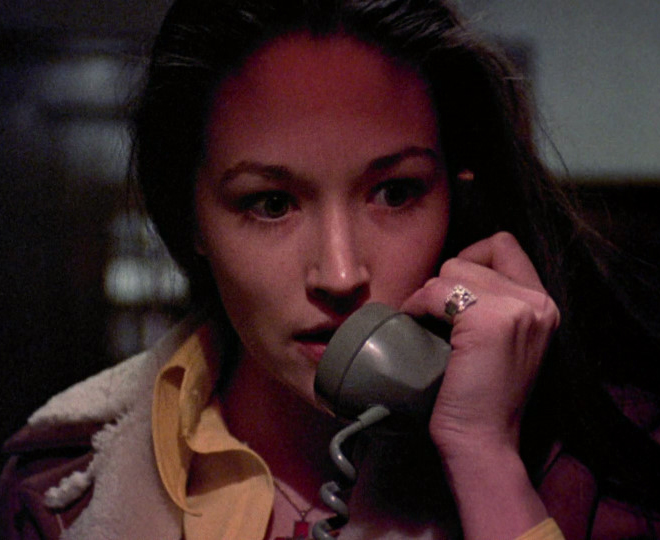
This might actually be another controversial choice, because a lot of what we see from Olivia Hussey’s character Jess Bradford in 1974’s Black Christmas is her reacting to the events transpiring around her…and her depending a lot on police to solve said events.

[Loba warning: It’s also going to spoil quite a bit from this film and a couple other films, for which I do apologize. It’s necessary to reveal certain things about this character, however, to justify my selection of her for this series. If you haven’t seen this film, then I would recommend stopping now and getting thee to the closest copy you can find.]

However, I believe that she earned her right to be a Lady of Horror May-hem for several reasons. First, (SPOILERZ) she is the originator of the slasher film “final girl” trope, proving her right to this crown by, der, surviving what many consider to be the first slasher film (blame Canada, eh?). For that reason alone, she stands at the pinnacle of horror movie greatness.

Jess does more than merely survive cinema’s very first slasher villain, however. She does so while contending with what were, at the time, several serious and controversial issues. Actually, one of them remains controversial and something that I can’t really tag as a point of stress for any other horror heroine (please feel free to correct me if I am wrong).

See, Jess has just learned that she is pregnant. Right out of the gate, she breaks the mold of “virginal survivor” that John Carpenter would cast fours years later with his final girl, Laurie Strode…a mold that wouldn’t be shattered completely until almost 20 years later by a wily young lass from Woodsboro High. As a college student looking forward to a future full of many things that do not require diaper change and feeding breaks, Jess decides to terminate this unplanned pregnancy. This does not set well with her boyfriend, who becomes a tad bit unhinged when she informs him of her decision (thus bringing him into contention as a potential suspect for the mysterious and increasingly disturbing obscene calls Jess and her sorority sisters keep receiving).

In that one paragraph, I’ve already identified three ways in which Jess stands apart as unique in the realm of horror heroines from that point in time. First, she’s obviously sexually active, thus proving that the quintessential final girl got her freak on and still survived. Then, she opts for, as I said, a still controversial decision, and she does so without first consulting with or seeking permission from her boyfriend. She stands as an early example of the evolving female identity, both in cinema and the real world. She is scared and a bit too trusting when it comes to authority (read: the expectations she has of the police actually coming through for her and her sisters), but she is also decisive, level-headed, and independent. In fact, she is one of the only sorority sisters to remain relatively grounded amidst the constant cacophonous swirl of activity surrounding her.

Hussey delivers a well-considered performance as Jess, oftentimes serving as the true house mother to her sisters (heavens knows Mrs. Mac isn’t providing much of a positive example). She comforts them, counsels them, chides them, and ultimately tries to protect them, all while contending with more stress and drama than the average college girl should ever have to deal with. Again, she is in many ways what that wily young lass from Woodsboro High will become. For all these reasons, Jess stands as the original example of what a final girl could be, in all her complex glory, if given the proper chance.

Ladies of Horror May-hem: Meg Penny

megpenny

Aw, this was the perfect draw for a Friday. I have had The Blob in mind as a potential Flashback Friday entry for a while. This remake was one of my favorite horror movies when I was a teen, for many reasons (which I might detail if I ever do add this movie to my Flashback Friday entries).

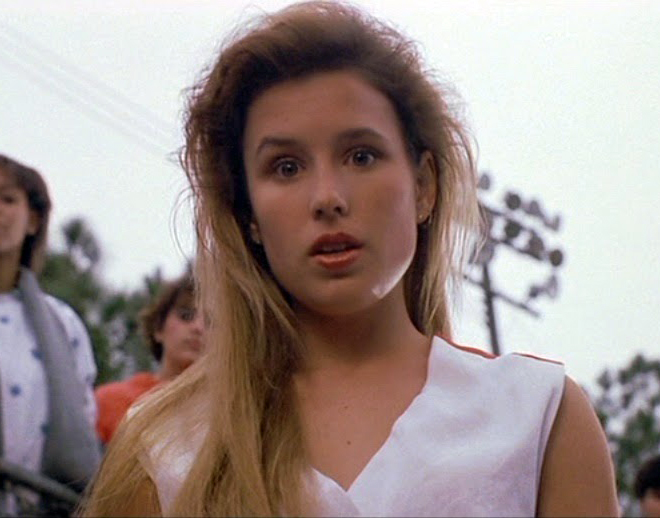
It’s also, IMHO, a perfect example of how to do a remake well. True, it has cheese galore when viewed through the prism of modern CGI capabilities (although I swear that practical effects still trump CGI any damn day). However, here are the four reasons that I think this was a successful remake: They waited a significant amount of time between the original and the remake (30 years is way more substantial than, say, the 10 years certain people waited to reboot the Spider-man franchise); during the time that passed in between the original and the remake, significant advances occurred in special effect capabilities (again, as opposed to the relative lack of advances made between 2002 and 2012); they freshened up the script so that it was the same idea but with different reasons and motivations that still worked within the parameters of the idea; and they twisted things up a bit by giving us a new hero…now a heroine in the form of Meg Penny.

This is primarily why I have chosen Meg Penny as a Lady of Horror May-hem: She was an early example to me of how remakes can switch things up and turn earlier accepted norms upside down in the best possible ways. Rather than sticking with the original plot’s male hero, played by a “teenaged” Steve McQueen (who was nearly 30 when he made this movie and looked nearly 40), this time they chose an actual teenager! And a girl! Shawnee Smith was 17-18 years old at the time she played Meg. In a review of this movie I posted elsewhere, I wrote of Meg:

She was cute, she was sporty, she could rock pearls and a machine gun. Plus, she had this hair that was like the most awesome non-mullet mullet in the history of mulletdom. I have no idea what this hairstyle was supposed to be…but she somehow made it work.

Additionally, one of the things that has always cracked me up about Meg is that, while she has an uncanny ability to adapt to a series of increasingly bizarre and terrifying events transpiring in rapid fire, she never ever gets the chance to pull off the perfect “So, there!” exit from a situation. You know what I mean…that great exit that everyone always wants to get the chance to do at least once in their life, usually right after delivering the perfect verbal burn or rigging a charge to explode canisters of liquid nitrogen. You all know what I mean, right?

Seriously, poor Meg simply can’t catch a break when it comes to making a solid exit, and that gave her a relatable quality that I always enjoyed. She’s a horror movie heroine, but she bumbles along sometimes just like the rest of us. We won’t ever make a mullet look quite so fabulous, though. Natch.

Ladies of Horror May-hem: Pazuzu

pazuzu

I think this might be my most controversial choice for this series. However, I stand by it 100 percent. See, for me, The Exorcist remains one of the greatest horror movies ever made. The reason stems from so many different sources, from original book to screenplay to direction to casting to practical effects to makeup to special effects…this movie had so many moving pieces that fell perfectly into place to make this well-oiled machine of a movie.

Two of the oft-overlooked but integral cogs in this wheel are the two women who helped to make the demon Pazuzu even more terrifying than a little head-spinning, naughty language, soup-puking, crucifixated little girl could by herself. First, however, I don’t wish to take away from Linda Blair’s performance as Regan MacNeil. I think she was amazing in this role, and her ability to make Regan sympathetic and believable as this vessel for the demon Pazuzu are two reasons why this movie remains as powerful as it is more than 40 years later. However, Regan as her own character does not fulfill my requirements for the Ladies of May-hem, because she is not the proactive central character. She is the receptacle for the proactive possession by Pazuzu.

Back to what I was saying. One of the creepiest recurring themes throughout the film is the split-second splash of luminescent white face we see throughout the movie (even more throughout the jazzed up re-release they did back for “the version you’ve never seen” DVD release). The flashes are so brief…just long enough for you to register that horrific visage and shiver as a result. That face was actress Eileen Dietz, see on the left:

dietz-mccambridge

The lady on the right is the one who ultimately makes Regan’s possession the most believable. Close your eyes. Now, imagine the sounds emanating from that possessed little girl. The wheezing breaths. The raspy moans. The guttural, vile, almost multi-voiced heaving and threatening and cursing and screaming and laughing…all of it, so terrible flowing from the mouth of a child.

Only it wasn’t really a child making all those noises. It was silver-screen star Mercedes McCambridge, who went uncredited for her vocal talents at first but later received the credit she most definitely deserved. McCambridge went through hell to provide those voice-overs for Regan, sometimes having the sound recorders tie her to her chair and leave her in the dark, to put her in the proper frame of mind. As if there were such a frame of mind for those sounds. Those awful, demonic, spine-shivering sounds.

Just thinking about them now is giving me a strong case of the NO.

Dietz and McCambridge actually both went uncredited for their parts in The Exorcist. However, they both helped give Pazuzu its true face and voice, thus solidifying the demonic presence even more and solidifying their places in horror history.

Ladies of Horror May-hem: Alice Johnson

alicejohnson

I was so excited about the thought of adding Alice Johnson to my list of horror heroines. See, most of the time, when people think horror heroine, especially in reference to the Nightmare on Elm Street franchise, they immediately (and rightly) think of Nancy Thompson. She was, after all, the first Elm Street kid to defeat Freddy Krueger.

(Sorry for that spoiler and for the few spoilers that I have to drop into this post…but I kind of have to reveal some stuff to reveal my reasoning…)

What a lot of people fail to remember is that, yes, Nancy defeated Freddy twice, but there’s only one bad-ass grrl who both defeated Krueger twice and lived to tell the tale.

Enter Alice Johnson.

We first meet Alice in A Nightmare on Elm Street 4: The Dream Master. She’s one of those “transformation girls,” quiet and shy and mousy and weak…but guess what? Let’s just say that she “masters” those issues like a baus. Honestly, it’s one of the best depictions of the transformation trope I can think of in slasher-level horror. Of course, I say that with the full confession that I have a huge soft spot in my horror heart for Freddy Krueger (the Robert Englund version…which, let’s face it, is the only version that matters at all in the history of ever).

Still, watching Alice Johnson metamorphose through this movie is a joy to behold, and nearly as much fun as watching Englund not just chew scenery but devour it, whole piece at a time as Krueger. When you’ve got someone like Englund playing your main villain, you need an actor who not only can convince viewers of her inherent weakness but also can be believable as a suitable counterpoint to Krueger when the time comes. Lisa Wilcox was quite a brilliant choice for these reasons. She pulls off timid, fearful Alice quite well. And bad-ass Alice? Oh, yeah. She could match the camp and slash of Freddy K.

When I saw that they’d brought Alice back for A Nightmare on Elm Street 5: The Dream Child, I was actually sad. I kind of figured, based on previous track records, that this meant that she wasn’t going to make it to the end. Again, I’m sorry for this spoiler, but this is ultimately one of the main reasons I chose Alice…she kicks Freddy’s ass one more time and lives to tell the tale.

For the final movie in the original series, the creators decided to go in a decidedly different direction from the previous movies, and then Wes Craven came back to reclaim Freddy with his New Nightmare (which ironically brought Heather Langenkamp back into the Krueger fold), so we never saw Alice again in the movies. I’m actually okay with that. I admit that I wanted to know what had happened to her after the fifth movie, but I also reminded myself that the third time could have been the charm…for Freddy.

No, I’d like to believe that Alice never encountered Freddy again and that she and her son found a nice little suburban neighborhood to live in. Somewhere green and quiet, where her biggest nightmare would be trying to pay bills or get her son to ball practice on time. I know, it doesn’t sound all that exciting…but she’d probably love every minute.

Ladies of Horror May-hem: Annie Wilkes

anniewilkes

Oh, Annie Wilkes, you crazy dirty birdie, you.

That’s right, denizens…my selections aren’t always going to be the heroines of the story. And that’s the only spoiler that I’m going to give you for Misery and its leading lady. Yes, this movie came out in 1990, but I know that some of you haven’t yet seen it. Or some of you haven’t seen it in a long time. I urge you to remedy this. This might very well be one of the best screen adaptations of a Stephen King horror novel yet filmed (I would even contend that it holds its own against non-horror adaptations like The Shawshank Redemption).

The plot revolves around writer Paul Sheldon, most famous for a series of novels featuring a character named Misery Chastain. When Sheldon crashes his car during a blizzard while driving through an isolated section of Colorado, he’s lucky to be rescued by Annie Wilkes, a local nurse who just happens to be his “number one fan.”

No three more frightening words exist in the English language, thanks in great deal to Kathy Bates. In fact, the role of Annie Wilkes not only instantly tagged Bates as a major-league Hollywood player, but also earned her a Best Actress Oscar, the first ever awarded to an actress for a role in a horror movie. Even King loved her performance

Flashback Friday: Elvira, Mistress of the Dark

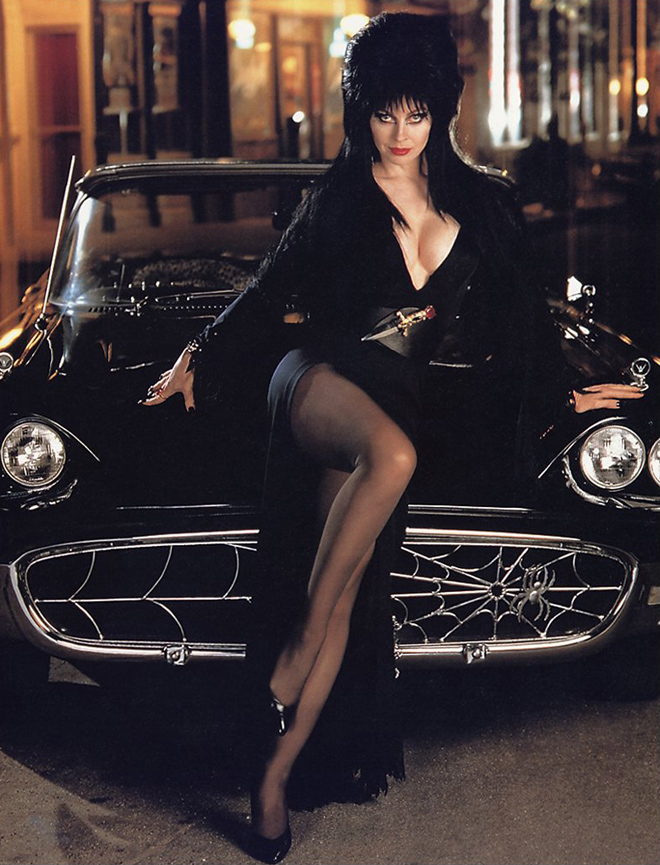
I suppose this is both for the character and the same-titled movie. But let’s face it: The movie wouldn’t have existed without the character first. And oh, what a character she is.

You all know that I love horror movies. And anyone who loves the horror genre knows that sometimes really bad horror equals a really great movie-watching experience, especially when said horror is brought to you with respectful acknowledgement of said shlockiness. By a Goth Valley Girl with really large…assets.

Enter Elvira, Mistress of the Dark.

elvira

To be honest, I’m slightly too young to be able to claim that I first knew Elvira as the host of Movie Macabre. I must confess that I first knew her as the provocative spokesghoul of…Coors Light:

//www.youtube-nocookie.com/embed/K1zcV_Za2t0

All right, all right. Cut me some slack. I didn’t know anything about beer back then. Besides, they brought me the Mistress.

Of course, the feminist side of me wants to rage against the first-blush image of Elvira and her scantily clad form and what might be the most amazing push-up bra in the history of everything. However, my more learned feminist side informs me that a woman can dress however she chooses to without fear of retribution or repercussions, and if this is how Elvira wishes to dress, then so be it. Then, of course, the engineering side of me wants to know things like how on earth does she stay inside that low-cut dress? I mean, everything has its limits, and I would think that she would have maxed out that dress a while ago.

Look even more deeply and you’ll find the woman behind Elvira and an amazing story. Cassandra Peterson, she who is the Mistress, was born in Manhattan, Kansas, in 1951. When she was three years old, she knocked a pot of boiling water onto herself, burning off most of her hair and ending up needing skin grafts over 35 percent of her body. It was so bad, she said that doctors had to graft skin from her mother to cover her burns.

Peterson would later state that her scarred appearance was what led to her love of horror. She’s said in interviews that she felt “comforted” by the monster movies of her youth because other kids often made her feel like one of the monsters from those movies. Then came puberty and a sudden expansion of her…personality that she admits led her to be what she has deemed cruel and taunting to the boys. In fact, she has stated that she channels some of that uninhibited teenaged lustful indulgence into Elvira’s personality.

Fast forward to post high school when Peterson went to Las Vegas to become a dancer and ended up being told by the King himself, Elvis, to get out of Vegas before it consumed her. So, she packed up and headed to Italy, where she met Federico Fellini and ended up in his movie Roma.

Back to the States and she found herself in LA LA Land and part of the improvisational group The Groundlings. This troupe has provided many a stand-up and star to comedy clubs and shows like Saturday Night Live and MadTV. It was also where Peterson both began to hone her Elvira persona and where she would meet and become friends with Paul Reubens. She even appeared in a brief non-Elvira cameo in a little movie called Pee-wee’s Big Adventure.

Tequila, anyone?

//www.youtube-nocookie.com/embed/UVKsd8z6scw

And then, of course, came Peterson’s big break when she saw that a local affiliate was looking for a new host to help them bring back their weekend horror show, originally called Fright Night but rechristened Movie Macabre. With her sharp comedic timing, her sarcastic Valley Girl comments, delicious double entendres, unforgettable visual aesthetic, and anachronistically upbeat personality, Peterson’s Elvira was destined to become one of the most popular horror personalities of the 80s. Hell, of every decade since she started, really.

Of course, the zenith of her popularity was around the time that NBC Pictures greenlit her very own titular (heh) film in 1988. Co-written by Peterson, the film is one of the purest forms of 80s horror comedy shlock imaginable…which means it’s kind of perfect if you think about it. Elvira made her claim to fame by providing snarky yet loving commentary to really awful horror movies. She was MST3K before MST3K. For horror. What better venue for the Queen of Cheesy Horror than her very own cheesy horror?

Seriously, it’s really cheesy. And stars Edie McClurg as one of the antagonists. And W. Morgan Sheppard as one of the other antagonists. And the nerdy wheelchair-bound kid from A Nightmare on Elm Street 3: The Dream Warriors. (Spoiler: He doesn’t really need a wheelchair.) Plus a bunch of other instantly recognizable character actors populating a town in Massachusetts called “Falwell,” and a poodle with a punk-rock buzz. Oh, and tassles. Spinning tassles. I kid you not, denizens. There’s really nothing else I can think of to say about this movie after that.

//www.youtube-nocookie.com/embed/MfVl56ZQBWA

Do I recommend this movie? Oh good grief, yes. Rent it, buy some really good beers (Sorry, Coors, that doesn’t mean you), invite over some friends, and just have a great time laughing at one of the most ultimate midnight B-movies ever made. You’ve heard me say it before, but it bears repeating: When horror is good, it’s great…but when it’s bad, it can be spectacular. Elvira is spectacular.

Flashback Friday: Tommy Boy

I’ve already written about a movie based on a Saturday Night Live skit of shwingalicious proportions. To be honest, it’s one of the only SNL-based movies that I can tolerate, let alone love.

[Loba Tangent: Dear Mr. Michaels, Creating a character that is funny for five minutes does not automatically translate to said character being funny for 90 whole minutes. Tangentially, having a cast member who can be funny for five minutes does not a movie star make. I won’t name names, but I suspect you already know about whom I speak.]

Then there is Tommy Boy, SNL alum Chris Farley’s first starring foray into movies.

tommyboy

I’m sure it was a scary prospect, moving from the safety of Rockefeller Plaza to Hollywood, so Farley took along his woobie…er, friend and fellow cast mate, David Spade.

[Loba Tangent 2: This was Spade and Farley’s first movie together, but they appeared in a lot of SNL skits with each other and they went on to make another movie, which was a blatant attempt to capitalize off the popularity of this one. Riding the coattails, so to speak. Kind of like how Spade rode Farley’s coattails, even after Farley died. Oh, you thought I had forgotten that awful DirecTV commercial you did, Davey? Not cool, man. Not cool.]

Enough tangents. I love Tommy Boy. It’s not Shakespeare. It’s not deep. It’s not Oscar-worthy. It belittles stupid people and fat people and skinny people and balding people and short people and Midwesterners and city slickers and deer and bees and cows and cops and working-class people and white-collar people, and I think it implies a little bit of non-incestuous incest for a couple of characters.

But…it’s funny. It’s damned funny. Whatever his hangups, proclivities, problems, or demons, Chris Farley was an incredibly funny guy. He channeled Belushi’s energy in so many ways during his SNL days, to both great and awful ends. He was the eponymous bull in SNL’s china shop, body-slamming and careening his way through some of the most hilarious skits to come from that show’s time period…hell, to come from the entirety of the show’s run.

And he brought that same untamed energy to Tommy Boy, this paint-by-numbers buddy movie about a bumbling oaf and a snippy little pencil pusher, one who is clueless about everything and the other who is bitter to his core about said cluelessness.

This time? Hilarity absolutely ensues.

This could have been a nothing movie like so many other cinematic flops from SNL cast mates (even though Tommy Boy wasn’t an actual SNL character, the truth is that most every character Farley ever played was actually just Farley being Farley…and that was perfectly fine). And, to be fair, the “holy shnikey” shtick threatens to wear thin (but only threatens; it somehow holds in there until the end). There was something about Farley in this movie…something that he was never able to recapture, not even by pairing up with Spade for the lesser Black Sheep, which was really just a different iteration on this movie.

Tommy Boy came out in 1995, and sadly, it was Farley’s highest career point. He remained on SNL a bit long and did a few more movies that never came close to the popularity of this film. And then his demons finally found him and he overdosed on December 18, 1997. He was only 33 years old. I remember that it was close to Christmas when he died because my mom told me while we were out Christmas shopping. I even remember where we were: standing in the classical music section of the Waves Music, looking for something for my dad. Crazy, right? Most people remember where they were when Elvis died or JFK or John Lennon. I’ll always remember where I was when I learned that Chris Farley died.

Talk about a downer. Just call me Debbie. Oh, but please don’t try to make a whole movie based on Debbie Downer. Here, let’s forget I even mentioned the name. Let’s watch the trailer for Tommy Boy instead. And after we’re finished, we can go cow tipping. I heard that Sandusky has their own league (I should know; I used to have the T-shirt)…

//www.youtube-nocookie.com/embed/6nQ4K2bvVxY

BookBin2014: The Complete Peanuts 1975-1976

peanuts7576

This is going to be a very quick review, denizens. Apparently, that’s all I have time for these days. Really, though, there’s not a whole lot to say about this read. While wandering through parts of the library I’d never been in before (read: the kids’ section), I stumbled across a small collection of some of the books from the Complete Peanuts comic collection that has been slowly hitting the shelves.

I really want all these books, and I don’t know why I haven’t been buying them as they come out. I even went so far as to add them to my wish list, to remind me to buy them. And yet, I have not. I love the Peanuts. I used to save all the Sunday comics when I was a kid. By then, of course, the strip had lost most of its bite, which made them perfect for young readers but, I realize now, must have been quite disappointing for readers who loved the edginess of the early strips.

Apparently, the edge was dulling even in the mid-1970s. Lots of focus on Snoopy, including what I guess was Spike’s first big foray into the comic strips. I remember Spike was a strip stalwart in the 80s, so I found it interesting to see his official big-scale arrival. I also got a little bit of a kick seeing the comic strip that originally ran the day I was born. Because, really, who doesn’t love a shot of narcissism with their Peanuts?

This wasn’t a bad collection to thumb through on a snowy Sunday, but it did rekindle one of my primary concerns with this collection, and what I think is ultimately causing my hesitation: At what point do I stop buying the books? We all know that I have a slight bit of OCD. It was difficult enough for me to stop buying X-Files seasons (hell, I’m still vacillating on that decision!). Can I handle not having the entire collection? What if I miss something really good because I drew the line too soon? Should I draw the line? Or do I just buy them all and deal with the fact that later books won’t be nearly as good as the earlier stuff?

This. This is what I deal with all the time, denizens. Be thankful I filter. Most of the time.

Final Verdict: I really do need to start collecting these books. When does that tax return come in?