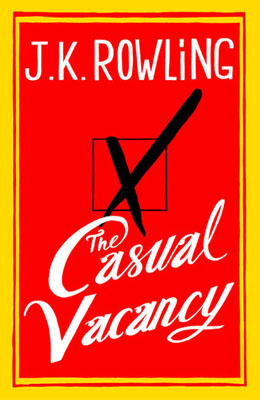
BookBin2014: The Casual Vacancy

casualvacancy

I suppose that notoriety for a particular “thing” does have a bit of a double edge to it. Yes, you have gained fame (and often great financial stability from said fame), but you also have found yourself pigeon-holed by expectations that you forever continue to be/do said famous “thing.”

Such is the case with J.K. Rowling. After spending more than a decade spinning the tales of Harry Potter and his band of friends and foes at the Hogwarts School of Witchcraft and Wizardry, she was both quite financially set (richer than the bloody Queen!) and quite pigeon-holed. What do you mean, you don’t want to write about Harry’s adventures anymore? What? You want to…write for adults now?

(Okay, some can very validly argue that she was writing for adults also with the Harry Potter books.)

So, after years of being She Who Must Write Harry Potter Fiction, Rowling decided to hang up her invisibility cloak and set to writing different stories about different people in a completely different style. A style meant for grups.

I have to admit, denizens, that I found this highly disorienting. I sort of expected this response, which is why it took me this long to take a stab finally at Rowling’s novel The Casual Vacancy.

From an objective perspective, Rowling’s first foray into writing for adults? Not bad. Quite decent, actually. She’s rather successfully brought her acumen for planning and outlining intricate plot points in clear language to this novel about the idyllic parish of Pagford and many of its residents. She weaves a detailed tale of the many surface and surprising ways that the sudden death of Parish Councillor Barry Fairbrother impacts the town. She assembles an impressive array of characters and how they connect, impact, influence, irritate, offend, betray, belittle, disappoint, inspire…basically, how they interact with each other in realistic, albeit overly negative ways (Rowling’s commentary on our real-life propensities to too often be utter gits to one another?).

Objectively, this is a fascinating character study from a skilled author, even if it is a bit like a slightly more high-brow, slightly more believable literary equivalent of a soap opera. Rowling’s take on The EastEnders?

Subjectively, I have to confess that I found myself often thinking that the writing was far too blue, far too graphic at times

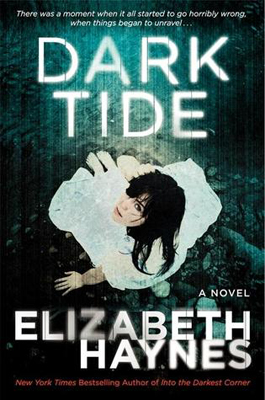
BookBin2014: Dark Tide

darktide

First, a caveat: This book has two different titles, depending on which side of the pond you find it. In Elizabeth Haynes’s home country of England, the book is known as Revenge of the Tide. Here in the colonies, however, the book is called Dark Tide. Haynes does make note of the fact that the U.S. version of her story went through additional revisions that provided a bit more back story for the main character. Perhaps they changed the title to allow readers the chance to more easily identify the two different versions. I’ll go with that answer for now.

Anyway, I decided that I wanted to continue on the mystery thriller streak that I started with Gone Girl. This book sounded promising from its dust jacket blurb, which describes how protagonist Genevieve Shipley has left behind all the stresses of London to spend a year remodeling a houseboat she purchased in Kent (heh, Shipley…houseboat…clever girl, that Haynes). Part of the stress, however, finds her in her new home when she discovers the body of a former friend/colleague floating outside her bedroom window one night.

Different level of stress from what we’re used to, eh?

From the point of discovery, we begin to learn more of Genevieve’s London life: Of her horrible day job that she wants to leave more than anything, and of the night job she takes to reach her financial goals a bit more quickly. Seems she’s got quite a talent for pole-dancing in her exercise class, so her instructor (a former stripper, of course) sets her up to become the newest dancer at the Barclay, a classy gentleman’s club where the strippers might wear very little, but they never wear clear heels.

Chris Rock hollaback.

Truthfully, this wasn’t a bad novel. Haynes is an able writer and, as a police analyst, she infuses a certain level of professional believability into her writing that grounds it, gives it a bit of much-appreciated heft. I’m still uncertain as to whether I’m ever going to be a true fan of these types of books, but I obviously enjoyed this one enough to finish it (although I didn’t find it to be quite the page turner that I found Gone Girl to be).

Plus, Genevieve is a likeable enough character. Actually, many of Haynes’s characters were likeable (which was a welcome change from the last book). I read a couple of reviews that dubbed Genevieve a “good girl gone bad.” I don’t necessarily think that’s a fair assessment. If anything, I think that Genevieve remains relatively inline with her true self (which isn’t “good” or “bad”…I’d say she’s a decent soul). She’s a bit naive when it comes to certain things, true, but she’s also more than aware of other things, knows how to take care of herself (for the most part) and knows that sometimes you have to take different routes to get to where you want to go. I wouldn’t say she’d “gone bad” at all; she just made allowances that she didn’t properly think through so that she could get what she wanted. This story is just an exaggerated example of how having tunnel-vision focus on a goal can sometimes lead to very bad things.

Final Verdict: Dark Tide is a solid enough mystery that had a satisfying series of revelations and wrap-ups. I don’t foresee purchasing it, but I wouldn’t be averse to reading other novels from Haynes.

BookBin2014: Gone Girl

gonegirl

New year, time to start the new BookBin litany. Of course, I’m still promising to get through all the books from my own collection that I need to read…and now that I have them all properly arranged in one place thanks to relocating to a new domicile that has, of all wondrous things, denizens, my very own reading den, I see how many books I own that I have never read. It’s alarming.

So what did I do? I went to the library and checked out a stack of books…including the book that I saw most frequently at the top of people’s book stacks last year: Gillian Flynn’s suspense thriller Gone Girl.

I was a bit worried about getting this book, which was why I avoided picking it up last year whenever I saw a copy available in the New Releases section. I’m infamous for balking at those things most people bury under mounds of hyperbolic praise. There is nothing more difficult sometimes than living up to other people’s hype. Amplify that hype through the ever-present, always wired online echo chamber and good luck trying to hear an honest opinion above the roar.

However, I recently read a book-to-movie list for 2014, and Gone Girl was there, directed by David Fincher, one of my favorite modern filmmakers. I decided this was the push that I needed to finally read this novel.

Here’s a quick snippet of the “official” description:

On a warm summer morning in North Carthage, Missouri, it is Nick and Amy’s fifth wedding anniversary. Presents are being wrapped and reservations are being made when Nick Dunne’s clever and beautiful wife disappears from their rented McMansion on the Mississippi River. Husband-of-the-Year Nick Dunne isn’t doing himself any favors with cringe-worthy daydreams about the slope and shape of his wife’s head, but hearing from Amy through flashbacks in her diary reveal the perky perfectionist could have put anyone dangerously on edge.

Under mounting pressure from the police and the media – as well as Amy’s fiercely doting parents – the town golden boy parades an endless series of lies, deceits, and inappropriate behavior. Nick is oddly evasive, and he’s definitely bitter – but is he really a killer? As the cops close in, every couple in town is soon wondering how well they know the one that they love. With his twin sister Margo at his side, Nick stands by his innocence. Trouble is, if Nick didn’t do it, where is that beautiful wife? And what was left in that silvery gift box hidden in the back of her bedroom closet?

That’s all I’m going to give in regard to plot. I’d hate to give away anything here, as this is a suspense novel. Part of the fun of these stories, I’m told, is figuring out the mystery for yourself. I found that some of the twists in this novel become quite obvious, especially as you get a better feel for the truth hidden among the flotsam of falsities that saturate this story. Some twists are less obvious, but if you’re paying close enough attention, especially to those “innocuous” throw-away lines, you’ll be okay.

Admittedly, I found that I couldn’t put down this novel. This became a problem in the evenings, since I usually read as a means of mellowing out and shifting into “sleep” mode. This book did not make me want to sleep. It made me want to keep reading. I finally capitulated to this need and spent the better part of this past weekend devouring the remainder of this novel.

My general opinion of Gone Girl is that Flynn is a masterful writer who apparently has chosen to specialize in showcasing some of the worst that humanity has to offer. I disliked practically every character. I think, though, that’s the point. Apparently, Flynn wants us to believe that some people live their awful lives, surrounded by equally awful people…or people far more awful than they could ever aspire to become. For Flynn, awful attracts awful. Twisted forms more twisted. Repulsive is the new black.

Then there is the ending. Many people hate the ending. Many view it as a cop-out. Many view it as ruinous. I can understand these reactions. I didn’t experience any of these responses, but I think that’s because I was not invested in any of these characters. I realized pretty early on that I didn’t care what happened to any of them. I was more fascinated by Flynn’s writing and her incredibly warped sensibilities…watching how she tied the knots and then watching how she would untangle them all in the end. I might have experienced some sympathy for a couple of the characters, but that didn’t last long. If anything, they are interesting to observe before leaving them behind and thanking your lucky stars that you don’t know anyone who even remotely resembles any of these people.

If you do know people like the ones in a Flynn novel, I’m supremely sorry.

I didn’t think the ending was all that out-of-character. I also didn’t have any other preferred ending in mind. I know many people were probably looking for an ending in which certain characters received retribution. No one likes to think that bad people can get away with doing bad things. Sadly, though, it happens all the time in real life…and we apparently want all our escapism to be just the same as the reality we’re seeking to escape. So…retribution denied.

As for the movie, I’m actually pretty on-board with most of the casting. I think Rosamund Pike will make a great Amy Elliott Dunne. I actually think Ben Affleck will make a good Nick Dunne. I do wish they were closer in age, but that’s an aesthetic complaint only at this point. Strangely enough, I was actually picturing Neil Patrick Harris as Desi Collings in my mind as I read the novel, so I’m obviously okay with his casting. I disagree with Tyler Perry as Tanner Bolt, but that’s because I disagree with Tyler Perry. Kim Dickens was a surprise to me as Detective Rhonda Boney, but that’s another aesthetic gripe (the novel’s Boney does not sound like she would look at all like Dickens). I really hope that Emily Ratajkowski can do more than make “duck face,” because she’s going to be really irritating if she can’t.

Final Verdict: I don’t think I want to add this novel to my own collection. It has made me want to seek out at least one more example of Flynn’s writing style, but probably not for a while. I don’t know if I want to submerge myself so soon into the warped psyches of the inhabitants of Flynn’s world. However, I will be keeping an eye on movie news. I might even go see this in the theater. Probably not…but you never know!
BookBin2013: Batman R.I.P.

batmanrip

Yes, that’s right…one more BookBin review for the late, great 2013. I didn’t completely finish this one last year, but I finished the bulk of it…so it counts, dammit.

To be honest, I felt mostly lost the entire time that I was reading Batman R.I.P., written by Grant Morrison and illustrated by Tony S. Daniel (with cover art by the impeccable Alex Ross…who likes Batman’s eyes to be brown while the book artist makes them blue). I don’t really follow Batman in the comics. I know enough about him through comic book osmosis, the 1960s show, and the Tim Burton movies (well, at least the first one was awesome). The only thing the Christopher Nolan movies taught me was that I could really hate Batman under the right circumstances.

Nolan’s movies also taught me that I really don’t like The Joker being played as totally psychopathic and cruel. He needs to have some kind of softening humor to him. Some kind of Cesar Romero or Jack Nicholson joie de vivre. Without that whimsy, he’s just…like any other psychotic killer. Even Alan Moore’s Joker was more interesting than the way the character comes across now. And having him split his tongue with a straight razor (SPOILERZ) so that it looked like a serpent’s tongue? That was around the point when I kind of shut down on that character. I can’t help it. I grew up with Romero’s kooky, loveable Joker and “This town needs an enema!” Nicholson Joker. Besides, why does everything have to be so sick and twisted and dark anymore? Tongue-splitting Joker. Neck-breaking Superman. Spoilerz. What happened to having fun with these stories?

I get that Batman’s had a rough life. As rough as a life can be for a multimillionaire who never has to work an honest day in his entire life. I guess we should be thankful that he wants to do good and fight evil rather than jet off to Bora Bora every weekend with his latest fling. Still, lighten up, Brucie. Dark Knight is Dark. And mopey. Then again, this is called “Batman R.I.P.” Moping is allowed, I suppose, when everyone is always trying to kill you.

All in all, it was an entertaining read with some really fine artwork, even if: A) I felt like I was missing key information while reading parts of it; and B) It does go a bit off the rails here and there (although maybe those moments would have made more sense if I’d had all the pieces to the puzzle). Also, no one is ever going to believe that any of these characters is ever going to really die. People who don’t really die: Star Trek characters and comic book heroes. Whether they come back as half-Romulan hybrids or they’re rebooted back into existence, they’re always going to be around. Not even having a bridge dropped on him could stop Captain Kirk, in the books at least. SpoilerZ. So at no point did I ever believe that Batman was really going to die. Also, I have the pleasure of being in the now and knowing that Batman does, indeed, still live.

I also don’t really get the back story for all the different Robins. Yeah, I know that one of them is now Nightwing. And I think one of them is dead (okay, so some characters do die…but only the replaceable ones). Not that I really care all that much. Still…it feels like there’s something questionable going on in Gotham that they keep remanding all these boys over to Bruce Wayne’s care but not investigating when they “go missing.” Maybe that’s just me. I had to laugh at the appearance of original Batwoman, in her yellow onesie and her Bat lust for Bruce Wayne. Oh, Katy Kane. You so cray.

And now excuse me while I wash my brain out with peroxide for actually using the word “cray.”

Final Verdict: Even though I found the novel enjoyable enough to finish it, I guess it’s safe to say that I’m not much of a Batman comic fan. I still love the original series and I still love the Tim Burton movie. I also like the concept of the character, for the most part. However, I think I find others from the Bat Family more interesting than the Dark Knight. Still, I’ve got a “classic” Batman graphic novel in my collection that I need to finally read. I’ll let you know how that goes…

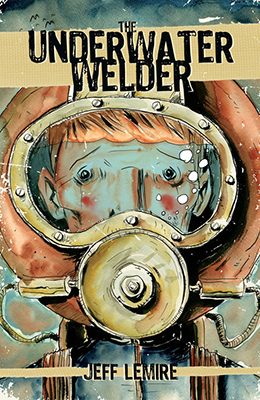
BookBin2013: The Underwater Welder

underwaterwelder

I nearly put Jeff Lemire’s graphic novel The Underwater Welder back before even giving the story a proper go. Why? Because the Introduction’s author likened the story to “the most spectacular episode of The Twilight Zone that was never produced.” That’s not what set me off; I actually love The Twilight Zone. What set me off was the author himself: Damon Lindelof. Otherwise known as “The Butcher of GallitepStar Trek Movie Scripts.”

My honest initial reaction was, if Lindelof knows as much about The Twilight Zone as he does about Trek, then no thank you. However, I resisted the temptation to judge the book based solely on the questionable choice of Lindelof as the one responsible for introducing this novel. And I’m very glad that I did.

Lemire’s story of Jack Joseph, he of the titular profession, is equal parts eerie, surreal, mysterious, and moving. Jack is facing the life change of a newborn son

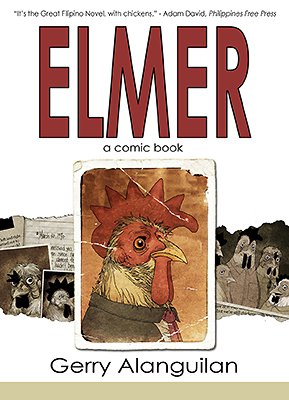
BookBin2013: Elmer

elmer

Another graphic novel posing another allegorical examination of another human flaw. This time, rather than examining our obsession with war by putting animals in the path of bullets instead of humans, we examine humanity’s intolerance of those who are different…through racism toward sentient chickens.

I know, denizens. I know.

Actually, though, sometimes the best way to get someone to think differently about a topic or to look at it with fresh eyes is to pull it out of familiar settings and turn it on its head a bit. Why do you think Star Trek has been so popular for so many years? When we remove these topics from the realm of the familiar and put them in unexpected settings, we’re forced to view them in new ways. Perhaps even view them in ways opposite from how we would typically view them.

Such is the case with Gerry Alanguilan’s graphic novel Elmer. Part social commentary, part family drama, the novel tells the story of the strange and sudden evolution of chickens into creatures capable of intelligent communication and interaction with humans, and what this means for a global society forced to accept that what was once part of the dinner menu at McDonald’s now demands the same rights and freedoms as any other sentient being.

Where my previous BookBin review left me feeling quite depressed, Elmer left me feeling amused as well as enamored of the fact that Alanguilan succeeded, for even the briefest of moments, in encouraging me to re-examine my rather carnivorous eating habits. What would I do if, tomorrow, chickens actually did start speaking? Or, even worse, cows? How would we deal with no longer being able to depend upon these creatures for sustenance?

Insert parallel comparison with slavery and emancipation. Minus the consumption. Again, always interesting when someone can force us to view old arguments through new lenses.

Sadly, I’m still just a carnivore at heart. I’ve greatly reduced my meat consumption in recent years, particularly my red meat consumption. But sometimes…sometimes. Sorry, Bessy, but sometimes I just need a steak.

Final Verdict: I might be tempted to add this to my wish list, just to keep an eye out for a cheap copy through Amazon Market Place. It was an interesting enough concept executed in a captivating enough way that I wouldn’t be averse to revisiting it later on (could I sound any more non-committal?).

BookBin2013: We3

we3

Obviously, I’ve been hitting up the library quite a bit in this last half of 2013. This past trip, I spent even more time than usual in the graphic novel section. Seems they got a new shipment of books in recently, and I couldn’t help myself. That’s the only way I can explain how I ended up with this strange three-comic collection, We3, written by Grant Morrison and illustrated by Frank Quitely (Scotland Tag Team, woot!).

“We3” stands for “Animal Weapon 3,” a government experiment to turn common house pets into lethal weapons. This particular group of weaponized animals, the third in a series of tests, consists of three pets stolen from the streets: a brown Labrador mix named Bandit, a tabby cat named Tinker, and a black and white rabbit named Pirate (yeah, I’m not really sure why the rabbit was hopping out on the streets either). They are reclassified (rather originally) as “1,” “2,” and “3” and outfitted with body armor that contains missiles, razor-sharp claws, machine guns, and mines. Scientists also somehow soup up their brains to a point where they can speak in rather rudimentary ways.

Yes, before you even say it, the basic story does sound a bit silly. Then again, with a culture as obsessed with war and destruction as we are, sometimes I wonder if we even have limits to what we would be willing to do in the name of defending ourselves.

Beyond finding the concept both silly and disturbing, I just felt depressed after reading this book (even with the questionably “happy” ending). Still, kudos to Morrison for writing a compelling story and to Quitely for beautiful artwork.

Final Verdict: This series posed an interesting (and definitely unsettling) question about our limits when it comes to war, but I don’t feel as if it’s a question that I want to revisit exploring. Perhaps that’s my own unwillingness to face this particular darkness that surges through humanity and that could actually cause us to consider doing something like this…or worse. We send children to die “for [insert deity of choice here] and country” all the time. Sometimes, even someone as jaded and dark as I can be prefers to put some things out of mind.

BookBin2013: Spook: Science Tackles the Afterlife

spook

I enjoyed Mary Roach’s first appearance here at the lair so much that…rather than read the book of hers that I have owned for almost a decade and still have not read, I found the other book of hers that our local library had in stock and borrowed that instead!

I probably should have gone with the book I already own. I suspect that it would have been more entertaining. That’s not to say that there is nothing enjoyable about Roach’s second book, Spook: Science Tackles the Afterlife. There are several interesting, strange, funny, and disgusting portions of this book that amused (or traumatized) me greatly. Holistically, though, it’s quite an uneven read with a painfully slow start. I think it took me a full four chapters before I finally started enjoy the read. It’s also painfully obvious that Roach doesn’t really believe in any of the things about which she’s writing.

I can’t completely fault her for this outlook. Tackling aspects of the afterlife when there’s not really anything that you can do to prove anything pertaining to the topic…it can be a hard pill to swallow, for sure. But that doesn’t mean that you have to be so…patronizing about it all. Her obvious “Scully” stance on this subject infiltrates every chapter.

To be fair, I have somewhat set thoughts on the “afterlife,” but I’m still not 100-percent certain what I believe (which is why books like this appeal to me in theory). After reading this book, I’m quite certain I know how Roach feels about it all. However, that wasn’t my interest in this book and it wasn’t my hope when I decided to read it. I simply wanted to learn more about other cultures’ views as well as some of the experiments performed in the hopes of applying science to faith. I got that, but I definitely could have done without the accompanying patina of Roach’s incredulity concerning everything she discussed.

Still, there are some interesting portions, as I mentioned. You simply have to suss out the interesting from the supercilious.

Final Verdict: I do believe I shall pass on adding this book to my library. I also really do need to read Stiff at some point in 2014…along with all the other books in my library that I’ve still not tackled. No, seriously. STOP LAUGHING.

BookBin2013: Reel Terror: The Scary, Bloody, Gory, Hundred-Year History of Classic Horror Films

reelterror

This is a first for this year, denizens. This started out as a library loan that I simply couldn’t finish before I had to return it…so I just went ahead and skipped adding it to my wish list, instead buying my own copy right away. I was enjoying it so much while reading it that I knew I was going to want a copy for my own library anyway (guess you can guess what the Final Verdict is going to be today, eh?).

You all know how much I love horror movies. As someone who has been a fan of the genre longer than even sci-fi and Star Trek, I tend to read and watch a lot about horror movies. Therefore, I can say that, from the perspective of a die-hard horror fan, David Konow’s anthology Reel Terror didn’t provide a lot of stuff that I didn’t already know, but did provide a nice timeline of the evolution of cinematic horror as well as an outline of some of the biggest movie high points. The book would be a good genre guide for those who might not be as well-versed in horror trivia but would like to learn more.

To be fair, the book does feel a bit redundant in light of the special edition DVDs of the movies Konow covers, which all have special features that cover a lot of the same ground. Also, a lot of the really big horror franchises have documentaries that cover way more ground in way more detail. For example, if you’re a Freddy Krueger fan, get thee to a copy of the documentary Never Sleep Again…or…just…here:

[hulu id=tbspev-i2zgahnxb13hchw width=512]

It’s also kind of strange how Konow shifts from a more holistic history of the genre in its early days to more specific movies once he reaches more recent times. I guess that’s because he’s more in his comfort zone with modern films that more people know. Then again, isn’t that more reason to go into more detail on the early stuff? So that more people know about them and discover their importance to the genre?

And, since I am an editorial nitpicker, I have to say, this anthology needs an editor STAT. Sentences need tightening, grammar needs correcting, facts need checking. Come on, now. Don’t let poor editing wreck a decent book (and some of the mistakes are really quite jarring).

All this aside, Reel Terror is a nice compendium full of fun facts for both beginners and old pros to the horror scene. If you like the genre or are interested in getting more into the genre, I think this book might be for you (you might want to wait until the next edition, though…maybe, just maybe, it will be properly edited!).

Final Verdict: Um. Yeah. You all are lovely smarties. You know the answer.

BookBin2013: Orange Is the New Black: My Year in a Women’s Prison

oitnb

Earlier this year, I found myself under a barrage of questioning from friends, both nerdy and non, all asking me the same thing: “Are you watching that new Netflix show, Orange Is the New Black?” It was weird and somewhat unnerving that people from all angles of my existence were asking about this show and showing utter shock when I responded no.

I hardly watch any television anymore. I mean, sure, I still watch CSI…because Jorja Fox and Elisabeth Shue. Otherwise, I typically tend to shy away from getting into TV shows. They just seem to constantly disappoint me. I’m far too critical for my own good sometimes. Also, why on earth would I want to watch a show about an upwardly mobile, city-dwelling Whiter-than-Casper yuppie who is suddenly faced with serving time in a federal prison for a crime she committed almost a decade prior? Sounded like a recipe in cliches and stereotypes that I didn’t think sounded interesting at all.

However, this constant questioning and surprise over my lack of participation caused enough curiosity that I finally looked up this Netflix show, just to figure out why everyone was asking me about it. And the obvious answer was?

Galina “Red” Reznikov. Known in my world as Captain Kathryn Janeway.

redkj

Oh, yes. This was something I needed to watch.

I typically don’t like things that pique the interest of the Hype Machine (which this show obviously was doing), but I put those reservations on the back burner because of my lifelong devotion to Kate Mulgrew. For the most part, I’m incredibly glad that I did. First, the expected nitpick from me: The show was created by Jenji Kohan, who created the Mary-Louise Parker-helmed Showtime series Weeds. Minus the first season, I hated that show. It took turns so dark and twisted, I finally gave up watching, for fear of ODing on Dramamine just to keep up. Kohan’s MO seems to be giving you characters that you love, instantly like, or even love to loathe…and then making them thoroughly hate-worthy in the least enjoyable ways.

I really hope she doesn’t do that with the characters of OITNB, although the first season ended in such a way that I’m beginning to wonder. Truthfully, though, the primary character, Piper Chapman, is probably the least likeable character of the whole cast. No, the strength of this show lies within the capable hands of one of the most amazing ensemble casts I have ever witnessed in any series. I’ve made note of this before, but it bears repeating that it’s a shame that many of these incredibly talented actresses couldn’t finally catch the break they deserved until being cast as prisoners. Yay for diversity…behind bars.

Seriously, though, the women on this show are amazing: In addition to Mulgrew and Taylor Schilling as Piper Chapman, there’s Danielle Brooks, Uzo Aduba, Laverne Cox, Samira Wiley, Dascha Polanco, Taryn Manning, Michelle Hurst, Natasha Lyonne, Yael Stone, Selenis Leyva, Constance Shulman…they are all so amazing in their roles. You’d think with a show with so many “moving pieces” as this one, it would be easy to overlook characters or forget certain ones in between appearances. Not so with this cast. Each of these actresses brings something so delightful to her character that you remember her, no matter how often or infrequently she appears.

But what does all this have to do with a book review? Glad you asked. After watching the first season and hitting a raging case of withdrawal upon finishing, I put myself on the library wait list for the book on which this series is based. There actually is a Piper, although her real name is Piper Kerman:

With a career, a boyfriend, and a loving family, Piper Kerman barely resembles the reckless young woman who delivered a suitcase of drug money 10 years before. But that past has caught up with her. Convicted and sentenced to 15 months at the infamous federal correctional facility in Danbury, Connecticut, the well-heeled Smith College alumna is now inmate #11187