BookBin2013: Look Down, This Is Where It Must Have Happened

ldtiwimhh

Continuing with the books I finished during those long flights to and from Hawaii, I decided that I also wanted to whittle away a bit at the collection of books I have picked up from City Lights Bookstore the last two times I’ve been to San Francisco (ironically, we had a long enough layover in San Francisco during our journey to the islands that I could have gone back to City Lights for some more perusing…but then we wouldn’t have gotten to do anything else. Because bookstores require HOURS.).

I admit that I chose Hal Niedzviecki’s short story collection Look Down, This Is Where It Must Have Happened because it’s a nice slim paperback that fit nicely into my backpack, in between my DSLR bag and my Kindle. I also admit that sadly one of the first things I noticed about this book was the fact that the Table of Contents listed the wrong pages for every single story (at least in my copy). For someone who spends a soul-crushing amount of time QCing minutia just like this, I was not happy to find such a glaring error during my leisure time. To me, this speaks to a lack of quality in the preparation that could have indicated a lack of quality in the product.

Luckily, this was not the case. Niedzviecki’s stories are captivating oddities, populated by strange and slightly indecipherable (and sometimes utterly unnerving) characters. His language is sparse and understated. His concepts are quirky and often complex…or at the very least complicated. One could imagine his characters populating a world conceived by Charlie Kaufman or perhaps even Robert Altman…actually, I detected a bit of Raymond Carver in these stories (Carver’s collection What We Talk About When We Talk About Love was the inspiration for Altman’s 1993 film Short Cuts). Niedzviecki isn’t quite as intensely restrained in his prose as Carver was, but he wields a similar precision in the selection of words to convey his tales. He also embraces the ambiguity of open endings that I sometimes really enjoy.

Final Verdict: I enjoy having short story collections on call into which I can dive quickly for a tale or two, so I do believe I shall be keeping this one.

BookBin2013: Double Dealer

doubledealer

Lest I end the evening (or the month) with a negative review, let’s talk about that other television franchise over which I’m thoroughly gaga: CSI!

I may have mentioned this at some point here at the lair, but a while ago I found a great eBay auction on a large lot of CSI novels (I think I ended up with the first 10 novels; I could be wrong on that count, but I’m too lazy to get up and check) for a relatively low price. It was low enough, in fact, that I decided that even if I hated every single novel, it was still worth the cost.

Of course, we all know the deal by now: I bought them, received them, stacked them, and promptly moved on to other books. However, I decided one of these novels would be the perfect length for at least one leg of our recent Hawaii adventure…and I was right! I was able to finish this one during the flight from the islands to LAX. Perfect timing!

So Double Dealer, written by Max Allan Collins, is the first of the Las Vegas CSI novels. I’ve mentioned Collins here before; he was the author of three of the CSI graphic novels I’ve reviewed here. From what I wrote previously, I found his writing skills to be mostly entertaining, but I found that his stories didn’t really push the boundaries of the CSI fictional world in ways similar to how the Trek novel writers often pushed that franchise’s “accepted” boundaries. Of this, I wrote:

One thing that I

BookBin2013: A Hard Rain

ahardrain

I always view long flights as the perfect excuse to tune out the entirety of existence for a nice dive into a book or two…or more, depending on just how far I happen to be flying. Recently, I flew to Hawaii. Lots of time for lots of reading (and sleeping, but mostly reading).

I didn’t want to take a lot of thick, heavy books (I wanted to save ample space for important things like all the booze and coffee that I may or may not have bought while there), but I also wanted to take enough books to cover my bases and provide a nice variety of choices.

Thank goodness for Kindle! I loaded mine up with lots of selections, including several TNG books that I have had on my reading list for quite a while. Top choice was Dean Wesley Smith’s “Dixon Hill” novel A Hard Rain. I actually referenced this book in a Doctober post as one of the few TNG novels to actually feature Dr. Crusher on the cover. It was also the only book from this admittedly short list that I had not yet read.

I wish I had left it as unread.

I’ve never read anything else by Smith, but he wrote the novel adaptation of The Core. Do with that what you will (and I already suspect what many of my nerdier denizens will do with it). I got the impression from this story (and its blatantly open ending) that perhaps Pocket Books had planned on making Dixon Hill novels a spinoff to the mainstream TNG novels. I think A Hard Rain was the only one actually written, and I can understand why the idea was abandoned (if it ever existed).

With A Hard Rain, Smith has written a rather chaotic and muddled…tribute? parody?…to the detective novel, using the world of Dixon Hill as his foundation. Perhaps it’s a great novel to detective fans. It’s not a great TNG novel, I can attest to that.

Then again, it’s been years since I last read my TNG novels. Perhaps I have simply outgrown the storytelling parameters of Trek literature? I feel once again that I need to revisit these books, if only to finally put this question to rest. However, I fear that what I will find is that all the books I once loved will now just make me sad. And slightly appalled.

Anyway, I’m still not wild about detective novels, so that aspect didn’t really appeal to me. I’m also not a fan of Smith’s writing style for this particular book (again, I’m assuming that he doesn’t typically write like this and was probably striving to mimic popular detective novel styles). Additionally, I wasn’t all that crazy about the way the Dixon Hill story overlapped the TNG storyline in a rather non-linear and subsequently nonsensical way. Actually, the “real” storyline was more absurd than the Dixon Hill one…although the denouement was ridiculous for both stories. I didn’t like other things about this novel, but at this point I feel like I’m unnecessarily phasering a dead targh. I will say this, however: I never again want to read the phrase “Luscious Bev.”

Final Verdict: I have deleted A Hard Rain from my Kindle. I still have the master file saved elsewhere, but I doubt I will ever revisit it.

BookBin2013: Sum It Up: A Thousand and Ninety-Eight Victories, a Couple of Irrelevant Losses, and a Life in Perspective

sumitup

What more could I possibly write about Tennessee Lady Vols Coach Pat Summitt? I first blogged about her right after she announced her diagnosis of early dementia, Alzheimer’s type. This heartbreaking news inspired me to revisit Summitt’s book Raise the Roof, all about her team’s 39-0 championship season in 1997-98. I enjoyed re-reading this book so much that I sought out and read her book Reach for the Summit, which I described as “equal parts business-minded motivational pep talkery, behind-the-scenes glimpses of Summitt

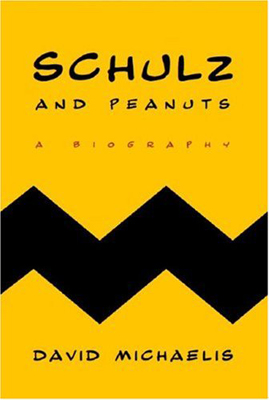
BookBin2013: Schulz and Peanuts: A Biography

schulzandpeanuts

Some friends recently asked me to name 15 artists who have influenced me and who will always remain important in my life. Honestly, I haven’t been able to answer the request, because I haven’t identified 15 who have been so monumentally influential that they will always and forever be in my pantheon of artistic awesomeness.

What? Doesn’t everyone have such a pantheon?

However, when I tried to reach the full 15, Charles M. Schulz was most definitely there. The “Childhood” chapter of my life story would be notably incomplete without Schulz and his “curiously independent” cast of un-childlike children. I grew up in what has been called the waning years of Peanuts glory, a time in which many considered the strip past its prime and much softer and far less esoteric than it once was. I didn’t know any of this at the time; all I knew was that I enjoyed reading the comics and I loved all my Snoopy stuffed animals and other paraphernalia.

It wasn’t until my teen years that I became more curious about this comic’s evolution through its impressively long existence, and I started seeking out the early Peanuts comics. And my love for Peanuts grew even greater. It was almost as if I were discovering this comic and its characters for the first time. Indeed, those later strips with which I was so familiar seemed subdued and rather banal in comparison with Schulz’s early dark, philosophical, somewhat nihilistic strips. His work in the 80s hooked me as a child. His work through the 50s-70s is what made me a lifelong fan.

When I heard that David Michaelis had written Schulz and Peanuts: A Biography, I remembered being incredibly excited. However, early reviews made me wary enough that I didn’t bother picking up a copy until I found the book in a beachtown bargain bin in 2009. I bought it…and promptly abandoned it to a shelf when I got home.

True to my promise this year, I’m trying to make my way through some of the backlogged biographies/autobiographies/memoirs I have. And how could I resist this book’s smexy Charlie Brown-inspired cover?

[Apparently, quite easily, since it’s been almost four years since I bought this book…but I digress.]

For a 600+-plus-page biography, I kind of expected to walk away with more insight on Schulz beyond the fact that he was shy, self-effacing in that intrinsically Midwest way, somewhat pedantic, thoughtful, introspective…but also a bit emotionally incompetent (as detrimentally introverted people can be), especially when it came to the relationships he tried to form throughout his life. Honestly, I had long suspected this last part, and I think it was one of the reasons that I didn’t want to read this biography. Sometimes, we simply want to believe that our heroes are just that

BookBin2013: The Devil in Silver

devilinsilver

I’ve been working my way through another book from my own library (I’m serious this year about reducing that stack of books around my night table…or at least of making room for new books waiting to be moved to the “next in line” stacks). However, I placed a hold with the local library back in December for this particular book. When I received the e-mail letting me know that my turn to borrow it had finally arrived…well, who I am to refuse the call of the wild library?

So I put aside the book I was working through and switched my book-loving fealty to Victor LaValle’s The Devil in Silver.

Let’s start with the dust jacket description:

Pepper is a rambunctious big man, minor-league troublemaker, working-class hero (in his own mind), and, suddenly, the surprised inmate of a budget-strapped mental institution in Queens, New York. He’s not mentally ill, but that doesn’t seem to matter. He is accused of a crime he can’t quite square with his memory. In the darkness of his room on his first night, he’s visited by a terrifying creature with the body of an old man and the head of a bison who nearly kills him before being hustled away by the hospital staff. It’s no delusion: The other patients confirm that a hungry devil roams the hallways when the sun goes down. Pepper rallies three other inmates in a plot to fight back: Dorry, an octogenarian schizophrenic who’s been on the ward for decades and knows all its secrets; Coffee, an African immigrant with severe OCD, who tries desperately to send alarms to the outside world; and Loochie, a bipolar teenage girl who acts as the group’s enforcer. Battling the pill-pushing staff, one another, and their own minds, they try to kill the monster that’s stalking them. But can the Devil die?

Again, I don’t usually provide these descriptions in my reviews, but I wanted to in this instance, to make a point. And that point is, this is not what this book is about.

Okay, it is. But it isn’t. It’s kind of like saying that Star Trek is about space exploration. See what I’m saying? It is. But it isn’t…and, with The Devil in Silver, the “isn’t” is what makes it such a compelling and difficult read.

What LaValle has done with this book is craft an enrapturing and infuriating castigation against several publicly facilitated ways in which we manage those whom most people immediately deem unmanageable, whether it be the mentally ill, the incarcerated, the illegally present. It is chaotic and claustrophobic and intelligent and revelatory and…I couldn’t put it down and I couldn’t stand reading it at times because it will cut you with its closeness to the truth.

The horror of this story is not in its “devil” but in the humans themselves, seemingly cored of their humanity by the perfunctory pressures of mind-numbing minutiae and the stunning insensitivities of status quo that have left them totally void of compassion or caring. Just do what you’re told, pay attention only to the words on the screen or the words on the paper. Ignore the human life those words represent. Makes it that much easier to dismiss yourself from culpability when you can say you were simply following orders.

There were points while reading this novel when I thought I wouldn’t be able to keep going. I’ve already stated that I know too well the inner workings of public mental healthcare in this country. LaValle obviously knows it as well. In fact, he has stated that the idea for The Devil in Silver was planted from a personal experience. What was planted all those years ago, LaValle forced into the light through one of the most captivating novels I have read in a long time.

I’m not necessarily sure how I feel about the climax or resultant ending, but I honestly think the strength of The Devil in Silver is more in its telling than in its ending. That being said, LaValle succeeded in creating characters that were, while perhaps not completely likeable, completely believable and completely empathetic. For these reasons, I truly wanted that mythical, virtually non-existent “happy ending.” For some, I got my wish. For others…

Well, I guess you’ll just have to read this one for yourselves. Just be warned: It is not horror in the exploitative or visceral sense of the word. It is horror in the literary, intellectual sense…in the pressing, rooted-in-reality sense. It will burrow beneath your skin in the most haunting of ways.

Final Verdict: I had to return this one, of course, but I might be adding this to my library, if only to make sure that I show support for an incredibly talented author.

BookBin2013: Mr. CSI: How a Vegas Dreamer Made a Killing in Hollywood, One Body at a Time

mrcsi

As you can already tell by the types of books I review here at the lair, I don’t read many autobiographies, biographies, or memoirs. I suppose because I’d much rather lose myself to a good fictional tale or immerse myself in the non-fiction minutia of one of my nerdy fandoms. I do (infrequently) purchase these more people-oriented books, if it’s about or by someone I’m terribly interested in, but they tend to languish, unread, far longer than my other purchases. Apparently, my general disinterest in people extends beyond the every-day disdain and into my free-time reading choices.

What better way to start to ease myself into the task of tackling at least some of the bio-esque books from my collection than through one of my nerdy fandoms? That’s why this review, denizens, is brought to you by three of my favorite letters in the alphabet: C, S, and I.

That’s Mr. CSI to you, however…or, if you’d rather, Anthony Zuiker, creator of that smexy team of Vegas criminalists that made science-based procedurals ubiquitous across the channel spectrum. In traditional memoir style, Zuiker maps for us the path that led him to create the biggest cash-cow franchise that Paramount’s sunk their teeth into, possibly since Trek.

What I found most intriguing about this book is that, for the most part, it’s Zuiker telling us absolutely nothing about CSI…while telling us absolutely everything about CSI. It almost reads like an episode script: Give the reader a stunning cold open, then flash into back story, full of clues and foreshadowing all along the way, and see if they can piece it all together on their own.

There’s even a grisly crime scene and guest appearances by real people who inspired characters from the Vegas series. Zuiker confirms the identity of one of his inspirations. Others are very obvious, even if they remain unidentified.

I have to admit, denizens: I really enjoyed this book. Not all that surprising, I suppose, considering the source material. However, before I read this, I didn’t know anything about Zuiker; I didn’t even know what he looked like until I saw the book cover. I had no idea that he grew up in Vegas, surrounded by the people who would later populate the world of his greatest professional creation to date. Reading this book gave me some great CSI trivia as well as a pretty decent understanding of what motivated Zuiker, not just to create this show but to persist in all his creative endeavors. I guess you could say this is kind of a memoir/detective novel/self-help/motivational speaker book.

Whatever you classify it as, it’s a quick, enjoyable read, but definitely meant primarily for CSI fans. You might enjoy some aspects of it if you’ve never watched CSI, but you’re going to miss a lot. “True believers,” however, will probably really dig the ride. I know I did.

Final Verdict: Yeah, this one’s a keeper. I actually have a shelf dedicated to memoirs and such, and Zuiker has definitely earned his spot…now, excuse me while I go cordon it off with some crime scene tape…

BookBin2013: Batwoman Volume 1: Hydrology / Batgirl Volume 1: The Darkest Reflection

batwoman_batgirl

Please don’t think that because I have paired these two books into one review I don’t think they are worthy of their own individual posts. I can assure you, denizens, this is not the case. However, it just so happens that I purchased both of these “New 52” collections at the same time (along with my very own copy of Alan Moore’s The Killing Joke, which I have already reviewed but mention because it will play a part in the following review). I also happened to read these two collections successively, which sparked a bit of “compare-and-contrast” within my swirly brain.

First, a bit of exposition: Both are collections of the first comics for each heroine under the recent DC Comics “reboot.” I use reboot loosely, however, because it kind of was a reboot…but not really. In my mind, a reboot would have meant total tabula rasa for all the characters involved. This wasn’t exactly the case, at least for Kate Kane and Barbara Gordon.

For example, Barbara Gordon is, indeed, once more Batgirl. However, she is still the same Barbara Gordon who was shot at point-blank range by the Joker in The Killing Joke. Part of her history is still those years she spent in a wheelchair and the time she spent known as Oracle, the brains behind the Birds of Prey.

Kate Kane is still the wealthy “playgirl” of Gotham with a military history that was curtailed by “Don’t Ask, Don’t Tell.” She also still carries with her the baggage of dark truths revealed in the anthology Elegy.

So not necessarily a complete reboot in the truest sense of the word. However, it was enough of a reboot to get Gordon back into that Batgirl costume, which I definitely appreciate. Even more, it was enough to get Gail Simone in to take over telling Batgirl’s second chance at bat.

Heh. Get it? Bat. Never mind.

Simone’s name on the cover of The Darkest Reflection is ultimately what lured me into Batgirl’s story. I spoke about my thoughts on Simone’s prowess as a comic writer in my review of Wonder Woman: The Circle. She did wonders (I’m sorry; I’ll stop doing that, I swear) for Diana of Themyscira. She was also responsible for telling Gordon’s tale as Oracle for many issues as head writer for Birds of Prey, so I knew she already had a connection with and understanding of Gordon that most writers wouldn’t already have.

Similarly, it was seeing J.H. Williams, III’s name on Hydrology that lured me once more back into Batwoman’s storyline. Williams was the artistic brilliance behind Elegy, so I knew the art once again would be exemplary. However, this time, Williams was also the writer, taking over the Batwoman mythology from Greg Rucka. I honestly think this was the collection’s biggest weakness. Not only was Rucka a more captivating and comprehensive writer, I think taking on both roles caused Williams’s art to suffer a bit. But only a bit, mind you. Between the two collections, I would choose Williams as the more stunning and unconventional artist. Still, I think that writing and drawing were too taxing for Williams. His artwork was nowhere near as astonishing as it was for Elegy.

Sticking for a moment with commentary on the artwork, I will say this in favor of Ardian Syaf, the artist behind Batgirl’s return: I much preferred his rendering of Gordon as Batgirl to Williams’s rendering of Kane as Batwoman. Batgirl came across as fit, athletic, limber, and lithe. She has a sporty physique and her Batgirl costume is modestly rendered. She looks like she’s ready to do battle with villains.

Batwoman, on the other hand, at times looks like she’s ready to take a spin or two around a pole in Gotham’s redlight district. Pendulous breasts and a generous derriere, covered in latex in a way that leaves little to the imagination, Batwoman is also drawn in a far more provocative manner than Batgirl. Translation: There are lots more stereotypical comic renderings of Batwoman from utterly ridiculous but obviously “male gaze” angles than there are of Batgirl.

Syaf’s take on Batgirl is celebratory of the female form, while Williams’s take on Batwoman comes across many times as exploitative. It’s a shame, really. I want to like Batwoman more than Batgirl, but I find comics that depict women so wantonly to be insulting and, truthfully, kind of sad.

I can’t help but wonder if the moderation of Syaf’s artwork was due to Simone’s presence. Did Simone let Syaf know that she didn’t want Batgirl coming across as one step above a Playboy Playmate? Or did Syaf perhaps refrain from the more lascivious artwork out of deference to Simone? Or maybe it has less to do with Simone and more to do with the one primary difference between the two characters names: Gordon is a Bat girl, while Kane is a Bat woman. Perhaps the “girl” nom de guerre grants her a reprieve from the more pornographic postures?

Of course, this isn’t to say that Syaf didn’t ever present Batgirl in some of those predictably provocative male gaze positions. There are a couple of doozies in this collection, actually. Williams, however, is the guilty party between the two artists when it comes to objectifying artwork.

As for the storytelling itself, I’m going to have to also give my vote to Batgirl. Just as I mentioned in my review of Simone’s writing for Wonder Woman, here she again presents her primary character in a wonderfully and holistically developed fashion. Barbara Gordon is believable, replete with damage, fear, guilty, wonder, and joy. Williams simply fails to provide Kate Kane with the same level of dimensionality, presence, or realism. He gives it the old college try, but, in the end, he lacks the inherent connection with and understanding of Kate Kane that a female writer
BookBin2013: Mortuary Confidential: Undertakers Spill the Dirt

mortuary

Ah, nothing like starting the new BookBin off with a happy read, no? I’ve had Mortuary Confidential, compiled by funeral directors Kenneth McKenzie and Todd Harra, since the summer (it was actually bought for me as “beach reading,” but I wasn’t able to finish my other books quickly enough to partake of such a delightfully macabre experience as reading a book like this surrounded by sea, sand, and sun).

The first thing I noticed when I flipped open my copy was a large advertisement, printed on the inside of the front cover, for Never Suck a Dead Man’s Hand: Curious Adventures of a CSI. I’ve read CSI Dana Kollmann’s book. It was one of my favorite finds for 2011. I took this as a good omen. Looking back, I realize that it was just a publication company advertising another of their books that they thought might “pair well” with the obvious death themes of Mortuary Confidential.

That’s not to say that I didn’t enjoy this book. It was entertaining enough, full of anecdotes that were poignant, funny, informative, and odd. In our world of constant online connectivity, though, I feel like books like this would be better served as a blog to which people can constantly contribute stories. Something, perhaps, like The Darwin Awards (which also lost a great deal of its quirky charm, imho, when turned into a book series). Something interactive, constantly growing, constantly changing. I suppose what I’m ultimately saying is that this concept seems too…alive to be limited to staid book status.

Final Verdict: I enjoyed reading Mortuary Confidential, but I don’t think I would ever revisit it. Again, though, if this were an interactive site, with new stories added constantly, I believe I would definitely bookmark it for regular visits.